 Excellent PLC


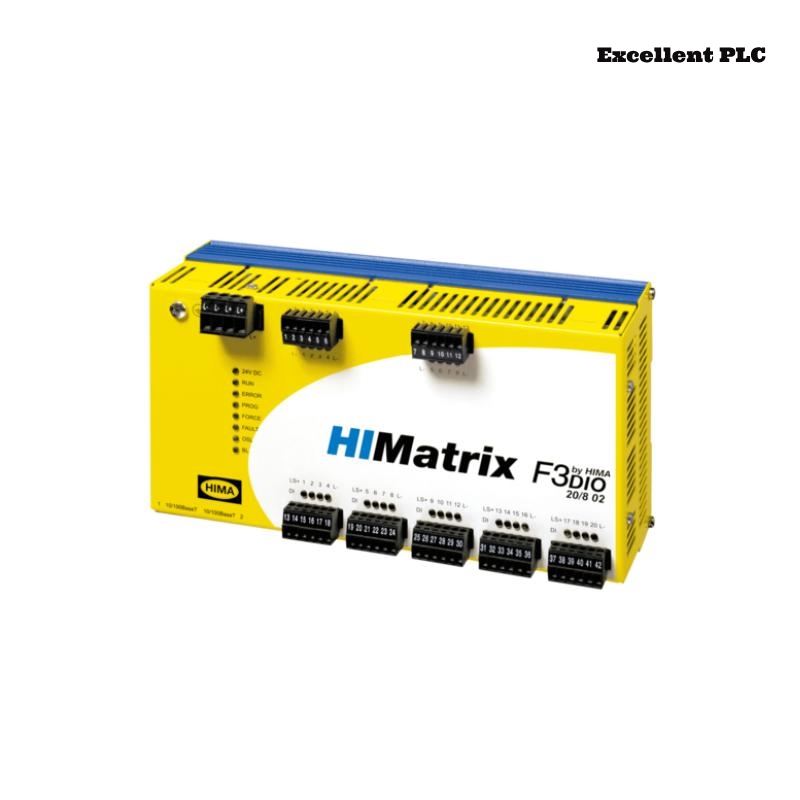
Detailed guide on troubleshooting intermittent signal loss in HIMA F3 DIO 8/8 01 modules caused by wiring errors and software debounce conflicts. Includes field inspection, configuration correction, and preventive measures.
Background of the Incident
During routine production monitoring at a chemical processing facility, operators noticed that the HMI intermittently reported digital input channels DI-01, DI-04, and DI-07 as inactive even when field devices were clearly engaged. Simultaneously, some outputs such as DO-02 and DO-05 responded unpredictably to PLC commands, occasionally skipping cycles.
The problem was sporadic and unpredictable, appearing more frequently during simultaneous batch operations with high I/O load. Cabinet power supply readings were nominal at 24V DC, and module LEDs for power and status remained green.
Observed Fault Phenomena
-
Digital Inputs: Channels toggled between “active” and “unknown” without any physical interaction.
-
Digital Outputs: Some outputs triggered out-of-sequence or failed to actuate during programmed cycles.
-
Module Diagnostics: Logged “unexpected state transition” and “debounce mismatch” events.
-
Environmental Conditions: The control cabinet was located near a cooling water line, and periodic condensation was observed during high humidity periods.
Operators performed initial soft resets and observed brief improvements, but the problem recurred within a few minutes during batch operations, indicating a more systemic fault.
Root Cause Analysis
Investigation revealed multiple contributing factors:
-
Crossed Field Wiring: Field inspection identified that DI-04 and DI-07 had partially crossed connections with adjacent input terminals. The miswiring caused unpredictable digital input states, especially when multiple devices changed states simultaneously.
-
Software Debounce Logic Conflict: The HIMA F3 DIO module’s firmware included a debounce routine that filtered rapid input changes to prevent false triggers. Due to the crossed wiring, this logic misinterpreted rapid voltage fluctuations as spurious signals, logging “debounce mismatch” errors and intermittently suppressing valid input events.
-
Environmental Interference: Minor condensation on terminals exacerbated electrical noise and slightly altered voltage thresholds, which further confused the debounce logic.
-
PLC Program Timing: The updated PLC logic included rapid sequential input polling and output commands. Combined with crossed wiring and condensation, this led to inconsistent module behavior, intermittent alarms, and skipped actuator commands.
The combination of hardware wiring error, software debounce logic, environmental conditions, and timing conflicts produced a highly intermittent and difficult-to-reproduce fault.
Step-by-Step Troubleshooting Procedure
1. Power Isolation and Terminal Verification
-
Shut down the module and isolate all affected input/output channels.
-
Inspect all terminal screws and wiring paths for misrouting or loose connections.
-
Correct the crossed wires and ensure tight, clean connections. Apply isopropyl alcohol to remove any moisture or minor oxidation.
2. Firmware and Debounce Logic Adjustment
-
Connect to the module using HIMA Safety Configurator and verify firmware version:
-
Update firmware if needed:
-
Temporarily adjust debounce timing to reduce false suppression while testing:
DEBOUNCE_TIME=12ms
SAVE
RESET_MODULE
3. PLC Logic Verification
-
Review batch program sequences to ensure input polling does not conflict with rapid output commands.
-
Introduce slight delays (10–20ms) between sequential commands for critical channels.
4. Environmental Controls
-
Inspect cabinet for condensation or proximity to moisture sources.
-
Install dehumidifiers or adjust cabinet airflow to minimize terminal moisture.
-
Monitor humidity during high-demand cycles.
5. Validation and Monitoring
-
Restore module power and monitor both inputs and outputs over multiple full production cycles.
-
Verify HMI readings remain stable and that all actuators respond consistently.
-
Check internal logs for debounce warnings or unexpected state transitions.
Following these steps, the module stabilized. All previously affected channels reported correct states, and no further skipped outputs were observed.
Preventive Recommendations
-
Conduct detailed wiring audits before deploying new modules or after maintenance.
-
Maintain consistent firmware across all modules to prevent debounce conflicts.
-
Review PLC logic and adjust timing sequences to match module capabilities.
-
Inspect cabinet environmental conditions regularly and mitigate moisture risks.
-
Maintain detailed logs of hardware changes, software updates, and configuration adjustments for traceability.
This incident demonstrates that complex intermittent faults often arise from the interaction of hardware, software, environmental, and timing factors. Addressing all contributing elements ensures reliable operation of HIMA F3 DIO 8/8 01 modules in industrial environments.