 Excellent PLC


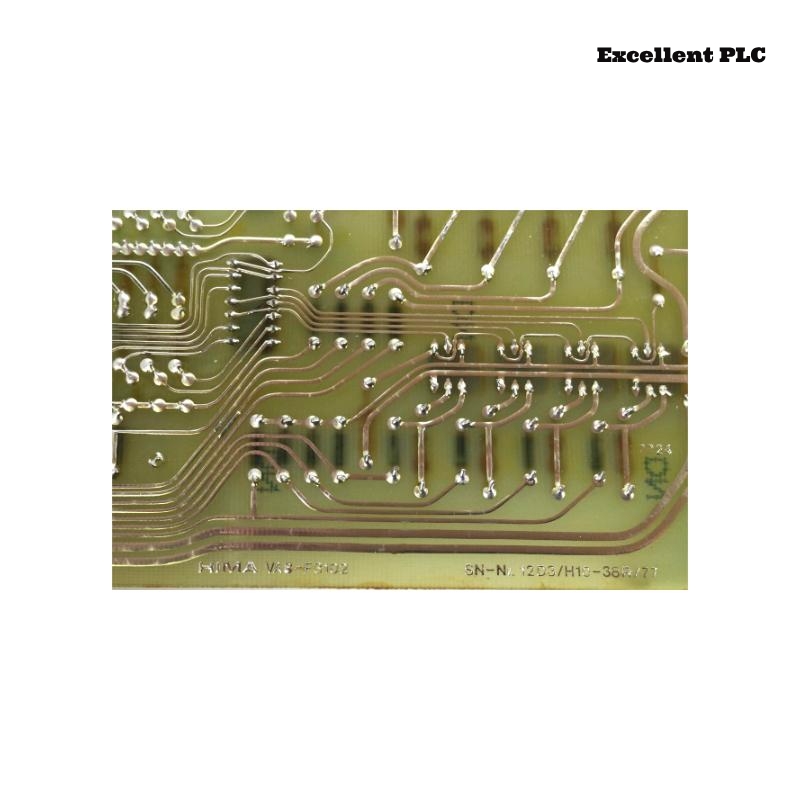
Troubleshoot analog drift and delayed signal response in HIMA F3102 buffer amplifier modules (Planar F system) caused by component aging, software sampling conflicts, and environmental stress. Step-by-step resolution included.
Incident Background
In a petrochemical plant, operators noticed that several analog input channels on the HIMA F3102 buffer amplifier module were displaying gradual signal drift during continuous operation. Channels AI-01, AI-03, and AI-05 intermittently lagged behind actual process changes, causing control loops to respond slowly and triggering minor process deviations.
The module is part of the Planar F system, which buffers and stabilizes analog signals before transmitting them to the safety controller. Initial observations showed the power LED remained steady, while the HMI indicated fluctuating values inconsistent with field transmitter readings.
Fault Phenomena Observed
-
Analog Inputs: AI-01 and AI-05 slowly drifted ±6–10% over 30–60 minutes, particularly during batch operation peaks.
-
Module Diagnostics: Logged “sampling delay” and “input deviation detected” events.
-
Digital Outputs: Some DO channels responded with slight delays when driven by automated control sequences.
-
Environmental Observations: Elevated cabinet temperature (~50°C) due to prolonged operation and partial ventilation obstruction. Humidity was slightly above recommended levels (~60%).
Initial soft resets temporarily reduced drift but did not eliminate the underlying problem, indicating a combination of hardware aging and software timing issues.
Root Cause Analysis
Investigation revealed several contributing factors:
-
Component Aging: Extended operational hours caused drift in precision resistors and amplifiers inside the HIMA F3102 module, affecting input signal linearity.
-
Input Terminal Degradation: Slight oxidation and loose connections at AI terminals increased resistance intermittently, compounding signal drift.
-
Software Sampling Conflict: The Planar F system firmware included periodic sampling filters that were misaligned with PLC polling sequences. This caused delayed recognition of input changes, especially when multiple channels changed rapidly.
-
Environmental Stress: Elevated temperature and humidity accelerated drift effects and contributed to minor signal inconsistencies.
The fault was therefore multifactorial, with hardware aging, terminal integrity, software timing, and environmental stress all contributing to the observed analog drift and delayed outputs.
Step-by-Step Troubleshooting and Resolution
1. Power Isolation and Hardware Inspection
-
Shut down cabinet power and isolate AI and DO channels affected by drift.
-
Inspect all input and output terminals for oxidation, discoloration, or loose screws.
-
Clean terminals using isopropyl alcohol and a soft brush; retighten screws to manufacturer-recommended torque.
-
Inspect module components for visible signs of aging or overheating; if available, use infrared thermal imaging to detect hotspots.
2. Module Calibration and Firmware Alignment
-
Connect to the module using Planar F configuration software.
-
Backup existing calibration and configuration:
EXPORT_CALIBRATION>FILE=F3102_BACKUP.CAL
-
Perform full calibration using known voltage or current references:
CALIBRATE>CHANNELS=AI-01,AI-03,AI-05
REFERENCE=4-20mA
SAVE
-
Verify firmware version aligns with the latest Planar F system release; update if necessary:
3. Software Sampling Adjustment
-
Adjust input sampling interval to reduce delay between field signal changes and module recognition:
SAMPLING_INTERVAL=12ms
SAVE
RESET_MODULE
-
Verify HMI readings respond correctly under both manual and automated test sequences.
4. Environmental Mitigation
-
Ensure cabinet ventilation is clear and operational.
-
Maintain temperature below 45°C and humidity below 55%.
-
If module is near heat sources, consider repositioning or adding insulation/shields.
5. Validation and Monitoring
-
Restore power and monitor inputs and outputs over multiple batch cycles.
-
Observe internal diagnostics for recurrence of “sampling delay” or “input deviation” events.
-
Document updated calibration, sampling intervals, and environmental conditions for traceability.
After these steps, analog inputs stabilized, HMI readings returned to accurate ranges, and output response delays were eliminated.
Preventive Recommendations
-
Conduct periodic calibration audits for all buffer amplifier modules.
-
Inspect terminals and wiring regularly to prevent oxidation and loose connections.
-
Monitor cabinet temperature and humidity to minimize environmental stress.
-
Align software sampling intervals with PLC polling sequences during firmware updates.
-
Maintain detailed records of calibration, environmental conditions, and firmware versions for traceability.
This case demonstrates that intermittent analog drift and delayed outputs often arise from a combination of hardware aging, terminal integrity, software timing, and environmental conditions. Systematic inspection, calibration, and monitoring ensure reliable operation of the HIMA F3102 module in critical process control applications.