 Excellent PLC


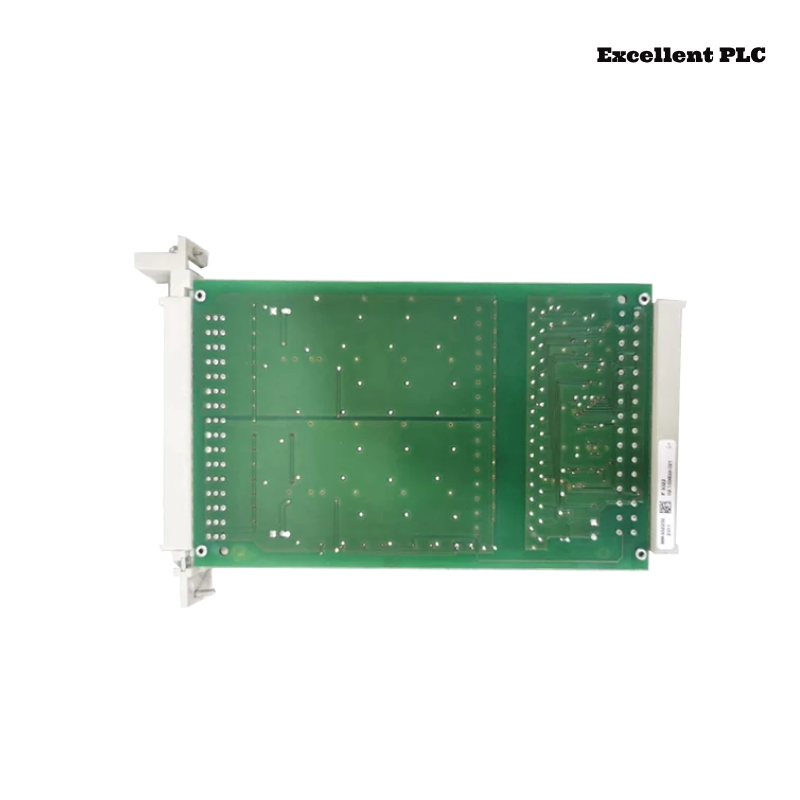
Troubleshoot intermittent analog signal failures in HIMA F3102 buffer amplifier modules (Planar F system) caused by signal crosstalk, filter misconfiguration, and terminal contact issues. Step-by-step repair and preventive measures included.
Incident Background
During a routine process audit in a petrochemical plant, operators noticed that analog channels AI-02, AI-04, and AI-06 on the HIMA F3102 buffer amplifier module were displaying irregular readings on the HMI. The signals fluctuated unexpectedly by ±10% during periods of high network traffic, leading to momentary discrepancies in automated process control.
The affected module is part of the Planar F system responsible for stabilizing analog signals from field transmitters before transmission to the safety controller. Initial observations showed that the module power LEDs were stable, and no error was immediately flagged by the Planar F diagnostics interface.
Fault Phenomena Observed
-
Analog Inputs: AI-02 and AI-06 fluctuated independently of actual field conditions, sometimes jumping to full-scale values for a few seconds.
-
Digital Diagnostics: Module recorded occasional “input out-of-range” and “filter timeout” events.
-
HMI Observations: Real-time process values occasionally triggered minor alarms, although the physical process remained stable.
-
Environmental Notes: The module cabinet had elevated humidity (~65%) due to HVAC maintenance, and nearby high-voltage cabling introduced potential electromagnetic interference.
These intermittent anomalies were highly sporadic, making the problem difficult to reproduce during normal maintenance checks.
Root Cause Analysis
After extensive inspection and testing, engineers identified multiple root causes:
-
Signal Crosstalk: Long analog wiring runs for AI channels passed near high-voltage field cables, introducing electromagnetic interference (EMI) into sensitive input lines. This caused brief spikes and signal oscillations, which were amplified by the F3102 module.
-
Input Filter Configuration Conflict: The module firmware included configurable software input filters designed to suppress rapid fluctuations. Misaligned filter settings, combined with EMI-induced spikes, caused delayed or suppressed readings, leading to intermittent “out-of-range” logs.
-
Terminal Contact Resistance: Loose or slightly oxidized input terminals increased contact resistance, amplifying the effect of voltage fluctuations and further degrading signal accuracy.
-
Environmental Factors: Elevated humidity increased leakage currents across terminal blocks and connector pins, compounding intermittent input failures.
The fault was thus a complex interplay of hardware, software, and environmental factors, with no single factor sufficient to produce the observed anomalies.
Step-by-Step Troubleshooting
1. Hardware Inspection
-
Power down the cabinet and isolate all affected analog channels.
-
Inspect all input wiring for proximity to high-voltage lines. Re-route analog cables to minimize EMI coupling.
-
Examine terminal blocks for oxidation or loose screws. Clean with isopropyl alcohol and retighten to specification.
2. Software Filter Adjustment
-
Connect to the HIMA F3102 module using Planar F configuration software.
-
Check current filter settings for affected AI channels:
INPUT>CHANNELS=2,4,6
SHOW_FILTER_SETTINGS
-
Adjust filter timing and threshold to balance EMI suppression and real-time response:
FILTER_TIME=15ms
FILTER_THRESHOLD=5%
SAVE
RESET_MODULE
-
Monitor inputs via HMI to confirm signal stability.
3. Environmental Mitigation
-
Ensure proper cabinet airflow; repair or activate dehumidifiers if necessary.
-
Maintain relative humidity below 55% for optimal module performance.
-
Monitor ambient temperature; avoid placing the module near heat-generating equipment or unshielded high-voltage cabling.
4. Validation and Monitoring
-
After cleaning, re-routing, and filter adjustments, restore power and monitor AI channels over multiple batch cycles.
-
Use Planar F diagnostics logs to verify no further “input out-of-range” or “filter timeout” errors.
-
Document all configuration changes and observed environmental conditions.
Following these steps, analog input readings stabilized, HMI displays returned to expected ranges, and intermittent alarms ceased.
Preventive Recommendations
-
Wiring Management: Route analog lines away from high-voltage cables and minimize parallel runs to reduce EMI exposure.
-
Periodic Terminal Inspection: Check and clean terminals to avoid oxidation and loose connections.
-
Filter Configuration Audits: Verify module software filters align with process requirements and environmental conditions.
-
Environmental Control: Maintain cabinet humidity and temperature within recommended ranges.
-
Firmware Updates: Ensure Planar F system firmware is synchronized with HIMA F3102 modules to avoid mismatches in signal scaling or filtering logic.
This incident illustrates that intermittent analog signal failures often result from multiple interacting factors—hardware, software, and environment. Comprehensive inspection and systematic mitigation ensure long-term reliable performance of the HIMA F3102 buffer amplifier module in critical process applications.