 Excellent PLC


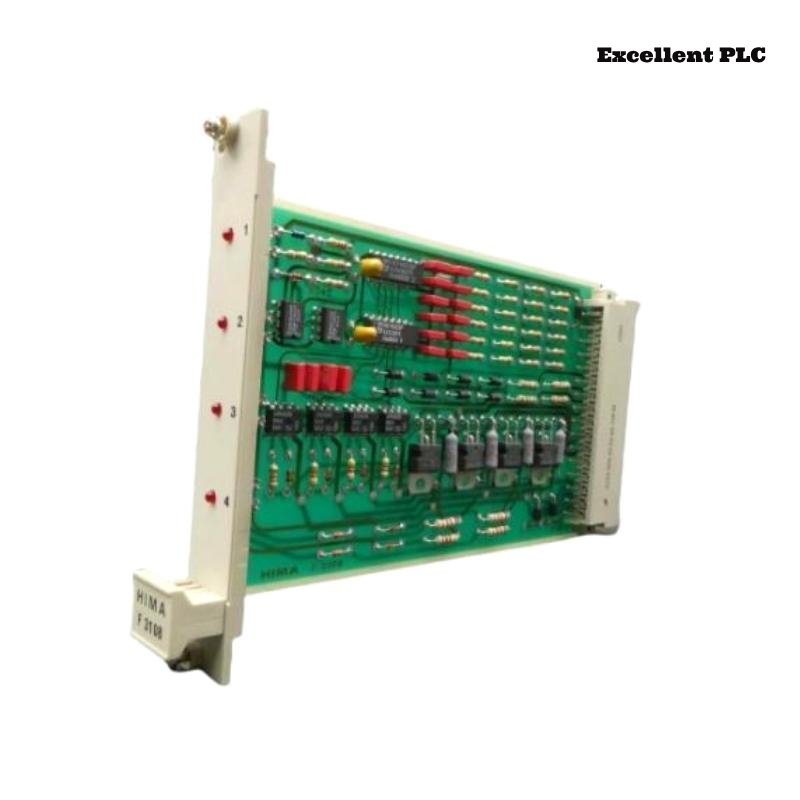
Learn how to troubleshoot intermittent output delays in HIMA F3108 relay amplifier modules (Planar F system) caused by relay contact aging, PLC command conflicts, and environmental factors. Includes repair, software adjustments, and preventive measures.
Incident Background
During continuous operation at a petrochemical facility, operators noticed that certain relay outputs on the HIMA F3108 module were delayed by 100–300 ms relative to PLC commands. Channels RLY-03 and RLY-06 were most affected, causing slight timing discrepancies in batch control operations.
The module is part of the Planar F system, responsible for amplifying relay signals to actuators. HMI diagnostics displayed intermittent “output timing deviation” and “relay contact delay” warnings. Module power and status LEDs remained green, indicating no total failure.
Fault Phenomena Observed
-
Relay Outputs: Channels RLY-03 and RLY-06 actuated late or failed to achieve full switching within expected timing.
-
Analog Feedback: Corresponding AO signals showed slow rise/fall times, affecting downstream control loops.
-
Module Diagnostics: Logged “contact aging detected” and “PLC command mismatch” events.
-
Environmental Observations: Cabinet temperature reached ~48°C during peak operations; humidity near 60%. High-voltage cables in proximity may have introduced minor EMI.
Soft resets temporarily improved performance, but delays reappeared during sequential batch cycles.
Root Cause Analysis
Investigation identified several contributing factors:
-
Relay Contact Aging: Repeated actuation and minor oxidation increased mechanical resistance, leading to delayed relay switching and intermittent output misalignment.
-
PLC Command Conflicts: The batch control PLC sent high-speed sequential commands that occasionally overlapped with module internal sampling, causing temporary misinterpretation of relay state changes.
-
Software Sampling Conflict: Planar F system firmware filters amplified the effect of delayed relay actuation, introducing further timing discrepancies.
-
Terminal Micro-Contacts: Slightly loose screws and oxidation at RLY and AO terminals increased contact resistance, exacerbating output delays.
-
Environmental Influence: Elevated temperature and humidity accelerated relay aging and affected terminal integrity.
The fault was therefore multi-factorial, combining hardware aging, software timing, terminal issues, and environmental stress.
Step-by-Step Troubleshooting and Repair
1. Power Isolation and Terminal Inspection
-
Shut down cabinet power and isolate affected relay channels.
-
Inspect RLY and AO terminals for oxidation, discoloration, or loose screws.
-
Clean terminals with isopropyl alcohol and retighten to manufacturer specifications.
2. Relay Verification and Replacement
-
Measure relay contact resistance using a low-resistance meter.
-
Replace relays exceeding resistance limits or showing visible oxidation/pitting.
-
Minor oxidation can be removed carefully with approved contact-cleaning solutions.
3. Software Filter Adjustment
-
Connect to the module via Planar F configuration software.
-
Review relay output filter and sampling intervals:
OUTPUT>CHANNELS=RLY-03,RLY-06
SHOW_FILTER_SETTINGS
-
Adjust filter time and sampling intervals to reduce timing discrepancies:
FILTER_TIME=12ms
SAMPLING_INTERVAL=18ms
SAVE
RESET_MODULE
-
Test relay outputs under both manual and automated sequences to verify stability.
4. PLC Command Review
-
Review PLC batch sequence logic to ensure commands are spaced to avoid overlapping with module sampling intervals.
-
Introduce minimal delays (~20–30 ms) between sequential output commands for critical relays.
5. Environmental Mitigation
-
Ensure cabinet ventilation is operational and unobstructed.
-
Maintain temperature below 45°C and humidity below 55%.
-
Install shields or reroute nearby high-voltage cables to reduce EMI effects.
6. Validation and Monitoring
-
Restore power and monitor relay outputs and AO feedback over multiple batch cycles.
-
Confirm HMI warnings are cleared and module diagnostics report no “contact aging” or “PLC mismatch” events.
-
Document all hardware inspections, relay replacements, software adjustments, and environmental measures.
Following these actions, relay outputs stabilized, AO feedback aligned with PLC commands, and timing discrepancies were eliminated.
Preventive Recommendations
-
Relay Maintenance: Inspect and replace aged or oxidized relays during preventive maintenance.
-
Terminal Audits: Regularly clean and tighten terminals to avoid micro-contact resistance.
-
Software Filter Review: Align relay filter settings with module and PLC timing requirements.
-
PLC Command Sequencing: Ensure sequential commands avoid overlap that could trigger misinterpretation by the module.
-
Environmental Monitoring: Maintain cabinet temperature and humidity within specifications and reduce EMI exposure.
-
Detailed Logging: Track relay replacements, software adjustments, and environmental conditions for traceability.
This incident highlights that intermittent relay output delays often arise from hardware aging, software sampling conflicts, PLC command timing, terminal integrity, and environmental stress, emphasizing the need for systematic inspection, configuration review, and preventive maintenance for HIMA F3108 modules.