 Excellent PLC


1️⃣ Overview
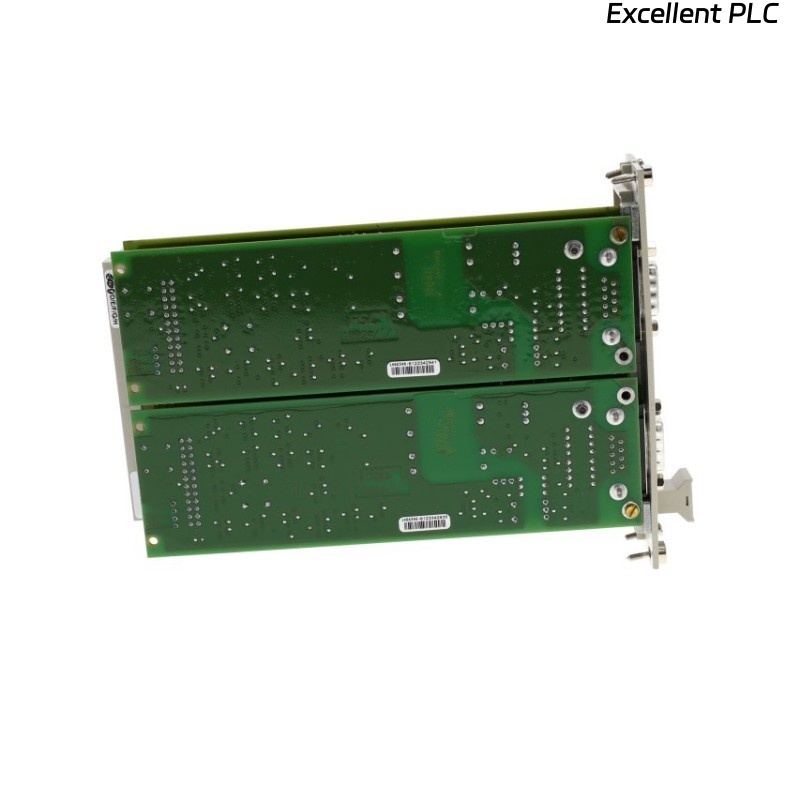
The Honeywell 10024/1/1 communication modules are integral components of HC900 / Experion PKS systems, facilitating data exchange between controllers, I/O modules, and supervisory systems.
The primary distinction lies between Standard Communication Modules and Enhanced Communication Modules, which are designed for different network loads, system sizes, and protocol requirements. Understanding these differences helps engineers select the most suitable module for their applications.
2️⃣ Feature Comparison
| Feature | Standard Module | Enhanced Module | Notes |
|---|---|---|---|
| Communication Speed | Standard speed (typically 19.2–57.6 kbps for RS-485, standard Ethernet speed) | Higher throughput, supporting high-volume data transfers | Suitable for complex networks and data-intensive applications |
| Network Capacity | Limited number of nodes | Supports larger node count and extended topology | Ideal for large or distributed control systems |
| Protocol Support | Basic HC900 protocol | Extended protocol support (e.g., Modbus RTU/TCP, Ethernet/IP) | Facilitates integration with third-party devices and SCADA |
| Memory and Buffering | Standard buffer | Larger internal buffer for high-load operation | Reduces risk of data loss under heavy network traffic |
| Error Handling | Basic CRC and retransmission | Enhanced error detection and recovery mechanisms | Improves system reliability and reduces downtime |
| LED Indicators & Diagnostics | Basic status indicators | Advanced LED feedback, fault logs readable via engineering tools | Simplifies maintenance and troubleshooting |
| Recommended Applications | Small-to-medium control systems | Large-scale, distributed, or high-data-rate systems | Choice depends on network size and operational complexity |
3️⃣ Performance Insights
-
Processing Power
-
Enhanced modules feature faster internal processors and higher buffer capacity, ensuring reliable communication in high-node networks.
-
-
Protocol Flexibility
-
Standard modules support only HC900 protocols.
-
Enhanced modules provide extended protocol compatibility, allowing seamless integration with SCADA systems and third-party devices.
-
-
Diagnostics and Maintenance
-
Enhanced modules allow detailed fault logs and remote monitoring.
-
Standard modules require manual inspection for troubleshooting, increasing maintenance time.
-
4️⃣ Selection Guidelines
-
Small systems or standalone units → Standard module is sufficient.
-
Large, distributed, or data-intensive systems → Enhanced module recommended for reliability and reduced communication errors.
-
Future system upgrades → Enhanced module offers better scalability and long-term investment protection.
5️⃣ Engineer Recommendations
-
Use enhanced modules in networks with high traffic or frequent communication bursts to minimize errors.
-
Ensure firmware and SCADA software compatibility before installation.
-
Maintain installation logs including module type, firmware version, and installation date for efficient maintenance planning.
✅ Summary
The key differences between Enhanced and Standard Honeywell 10024/1/1 communication modules are:
Processing capability, network capacity, protocol support, error handling, and diagnostic features.
-
Standard module: suitable for smaller networks with basic communication needs.
-
Enhanced module: ideal for complex, high-volume, or distributed control networks.
Selecting the correct module improves system stability, communication reliability, and maintenance efficiency.