 Excellent PLC


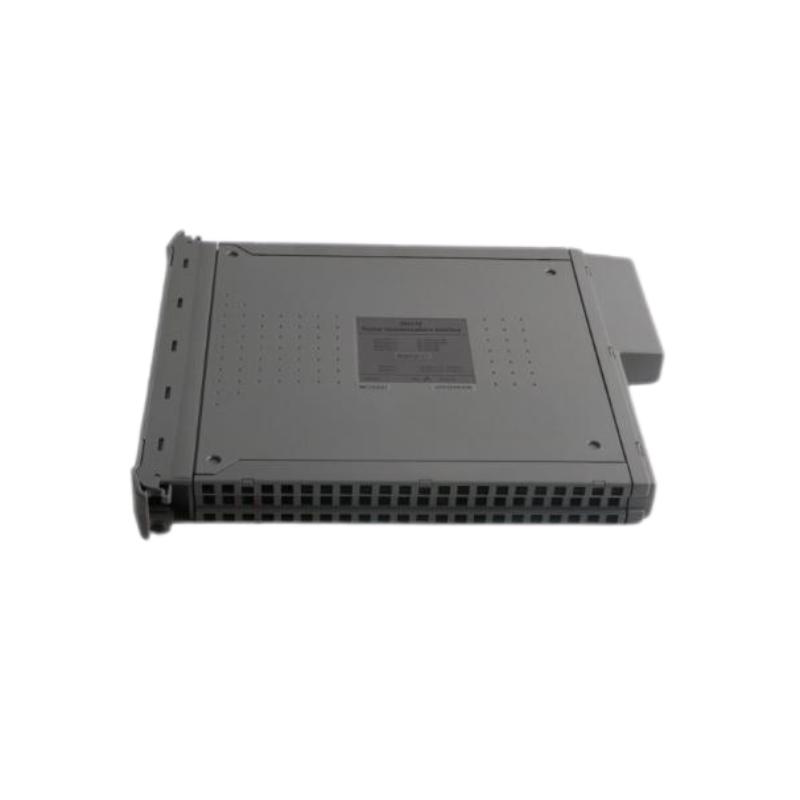
The ICS Triplex T8151B communication interface module is often introduced with reassuring language.
Reliable.
Deterministic.
Designed for safety-critical data exchange.
And yet, in real installations, it is frequently misunderstood—not because it fails, but because it works too well.
Safety Communication Is Not About Speed
In standard automation, communication is judged by throughput and latency.
In safety systems, those metrics are secondary.
The T8151B is not designed to move data fast.
It is designed to move responsibility carefully.
Every message represents a claim:
“This state is valid.”
“This decision is confirmed.”
“This subsystem agrees.”
The module’s job is to decide whether such claims deserve trust.
The Most Dangerous State Is “Apparently Healthy”
Engineers fear communication loss.
Cables unplugged.
Links down.
Alarms flashing.
Those situations are obvious—and manageable.
What causes real trouble is partial certainty:
-
links remain up
-
data still flows
-
timestamps look reasonable
But assumptions underneath are no longer aligned.
The T8151B is designed to detect that subtle erosion of confidence.
Determinism Can Create False Comfort
Deterministic communication feels safe.
Predictable cycles.
Consistent updates.
Clean diagnostics.
But determinism does not guarantee correctness.
If wrong assumptions are exchanged deterministically, the system can fail very consistently.
The T8151B does not assume that consistency equals truth.
It cross-checks.
Why Engineers Misdiagnose Communication Faults
When communication-related trips occur, the network is often blamed.
“Packet loss.”
“Network glitch.”
“Interference.”
In post-event analysis, the real cause is often logical, not physical:
-
mismatched expectations between subsystems
-
outdated configuration on one side
-
timing assumptions violated under load
The T8151B noticed disagreement before humans noticed inconsistency.
Distributed Systems Multiply Interpretation Risk
Safety architectures increasingly rely on distributed decision-making.
Remote I/O.
Peer controllers.
Segmented safety islands.
The T8151B sits between interpretations.
It does not merely relay data—it arbitrates meaning.
What does “ready” mean?
What does “safe” imply in this context?
What happens if two sides agree numerically but disagree conceptually?
These questions are embedded in communication behavior.
Aging Systems Stress Communication First
As plants evolve, communication assumptions age poorly.
One subsystem is upgraded.
Another remains untouched.
Timing windows shift subtly.
The T8151B is often the first component to react.
From the outside, it looks like a communication problem.
From the inside, it is a coordination problem.
Why Replacing the Module Rarely Solves the Issue
Swapping a T8151B may temporarily restore harmony.
Margins reset.
Noise reduced.
Confidence improves.
But unless configuration alignment and system assumptions are revisited, the same fault pattern returns.
The module was never confused.
The system was.
How Experienced Engineers Approach Safety Communication
Seasoned engineers treat communication interfaces with suspicion.
They:
-
verify assumptions on both sides
-
test degraded and transitional states
-
avoid relying on “it has always worked”
They understand that safety communication is not about keeping systems talking—it is about knowing when to stop listening.
Communication as a Boundary of Trust
The T8151B defines where trust ends.
It is not there to keep the network alive at all costs.
It is there to ensure that silence, disagreement, or uncertainty does not masquerade as agreement.
That boundary protects the system from coordinated failure.
A Lesson from the Field
After several cross-system incident reviews, one conclusion keeps surfacing:
The worst failures were not caused by lost communication—but by trusted communication that should not have been trusted.
As one safety architect put it after a long night of troubleshooting:
“Nothing was broken.
We were just all wrong—together.”
The T8151B exists to prevent exactly that.