 Excellent PLC


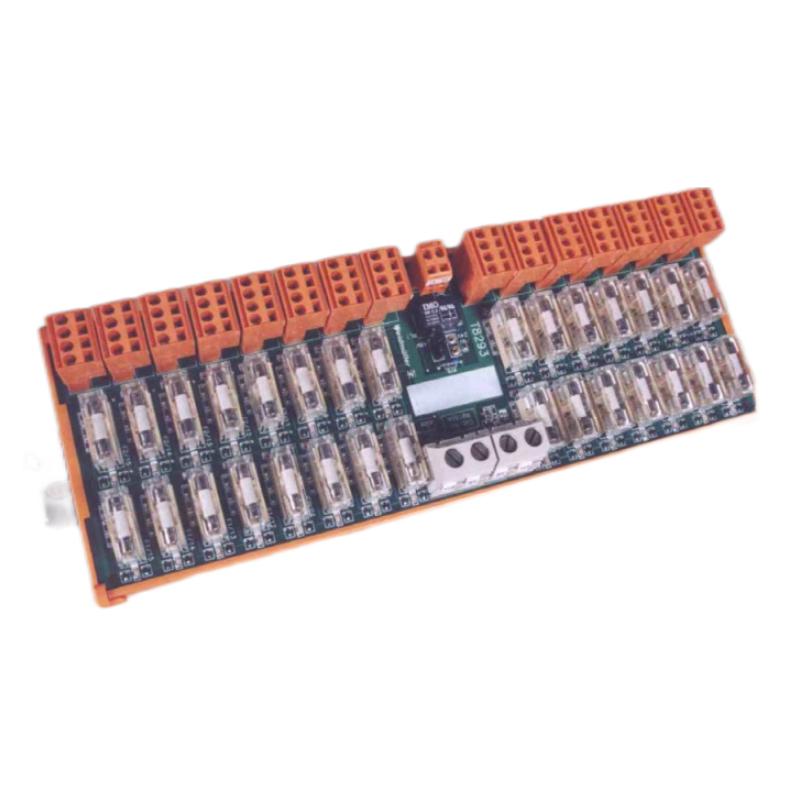
When engineers see the ICS Triplex T8293 Power Distribution Unit, their first reaction is usually relief.
Two feeds.
Clear separation.
Redundant power paths.
It looks like certainty.
In practice, it often introduces the most dangerous thing a safety system can have: false confidence.
Redundancy in safety systems is not about survival.
It is about controlled failure.
The T8293 is frequently installed with the assumption that if one power path degrades, the other will simply take over.
That assumption is incomplete.
What actually matters is how that takeover occurs—and whether the system still understands itself during the transition.
In more than one real-world incident, both power feeds were technically available.
Voltage was present.
Current capacity was sufficient.
Nothing had “failed” electrically.
Yet the system entered an undefined state.
Why?
Because power was available without hierarchy.
The T8293 enforces hierarchy.
If that hierarchy is misunderstood, redundancy becomes a liability.
Engineers often underestimate how sensitive safety systems are to asymmetry.
One feed slightly cleaner.
One reference marginally different.
One grounding path longer than the other.
The T8293 does not attempt to normalize these differences.
It exposes them.
That exposure is often mistaken for instability.
A common field practice is to test redundancy by pulling one feed and watching the system stay alive.
If it does, the test is considered passed.
This test proves almost nothing.
What matters is what happens before the feed is removed and after it returns.
If the system hesitates, reorders, or misinterprets authority, the redundancy is cosmetic.
The T8293 is designed to surface that discomfort.
I have seen engineers replace a “problematic” T8293 with a simpler distribution solution.
The system became quieter.
Trips disappeared.
Everyone relaxed.
Months later, a non-power-related fault triggered a cascading failure that the original architecture would have contained.
The redundancy had been decorative, not structural.
What experienced safety architects learn—often the hard way—is that redundancy multiplies assumptions.
Every additional path doubles the number of states the system must reason about.
The T8293 does not simplify that problem.
It insists that it be acknowledged.
There is an uncomfortable truth about dual power systems:
They do not make systems safer by default.
They make errors harder to notice until the moment coordination matters most.
The T8293’s behavior often feels “overly strict” precisely because it refuses to hide that complexity.
When evaluating a T8293-related issue, the right question is rarely:
“Is power redundant?”
The right question is:
“Does the system still agree on who is in charge when redundancy is active?”
If the answer is unclear, redundancy is already working against you.
One senior engineer summarized it after a long outage investigation:
“Nothing was wrong with either power supply.
The mistake was believing that two truths automatically agree.”
The T8293 exists to challenge that belief.