 Excellent PLC


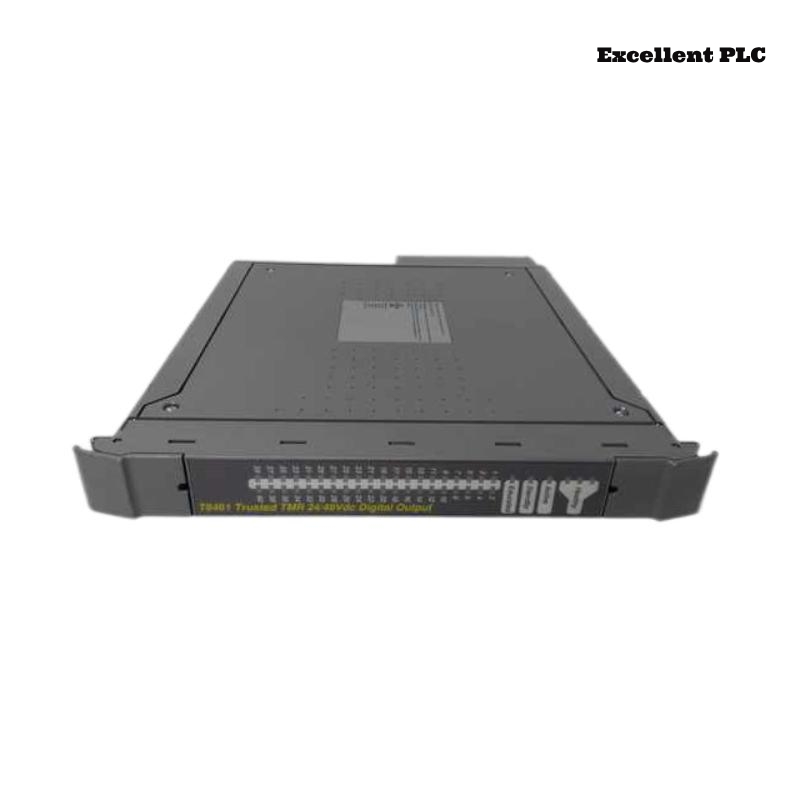
The ICS Triplex T8461 VDC digital output module is often treated as the simplest part of a safety system.
It drives solenoids.
It energizes relays.
It opens or closes circuits.
But in real safety analysis, digital outputs are where discipline matters most.
Because once an output acts, the physical world follows.
Safety Outputs Are Commitments
In control systems, outputs are instructions.
In safety systems, outputs are commitments.
The T8461 does not merely switch voltage.
It commits the system to a physical consequence.
That is why hesitation is not a flaw—it is a feature.
Why “Fail-Safe” Is Not Just About De-Energizing
Fail-safe is often simplified as “de-energize on fault.”
The T8461 interprets fail-safe more broadly.
It asks:
-
Is this command still valid?
-
Is the system still authorized to act?
-
Are all preconditions still satisfied?
If any answer is unclear, the output does nothing.
And doing nothing is often the safest action available.
Digital Outputs Age Differently Than Inputs
Outputs do not drift quietly.
They accumulate wear.
Contacts pit.
Solenoids heat.
Coils fatigue.
The T8461 monitors not only command logic, but output behavior over time.
An output that technically switches but behaves abnormally raises suspicion.
Why Output Faults Are Often Misunderstood
When a digital output refuses to act, frustration follows.
Logic is correct.
Command is present.
But nothing moves.
The immediate reaction is to blame the module.
In many cases, the T8461 is enforcing a boundary that operators no longer remember was there.
Redundancy Is About Permission, Not Power
Redundant outputs are often misunderstood as extra strength.
In safety systems, redundancy is about permission.
Multiple channels must agree that action is justified.
If agreement collapses, power is withheld.
The T8461 does not “vote to act.”
It votes to allow action.
Field Bypasses Create Long-Term Risk
Temporary bypasses are common during commissioning or maintenance.
Jumpers.
Forces.
Overrides.
If these are not properly removed or documented, the T8461 eventually becomes the only component still enforcing original intent.
That enforcement feels inconvenient.
But it is intentional.
Why Replacing the Module Rarely Changes Behavior
Swapping a T8461 may restore output temporarily.
But if authorization logic or wiring assumptions are compromised, the new module behaves exactly like the old one.
Because the problem was never hardware.
It was permission.
How Experienced Engineers Approach Digital Outputs
Engineers who trust safety systems do not rush outputs.
They:
-
test negative cases intentionally
-
verify de-energized states under fault
-
respect refusal as meaningful feedback
They know that outputs should act only when silence would be more dangerous.
When Not Acting Prevents Escalation
In several safety incident reviews, one critical moment stands out:
The output did not energize.
At first, this looked like failure.
Later, it was recognized as restraint.
The system refused to escalate a situation it could no longer fully understand.
A Quiet Truth About Safety Outputs
Digital outputs in safety systems are not about decisiveness.
They are about restraint.
As one commissioning engineer said after a tense validation test:
“The best thing it did today
was nothing.”
The T8461 is built to make that choice reliably.