 Excellent PLC


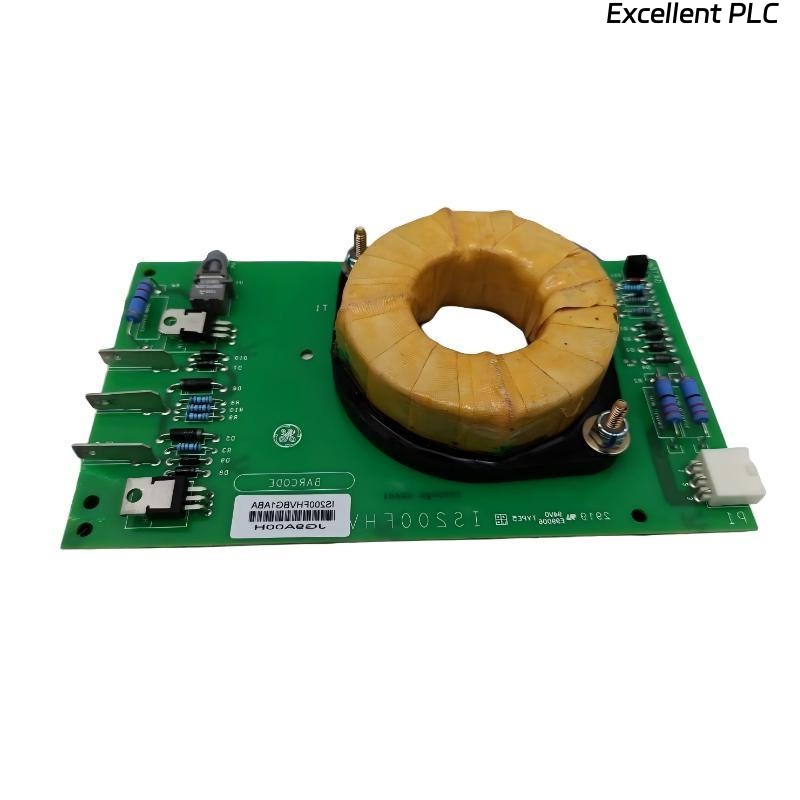
The GE IS200FHVBG1ABA is a high-voltage feedback interface board used in GE Mark VI / Mark VIe systems.
Although installation looks straightforward on paper, many of the long-term reliability problems seen in the field are caused by small oversights during mounting, configuration, or initial testing.
This is not a manual rewrite. It reflects how experienced engineers actually approach the board in real installations.
Installation Is Less About Inserting the Board, More About the Environment
Physically installing the IS200FHVBG1ABA is simple, but the board is extremely sensitive to its electrical surroundings.
Before inserting the board, experienced technicians usually pause and check three things:
-
the condition of the backplane connector
-
cabinet grounding continuity
-
airflow around the slot
A clean connector and solid ground reference matter more here than speed.
One GE engineer put it plainly:
“If the FHV board sees noise before it sees logic, you’ll chase ghosts for weeks.”
The board must seat evenly, without force. Any resistance usually means misalignment, not a tight tolerance.
Power and Reference Integrity Matter More Than People Expect
The IS200FHVBG1ABA relies on stable internal references.
If the supply feeding the rack is marginal, the board may appear to install correctly but behave unpredictably later.
In the field, repeated issues often trace back to:
-
slight voltage sag during startup
-
noisy DC rails shared with inductive loads
-
ground offsets between adjacent cabinets
This is why experienced teams verify power stability before the first power-up with the new board installed, not after the alarm appears.
About “Code”: Configuration Matters More Than Firmware
The IS200FHVBG1ABA does not usually require standalone firmware loading.
What people loosely call “code” is almost always system configuration and signal mapping inside the Mark VI / VIe environment.
Common configuration-related mistakes include:
-
incorrect channel assignment for feedback signals
-
scaling parameters copied from a different board revision
-
unused channels left floating in logic
-
mismatched expectations between the control logic and physical wiring
A frequent field observation is that the board is electrically healthy, but the control logic is asking it the wrong questions.
As one commissioning engineer said:
“The board isn’t wrong — the logic just doesn’t know what it’s talking to.”
Wiring Discipline Is Critical for This Board
The FHV board interfaces with high-energy or high-sensitivity signals.
Because of this, wiring errors are punished quickly.
Typical problem patterns include:
-
shield grounded at both ends
-
incorrect reference return paths
-
signal cables routed alongside power wiring
-
legacy wiring reused without validation
Even when the system initially runs, these issues often cause failures days or weeks later.
This board does not tolerate “almost correct” wiring.
Initial Testing Is About Watching Behavior, Not Just Status
After installation, seasoned engineers don’t rush the system back into full operation.
They tend to observe:
-
board temperature during the first hours
-
signal stability over time, not just at startup
-
consistency across repeated start/stop cycles
-
absence of intermittent logic or diagnostic warnings
If test points or monitoring tools are available, signal waveforms are checked—not just presence, but quality.
A board that passes cold tests but drifts when warm is already warning you.
What Experienced Teams Verify Before Calling It “Done”
Before handing the system back to operations, experienced teams usually ensure:
-
no unexplained diagnostics appear after extended runtime
-
cabinet temperature remains stable
-
connected devices behave consistently under load changes
-
no logic masks or temporary bypasses are left in place
These checks are rarely written down, but they prevent repeat failures.
Practical Field Conclusion
The IS200FHVBG1ABA is not fragile, but it is intolerant of poor discipline.
Most problems blamed on the board are actually caused by:
-
power quality issues
-
grounding mistakes
-
configuration assumptions
-
rushed commissioning
Or, as a veteran GE technician once summarized:
“If you install it calmly and test it patiently, the FHV board almost never gives trouble.”