 Excellent PLC


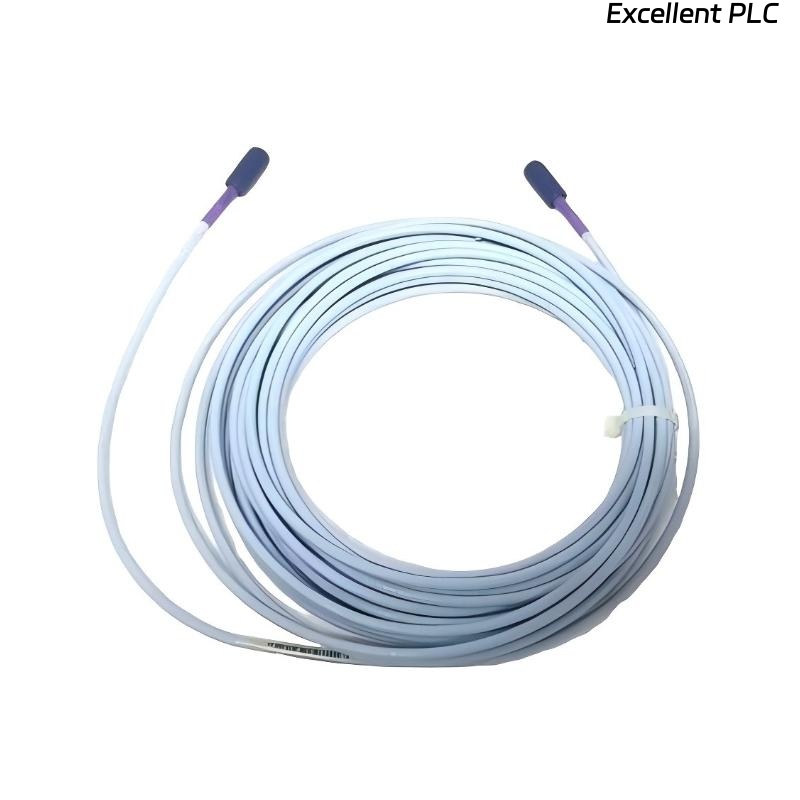
Installing the Bently Nevada 330908-00-40-05-02-05 proximity probe requires careful attention to mechanical alignment, cabling, and sensor clearance. This probe monitors shaft position and vibration, providing critical data to the 3300 NSv monitoring system.
The first step is mounting location verification. The probe must be installed on a rigid, vibration-free surface close to the rotating shaft. Even minor looseness in the mounting can cause measurement errors. I typically use the OEM-supplied probe mounting bracket and torque it according to the Bently Nevada 3300 Installation Manual (2020).
Next, I focus on probe-to-shaft clearance. For this model, proper air gap is essential—usually between 0.002 and 0.005 inches. Too close risks contact with the shaft, while too far reduces signal amplitude. I use a feeler gauge and dial indicator to set the gap precisely.
Cable routing and shielding are often overlooked but critical. The probe uses coaxial cable to transmit high-frequency AC signals. I route the cable away from power lines and other sources of electromagnetic interference, securing it with cable ties but avoiding sharp bends that could damage the coax. Clean and firmly seated connectors are essential for accurate signal transmission.
After mounting and cabling, I perform initial system verification. Power up the 3300 NSv monitor and observe the proximity probe readings. A correct installation shows stable amplitude and phase, with no erratic spikes. If readings are unstable, I re-check the gap, alignment, and cable integrity.
Field tip: Don’t rush the mechanical mounting or clearance adjustments. Even a high-quality 330908 probe will produce unreliable data if alignment and gap are off by fractions of a millimeter.
References:
-
Bently Nevada. 3300 NSv Series Installation and Operation Manual, 2020.
-
API. API 670: Machinery Protection Systems, 2014.