 Excellent PLC


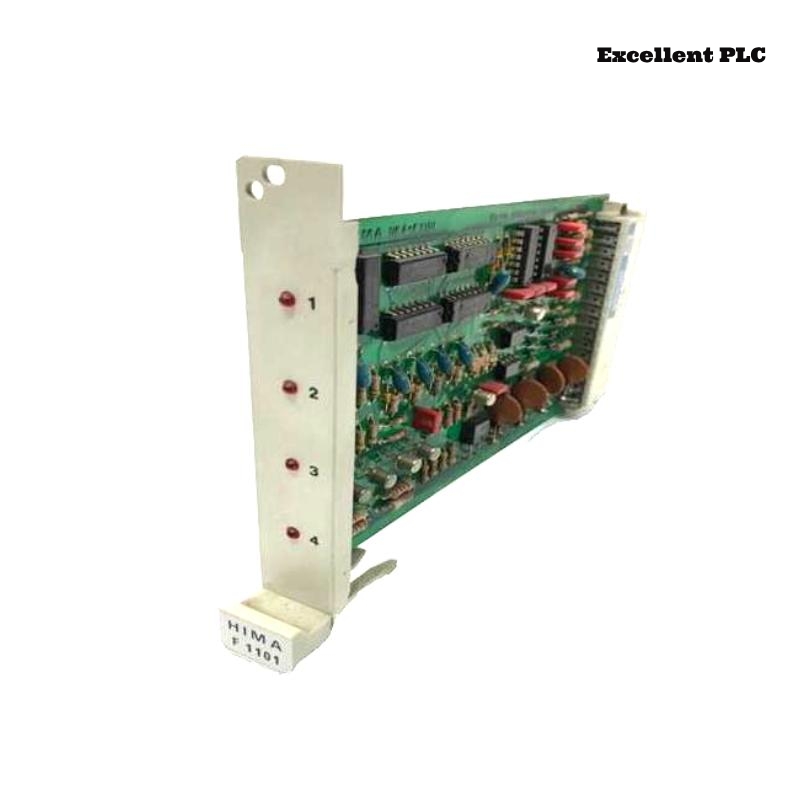
Failure Pattern Observed in Operation
In a high-density Planar F cabinet, operators noticed that several outputs driven by the Black Horse F1101 Switch Amplifier Module would drop out after prolonged operation. The failure did not occur immediately after startup but appeared after the cabinet had been running under full load for several hours. Following a short power-down period, normal output behavior temporarily returned.
This thermal-dependent behavior is a classic indicator of heat-related stress or thermal protection mechanisms affecting internal circuitry.
How the Fault Was Reproduced
To confirm the thermal nature of the problem, maintenance engineers performed a controlled observation:
The output dropouts consistently correlated with elevated cabinet temperatures, confirming that the fault mechanism was thermally driven rather than purely electrical.
Engineering Interpretation of the Root Cause
Switch amplifier modules like the F1101 contain output drivers and protective components that dissipate heat under load. In cabinets with limited airflow or densely packed modules, localized hotspots can form.
Over time, repeated thermal cycling accelerates component aging, increases internal resistance, and may trigger internal thermal protection features. In this case, insufficient ventilation and high ambient temperature combined to push the module beyond its optimal thermal operating envelope.
Corrective Actions Taken
After improving cabinet airflow and replacing the affected module, the intermittent output dropouts were no longer observed under equivalent operating conditions.
Verification Under Normal Operation
Stable operation across extended periods confirmed that thermal stress was the dominant contributor to the observed failure pattern.
Preventive Design Considerations
Thermal issues in control cabinets are often systemic rather than component-specific. Design-level improvements such as thermal zoning, adequate spacing between high-dissipation modules, and proactive thermal monitoring can prevent similar faults across multiple modules.
Including thermal considerations in cabinet design reviews is especially important for Planar F systems deployed in warm industrial environments or enclosed control rooms with limited cooling capacity.
Closing Notes
Intermittent output failures on the Black Horse F1101 Switch Amplifier Module can be driven by overheating and cumulative thermal stress. Identifying thermal patterns, improving cabinet airflow, and addressing heat concentration points are essential steps to restore stable operation and protect module longevity in Planar F system installations.