 Excellent PLC


By Anika Shah – Industrial Power Quality Engineer
Electrical noise is invisible but deadly.
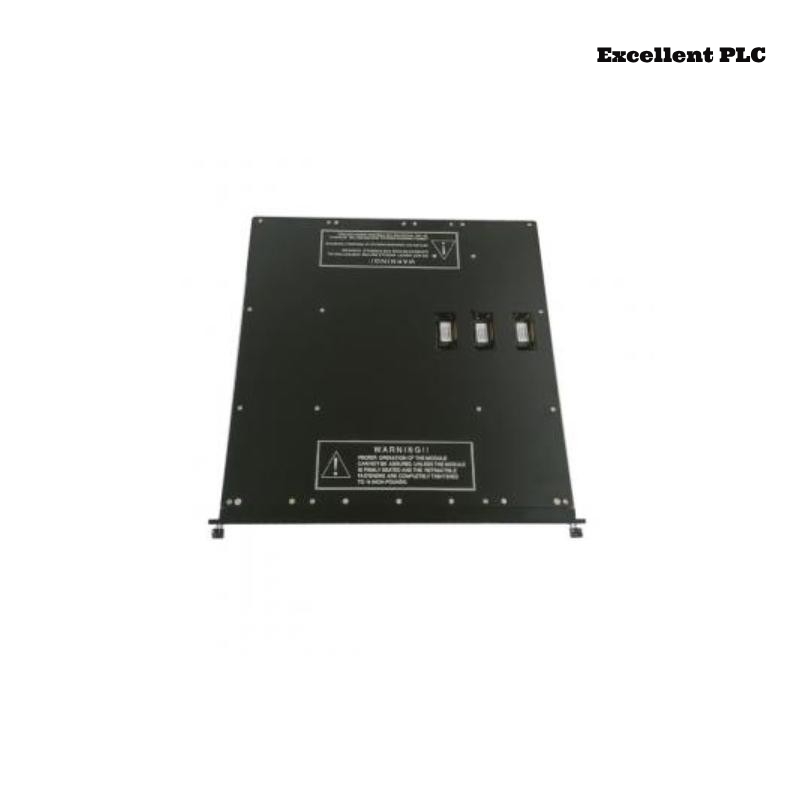
The Triconex 3007 MPM may appear perfectly healthy, yet even minor power supply disturbances can temporarily engage its protective logic.
Observed Scenario
-
High-power motors and drives in the same cabinet
-
24 VDC bus feeding CPU and I/O modules
-
Switching events caused brief voltage spikes (~200–300 μs)
-
CPU entered protective hold for milliseconds
-
Output modules temporarily paused
-
Redundancy channels maintained voting integrity
No alarms were logged, yet operators noticed a “blink” in output response.
Root Cause Analysis
-
Internal voltage monitoring detects transients above safe thresholds
-
CPU protective logic halts non-critical tasks
-
Redundant channel comparison prevents unsafe outputs
-
Effect is deterministic: milliseconds of pause, no permanent fault
Even though everything “looks fine,” the CPU prioritizes safety over continuity.
Verification Method
-
Pause occurs consistently under transient conditions
-
Output resumes automatically
-
Redundant voting prevents safety compromise
Recommendations
-
Filter and decouple DC supply near CPU module
-
Avoid routing noisy power lines near CPU
-
Monitor and log voltage transients for preventive maintenance
-
Include transient-induced delay margins in control loops
Key Takeaways
-
Power quality directly affects CPU timing behavior
-
Protective logic can cause deterministic, brief output delays
-
Redundancy preserves safety even under transient stress
-
Understanding electrical environment is as important as software configuration
Closing Note
The Triconex 3007 MPM doesn’t fail due to voltage ripple — it reacts predictively.
In industrial automation, milliseconds of pause can be a sign of intelligence, not weakness.
— Anika Shah