 Excellent PLC


Overview
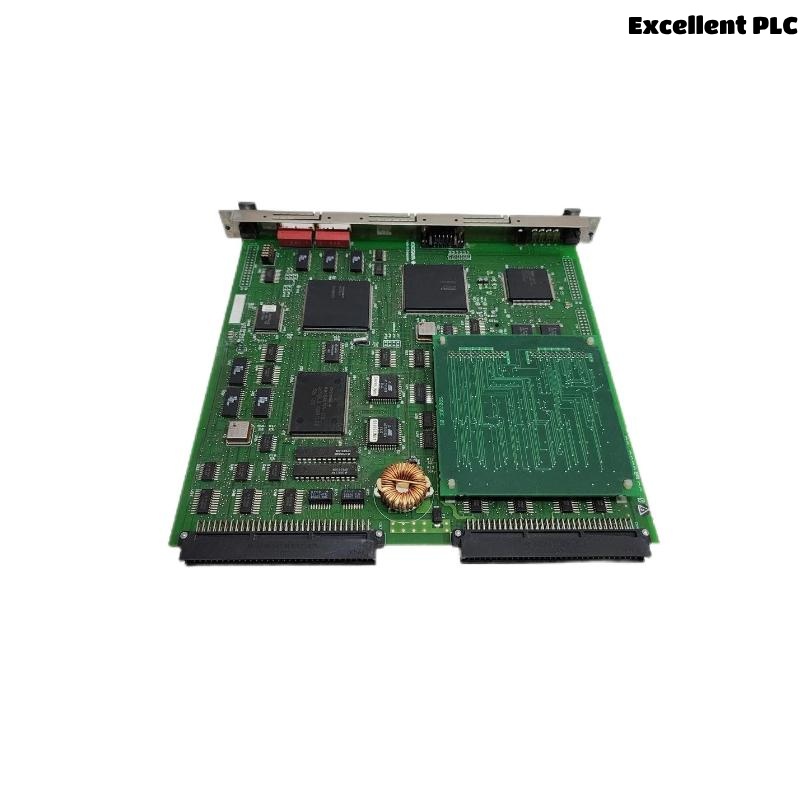
The Yokogawa CP701 CPU is widely implemented in DCS-based industrial automation systems. While the platform is reliable, its communication links can become vulnerable when exposed to unmitigated electromagnetic interference (EMI). This case study documents a real-world scenario where EMI caused data loss between the CP701 CPU and remote I/O modules, leading to intermittent process instability and operator alarms.
Industry Context
This issue was documented in a heavy automotive stamping facility utilizing high-current servo presses. These machines generate intense EMI due to:
-
Rapid current switching
-
High-frequency servo drive controllers
-
Non-linear power loads
-
Magnetic field coupling from transformers
The affected CP701 was part of a control panel positioned only 2.1 meters from a stamping press power cabinet.
Symptoms Observed in Operation
The operations team reported multiple abnormal conditions during peak production:
Key System Symptoms
-
Intermittent I/O packet loss during press cycles
-
Transient remote I/O “OFFLINE” status in SCADA
-
Occasional missing sensor readings
-
No physical damage or thermal warnings in CPU
-
No watchdog reset or firmware errors
SCADA Alarm Logs Contained Entries Such As:
Notable Pattern
The failures aligned tightly with heavy-duty stamping cycles, indicating electromagnetic interference rather than internal hardware failure.
Root Cause Analysis
After conducting signal integrity testing and EMI scanning, engineers identified multiple contributing factors:
1. EMI Coupling Through Unshielded Cable Runs
The Remote I/O bus cables were routed parallel to 480V motor cables for over 11 meters.
Result: Inductive and capacitive coupling during current spikes.
2. Insufficient Ground Bonding
The panel lacked a dedicated single-point grounding strategy, causing:
-
Ground loops
-
Common-mode noise buildup
-
Increased CRC communication errors
3. Absence of Ferrite and Shield Termination
Shield braids were connected at both ends instead of one, increasing noise circulation instead of dissipating it.
Diagnostic Approach
The engineering team followed an EMI troubleshooting workflow:
Step 1 — Oscilloscope Bus Probing
A differential probe captured high-frequency noise peaks on the communication lines:
Step 2 — EMI Spectrum Scan
A handheld spectrum analyzer confirmed EMI emission from press drive cabinets.
Step 3 — Packet Error Counter Logging
CRC error counters spiked during press cycles, confirming Packet Layer disturbance rather than protocol or firmware defects.
Corrective Measures Implemented
Once EMI was identified, mitigation strategies were applied:
✔ Cable Routing Improvements
-
Separated bus cable from motor wiring by > 50 cm
-
Routed across different cable trays
✔ Shielding & Termination Fixes
-
Terminated cable shield at one end only
-
Added EMI-rated ferrite cores near CPU and I/O terminations
-
Upgraded to twisted-pair low-capacitance industrial cable
✔ Grounding Improvements
-
Established single-point ground
-
Bonded all metallic enclosures
-
Added equipotential bonding straps
✔ Surge & Filtering Hardware
Installed:
-
Line filters
-
Isolation transformers
-
Transient suppression devices
After modifications, communication stability returned to nominal.
Post-Implementation Results
Engineers monitored the system for 4 weeks under full production loads.
Performance Metrics Before vs After
| Parameter | Before Fix | After Fix |
|---|---|---|
| CRC Bus Errors/day | 1,200+ | <10 |
| I/O Offline Events | 3–8/day | 0 |
| Operator Alarms | Frequent | None |
| Production Impact | Medium | None |
The CP701 remained stable, proving the failure mechanism was environmental EMI, not CPU hardware or firmware.
Preventive Design Recommendations
To avoid future EMI-related failures, we recommend:
Engineering Guidelines
-
Maintain ≥300mm separation from high-current cables
-
Implement star grounding topology
-
Terminate shields at one point only
-
Use twisted-pair industrial communication cable
-
Apply ferrite beads at both ends of communication runs
-
Keep control cabinets away from servo drives & VFDs
Monitoring Tools
-
Install bus error counters on SCADA dashboards
-
Periodically run spectrum scans in high-power facilities
Conclusion
Electromagnetic interference can silently disrupt communication between Yokogawa CP701 CPUs and remote I/O modules, especially in high-power industrial environments. While the CP701 hardware is robust, EMI-aware cable routing, grounding practices, and shielding strategies are essential for long-term reliability and production stability.
Proper EMI engineering not only eliminates communication faults but also extends the operational lifespan of industrial automation assets.