 Excellent PLC


By Laura Bennett – Lead Control Systems Architect
When an RS485 network fails completely, troubleshooting is usually straightforward.
When it fails partially, responsibility becomes blurry.
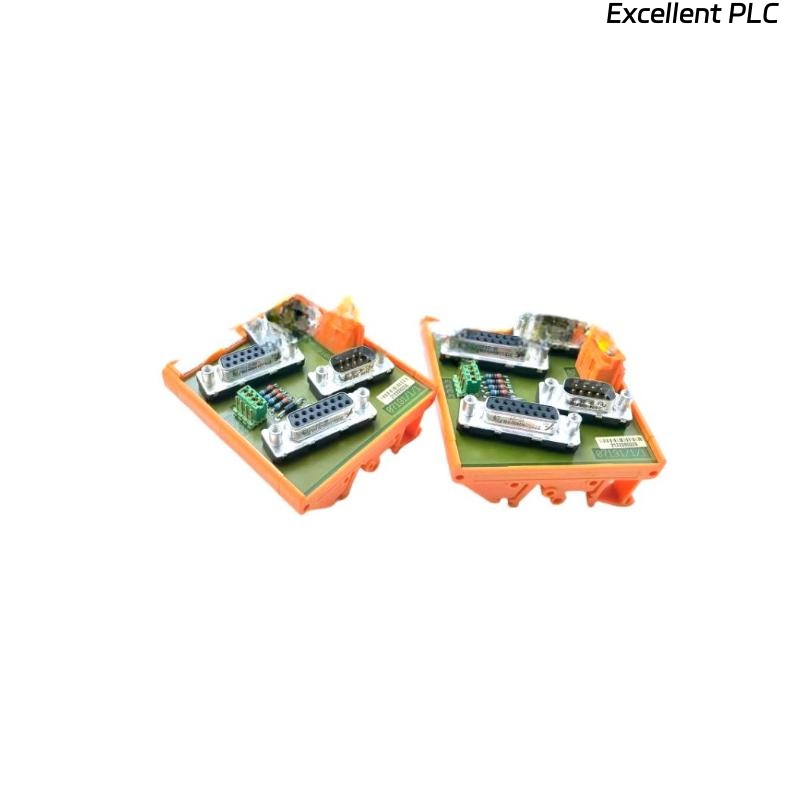
This case involved a Honeywell 07191/1/1 RS485 communication board in a system where communication never fully stopped — and that made it far more dangerous than a clean failure.
What the System Was Supposed to Be
-
One RS485 master (Honeywell DCS via 07191/1/1)
-
Multiple passive field devices
-
Strict master–slave polling
-
Deterministic timing
That’s the textbook model.
That’s not what we had.
What Actually Happened
During a system expansion, a third-party skid was integrated.
The skid vendor added their own controller — connected to the same RS485 trunk.
No one noticed.
Now the bus had:
-
Two masters
-
Independent polling logic
-
No arbitration
-
No collision detection
And RS485 does not complain about this.
Observed Symptoms
-
Data updates stopped intermittently
-
Values froze, then jumped
-
Communication recovered on its own
-
No hardware faults reported
-
No consistent pattern
From the DCS perspective, the 07191/1/1 board was functioning.
From the bus perspective, it was fighting for control.
Why Diagnostics Didn’t Catch It
RS485 has no concept of “ownership.”
When two masters transmit:
-
Frames overlap
-
Replies collide
-
Devices respond unpredictably
-
Valid data occasionally slips through
To the communication board:
-
TX succeeded
-
RX activity detected
-
No electrical fault
Nothing violates the rules — because there are very few rules.
The Telltale Sign
A protocol capture revealed something subtle:
-
Overlapping request frames
-
Replies truncated mid-frame
-
Identical device responding to different masters
-
Timing jitter far beyond normal limits
This was not noise.
This was contention.
Why the 07191/1/1 Looked Guilty
Because it was visible.
-
It was the DCS interface
-
Operators blamed the card
-
Maintenance wanted to replace it
But replacing it would not have solved anything.
The conflict lived on the wire.
Corrective Actions
Architectural correction
-
Removed second master from the RS485 trunk
-
Converted skid controller to passive mode
-
Enforced single polling authority
Configuration safeguard
Operational policy
-
RS485 networks documented as single-master only
-
Any expansion requires communication topology review
Outcome
-
Communication stabilized immediately
-
No further freezes or jumps
-
Same 07191/1/1 board remained in service
-
No hardware replacement required
Responsibility Lesson
This was not:
-
A hardware defect
-
A firmware bug
-
A wiring issue
This was an architectural violation.
And communication boards are always blamed first when architecture is ignored.
Final Reflection
The Honeywell 07191/1/1 RS485 communication board behaved exactly as designed.
It transmitted when told to transmit.
It listened when it could.
The real failure was assuming RS485 would enforce discipline.
It doesn’t.
— Laura Bennett