 Excellent PLC


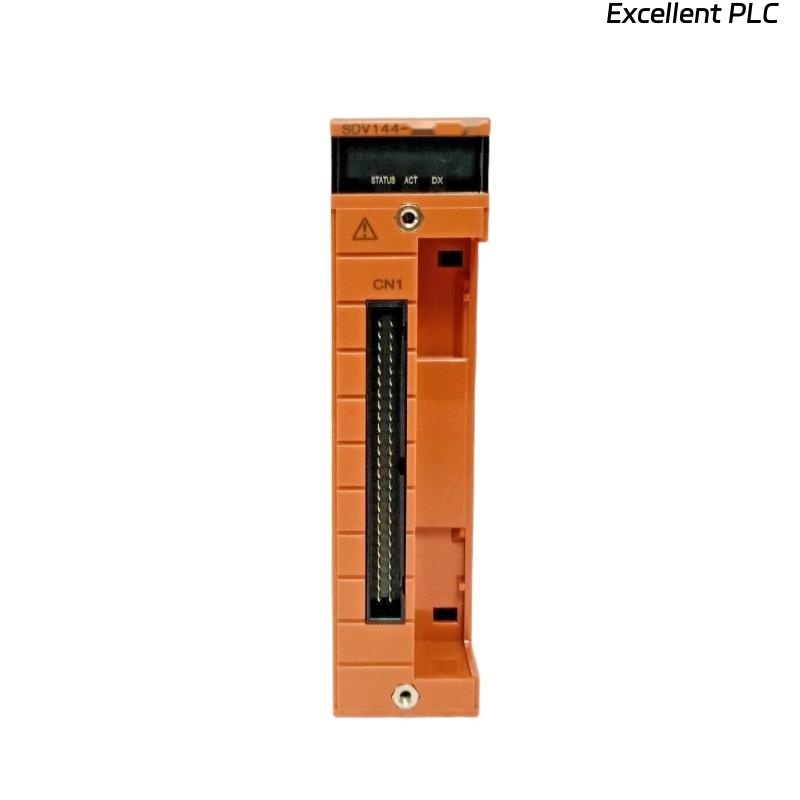
The Yokogawa SDV144 digital input module is often described as a simple interface between field signals and control logic.
In practice, it plays a far more influential role: it defines what the system believes about the real world.
In many Yokogawa installations, system behavior is shaped less by control logic and more by how confidently the SDV144 translates external states into internal truth.
Where the Control System’s Reality Begins
From the system’s perspective, the SDV144 is not reading “contacts” or “voltages.”
It is establishing facts.
Once a signal enters through the SDV144, it becomes part of the system’s decision-making fabric.
Every interlock, sequence, alarm, and protective action downstream depends on the reliability of this translation.
This is why experienced engineers treat digital input modules as the boundary of trust between the physical plant and the control system.
Filtering Noise Without Hiding the Truth
One of the less visible but critical roles of the SDV144 is noise discrimination.
Field environments are rarely clean.
Mechanical contacts bounce, long cables act as antennas, and grounding conditions evolve over time.
The SDV144 must:
-
suppress meaningless transitions
-
preserve legitimate state changes
-
maintain timing integrity
-
avoid creating false certainty
Doing this consistently is harder than it looks—and it directly affects how stable the entire system feels to operators.
Stability Is More Important Than Speed
In many Yokogawa designs, the SDV144 is intentionally conservative.
It does not chase fast transitions or attempt to interpret ambiguous states.
Instead, it prioritizes repeatability.
This design choice influences:
-
alarm behavior
-
sequence execution
-
interlock robustness
-
operator confidence
Systems that “feel calm” in operation often owe that quality to disciplined digital input handling rather than clever logic.
Digital Inputs Shape System Trust More Than Outputs
Outputs get attention because they move equipment.
Inputs deserve respect because they decide when movement is allowed.
The SDV144 often participates indirectly in:
-
permissive chains
-
safety-related decisions (even in non-SIS systems)
-
startup and shutdown logic
-
fault detection
If digital inputs are unstable, the entire system becomes cautious—or worse, unpredictable.
Why Digital Input Modules Expose System Weaknesses
The SDV144 rarely fails loudly.
Instead, it reveals issues elsewhere:
-
grounding inconsistencies
-
wiring quality problems
-
contact degradation in field devices
-
environmental stress
When engineers complain about “unreliable signals,” the module is usually reporting accurately.
The discomfort comes from discovering that the field reality is messier than assumed.
Integration Matters More Than Individual Channels
In a full Yokogawa system, the SDV144 does not operate in isolation.
Its behavior is shaped by:
-
power distribution
-
cabinet grounding
-
bus communication quality
-
system timing
As systems expand, these interactions become more important than the specifications of any single channel.
How Experienced Engineers Think About the SDV144
Engineers who have lived with Yokogawa systems for years rarely describe the SDV144 as “just DI.”
They think of it as:
-
a truth filter
-
a stability anchor
-
an early warning sensor
-
a trust boundary
This mindset leads to better design decisions, calmer operation, and fewer late-night troubleshooting sessions.
A System-Level Conclusion
From long-term operational experience, the most accurate way to describe the SDV144’s role is simple:
-
it does not control the plant
-
it defines what the system believes about the plant
-
everything else builds on that belief
As one senior Yokogawa engineer once summarized it:
“If your digital inputs are honest and stable, the rest of the system has a chance to behave intelligently.”