 Excellent PLC


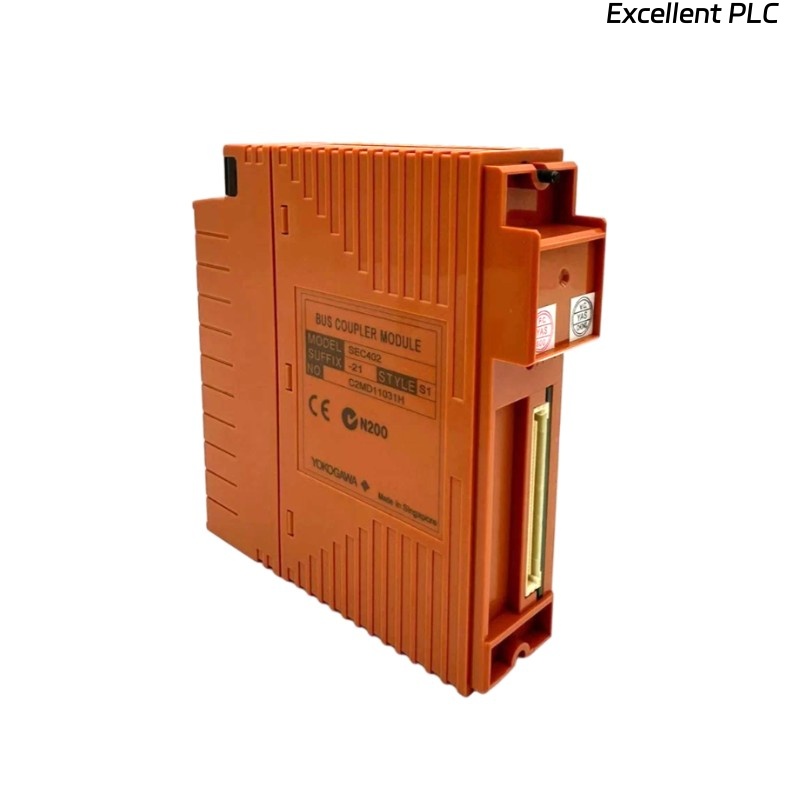
The Yokogawa SEC402-21 bus coupler module rarely fails in isolation.
When it reports a fault or behaves abnormally, it is often reacting to conditions elsewhere in the system rather than suffering an internal defect.
This is why effective troubleshooting starts with interpretation, not replacement.
First, Understand What Kind of “Fault” You Are Seeing
One of the most common mistakes is treating every SEC402-21 fault as hardware failure.
In practice, field symptoms usually fall into three broad categories:
-
the module is detected but not communicating
-
communication is intermittent or unstable
-
the module drops out only during startup or load changes
Each pattern points to a different class of root causes.
Experienced engineers pay close attention to when the fault appears, not just that it appears.
Power and Reference Stability Come Before Everything Else
Before touching the bus, seasoned Yokogawa engineers verify the local power environment.
The SEC402-21 may appear powered while still operating outside acceptable reference conditions.
Common findings include:
-
voltage sag during initialization
-
shared power rails introducing noise
-
degraded power connectors
-
reference drift between cabinets
If power integrity is marginal, no amount of bus adjustment will produce stable communication.
Grounding Issues Masquerade as Bus Failures
Many SEC402-21 troubleshooting cases ultimately trace back to grounding inconsistencies.
Typical real-world discoveries:
-
multiple ground points creating small potential differences
-
shields bonded differently across bus segments
-
temporary maintenance grounds left in place
-
cabinet expansions without ground revalidation
The bus coupler detects these inconsistencies as unreliable conditions and reacts conservatively.
The module is not confused—it is refusing ambiguity.
Mechanical Interfaces Are Easy to Overlook
Because the SEC402-21 is usually not moved once installed, mechanical degradation is often overlooked.
Field investigations frequently uncover:
-
slight backplane connector oxidation
-
uneven seating from earlier maintenance
-
guide rail deformation
-
accumulated dust affecting contact quality
Reseating the module sometimes restores operation, but experienced engineers treat this as a clue, not a solution.
Cabling and Routing Still Matter
Bus couplers amplify poor cabling practices.
During troubleshooting, engineers often find:
-
excessive cable tension at connectors
-
routing too close to power conductors
-
compromised shielding
-
connectors reused beyond their service life
Continuity tests may pass, yet signal integrity is already compromised.
Configuration Conflicts Can Look Like Hardware Faults
Logical inconsistencies are a frequent source of confusion.
Examples include:
-
address conflicts introduced during expansion
-
partial system updates
-
mismatched bus topology definitions
-
legacy assumptions applied to newer hardware
From the outside, the SEC402-21 appears faulty.
From the system’s point of view, it is simply rejecting an invalid participant.
When the Module Itself Is Actually Defective
True internal failure of the SEC402-21 does occur, but it is less common than assumed.
Clear indicators include:
-
identical symptoms across multiple known-good environments
-
visible thermal or electrical damage
-
persistent failure after power, ground, cabling, and configuration have been validated
Only at this stage do experienced teams confidently replace the module.
How Seasoned Engineers Structure Their Troubleshooting
Rather than jumping between symptoms, experienced Yokogawa engineers work outward:
-
confirm power and reference stability
-
validate grounding end-to-end
-
inspect mechanical and cabling interfaces
-
verify configuration consistency
-
substitute hardware only after the environment is trusted
This sequence minimizes repeated failures and false conclusions.
A Field-Tested Conclusion
From long-term experience, the most reliable way to troubleshoot an SEC402-21 is to remember:
-
bus couplers are conservative by design
-
most “faults” are environmental or systemic
-
replacing hardware without understanding conditions invites recurrence
As one senior Yokogawa engineer put it:
“If a bus coupler fails, assume the system changed before you assume the module did.”