 Excellent PLC


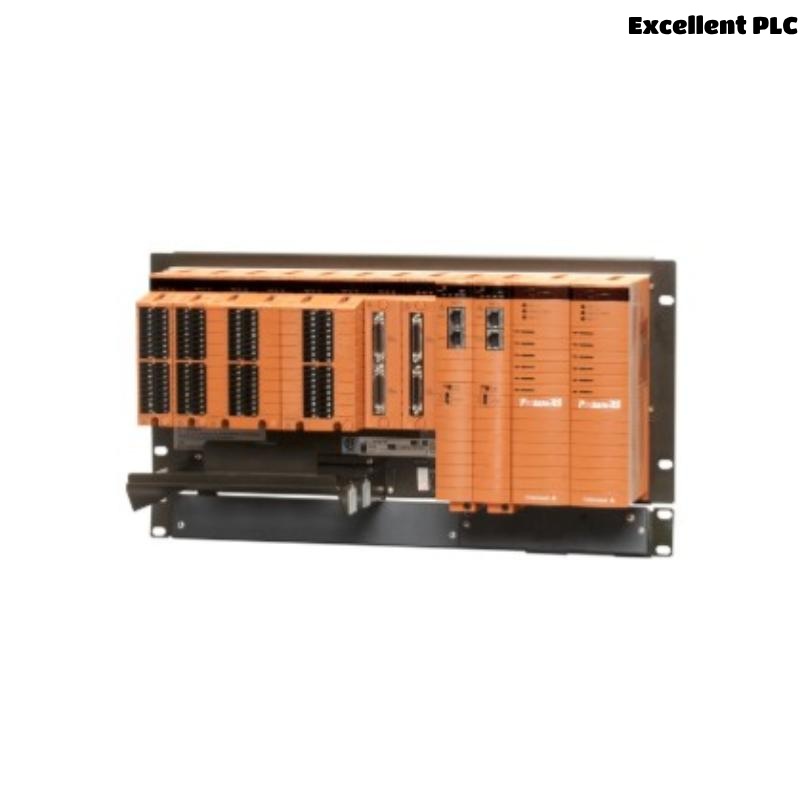
The Yokogawa S2SC70D is not a component that fails quietly.
When a safety control unit reports a failure or drops out of service, it is never just a local event—it immediately raises questions about system integrity, assumptions made during design, and how margins have evolved over time.
Engineers familiar with Yokogawa safety systems know that a genuine S2SC70D failure is relatively rare.
When it happens, it deserves careful interpretation rather than an automatic replacement response.
“Failure” Can Mean Very Different Things
One of the first lessons learned in the field is that a reported failure on the S2SC70D does not always indicate internal hardware damage.
Depending on system context, it may reflect:
-
a detected inconsistency within redundant logic paths
-
loss of a trusted reference (power, clock, or communication)
-
protection mechanisms reacting to abnormal external conditions
-
self-diagnostics responding to cumulative stress rather than an abrupt fault
In other words, the unit may be doing exactly what it was designed to do: refusing to operate under uncertain conditions.
As one safety engineer put it:
“In Yokogawa safety systems, refusal to run is often a sign of health, not failure.”
Power and Reference Integrity Are Non-Negotiable
The S2SC70D is intolerant of marginal power conditions.
Even brief disturbances—often invisible to standard monitoring—can trigger a safety response.
Field investigations frequently uncover:
-
momentary voltage dips during load transitions
-
shared power sources with non-safety equipment
-
degraded connectors introducing micro-interruptions
-
reference ground shifts between cabinets
What makes these issues difficult is that the system may recover, but the safety unit records the event and reacts conservatively.
Environmental Stress Builds Slowly, Then Shows Suddenly
Many S2SC70D “failures” appear after years of stable operation.
This timing often points away from sudden defects and toward gradual environmental stress.
Common contributors include:
-
long-term thermal cycling
-
cabinet airflow degradation
-
humidity ingress during seasonal changes
-
conductive dust accumulation
The unit may tolerate these conditions for a long time—until one additional disturbance pushes it beyond its comfort zone.
Wiring and Interfaces: The Quiet Risk
Because the S2SC70D interfaces with multiple safety signals, its reliability depends heavily on wiring discipline.
Field experience shows that issues such as:
-
aging insulation
-
reused terminals and ferrules
-
inconsistent shielding practices
-
undocumented modifications
can all introduce uncertainty that the safety logic cannot accept.
Unlike standard control systems, safety logic does not attempt to “work around” ambiguity.
Why Immediate Replacement Is Often the Wrong First Move
Replacing the S2SC70D may restore operation temporarily, but experienced teams are cautious.
If the underlying stress remains:
-
the replacement unit may behave the same way
-
trust in the safety system erodes
-
root causes remain hidden
Seasoned engineers often treat the first failure as a diagnostic opportunity rather than a maintenance task.
How Experienced Safety Teams Respond
Instead of rushing, experienced Yokogawa teams typically:
-
stabilize and monitor power sources over time
-
verify grounding and reference continuity
-
isolate external circuits where possible
-
review recent environmental or operational changes
-
inspect the failed unit for patterns rather than damage
This approach aligns with the philosophy behind safety systems: predictability over speed.
A Broader Safety-System Perspective
Working with the S2SC70D reinforces a principle that applies to all safety controllers:
-
safety systems fail conservatively
-
ambiguity is treated as danger
-
long-term stability matters more than short-term recovery
As one senior safety engineer summarized it:
“When a safety control unit stops, it’s not asking to be replaced — it’s asking to be understood.”