 Excellent PLC


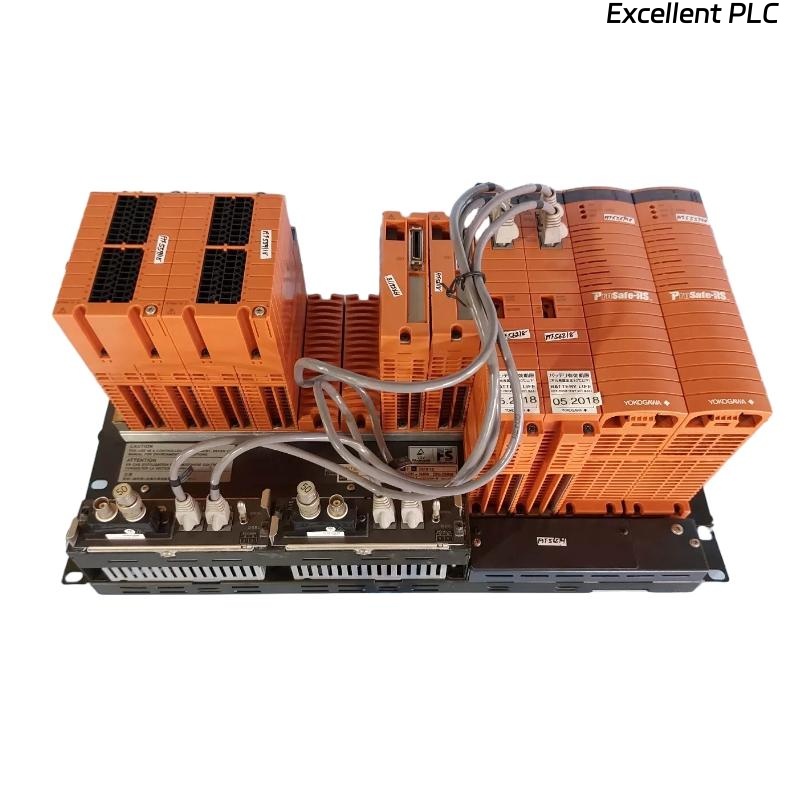
A failure of the Yokogawa SSC10D-F safety control unit is never a neutral event.
In a Yokogawa safety system, “failure” is not the absence of operation—it is a deliberate, conservative response to reduced certainty.
Understanding this distinction is critical before any attempt at repair or replacement.
Safety Control Units Do Not Fail Casually
Unlike standard controllers, the SSC10D-F is designed to stop participating the moment it can no longer guarantee deterministic behavior.
What operators often call a failure is, in many cases, the unit refusing to continue under conditions it no longer trusts.
This design choice explains why the SSC10D-F may appear completely inactive rather than partially functional.
Environmental Assumptions Are Constantly Evaluated
The SSC10D-F continuously validates its operating environment.
It evaluates, among other factors:
-
internal self-diagnostics
-
power stability and sequencing
-
memory integrity
-
timing consistency
-
communication validity
A deviation in any of these areas can trigger a controlled shutdown.
From the system’s perspective, silence is safer than uncertainty.
Power Irregularities Are a Common Trigger
Field experience consistently shows power-related issues at the top of the failure list.
These include:
-
voltage dips during startup
-
unstable redundant power sources
-
degraded connectors or backplane contacts
-
grounding shifts after cabinet modification
Even brief disturbances can be enough for the SSC10D-F to declare itself unfit for operation.
Configuration Mismatch Can Look Like Hardware Failure
Another frequent cause of apparent failure is configuration inconsistency.
If the SSC10D-F detects that its configuration no longer aligns with:
-
the system database
-
its peer units
-
the defined safety logic
it may refuse to execute logic entirely.
In these cases, replacing hardware does nothing to resolve the underlying issue.
Communication Integrity Is Non-Negotiable
Safety communication is validated continuously.
Loss of determinism, incomplete redundancy, or unexpected timing behavior can all cause the SSC10D-F to withdraw from operation.
This is often misinterpreted as a sudden unit failure, especially when communication issues originate elsewhere in the system.
Why “Reset and Retry” Rarely Works
In safety systems, repeated resets without root-cause analysis increase risk.
If the SSC10D-F enters a failed state repeatedly after reset, it is reinforcing the same conclusion: conditions remain unacceptable.
Experienced engineers avoid forcing restarts and instead focus on restoring certainty.
Repair Versus Replacement: A System-Level Decision
Whether the SSC10D-F should be repaired or replaced depends less on the unit itself and more on the context.
If failure is due to:
-
confirmed internal hardware damage
-
persistent memory errors
-
non-recoverable self-diagnostic faults
replacement is appropriate.
If failure is triggered by environmental or configuration factors, repair or replacement alone will not restore operation.
How Experienced Safety Engineers Approach Recovery
Rather than isolating the unit, seasoned teams typically:
-
stabilize power and grounding first
-
verify configuration integrity
-
confirm communication health
-
review recent system changes
-
observe behavior across controlled startups
Only after restoring environmental trust do they attempt to reintroduce the SSC10D-F.
A Safety-System Perspective
From long-term field experience, the most accurate interpretation of an SSC10D-F failure is this:
-
the unit is acting as designed
-
failure indicates lost confidence
-
restoring certainty restores function
As one veteran Yokogawa safety engineer summarized it:
“A safety controller doesn’t fail because it’s weak—it fails because it refuses to guess.”