 Excellent PLC


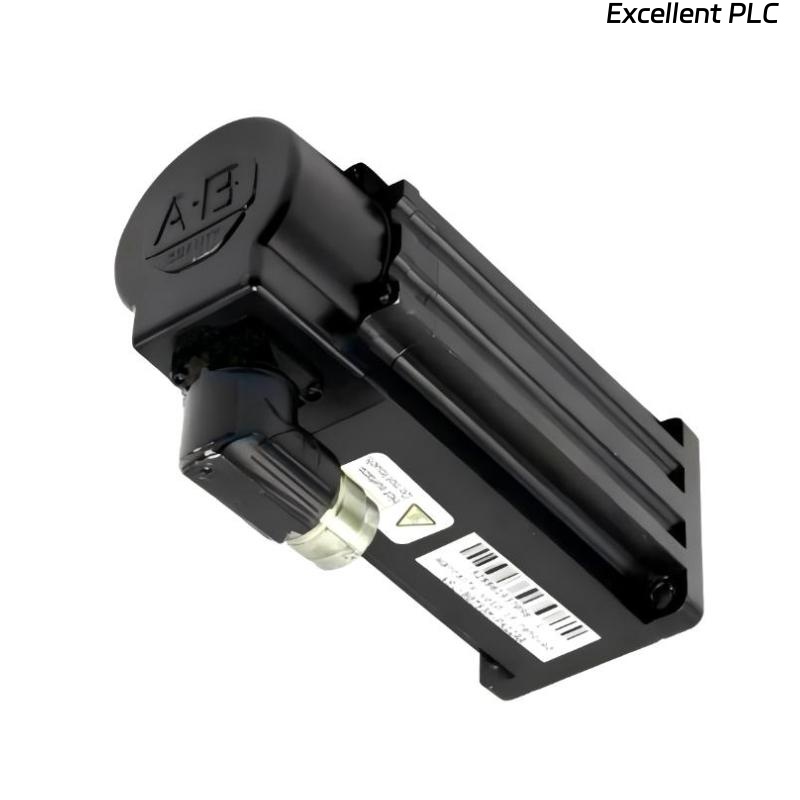
The Allen-Bradley VPL-B0753E-CK12AA servo motor is designed to deliver smooth torque with very little wasted energy.
When it starts rotating with noticeable resistance and overall efficiency drops, the issue is rarely sudden—and almost never limited to a single cause.
In most cases, the motor is not “failing.”
It is working harder than it should, and that difference matters.
“It Still Turns” Is Not a Useful Benchmark
One of the most misleading assumptions in servo diagnostics is that rotation equals health.
A VPL-B servo can still rotate smoothly while already suffering from:
-
increased internal losses
-
degraded magnetic efficiency
-
control loop compensation masking mechanical problems
By the time operators notice “heavy rotation,” efficiency has usually been declining for some time.
Mechanical Drag Is the First Layer to Question
Field experience shows that perceived heaviness is often mechanical before it is electrical.
Common contributors include:
-
bearing wear that has not yet become noisy
-
contamination ingress increasing friction
-
misalignment between motor shaft and load
-
coupling preload exceeding design assumptions
In these cases, the servo drive compensates by increasing current, which hides the problem—until thermal and efficiency limits are reached.
The motor does not complain.
It simply works harder.
Bearing Degradation Rarely Announces Itself Early
In VPL-B motors, bearing issues often start as increased rolling resistance, not vibration or noise.
This leads to:
-
higher torque demand at low speed
-
reduced dynamic response
-
noticeable heating even under normal load
Because the encoder feedback remains accurate, the control system assumes everything is fine.
From the motor’s perspective, it is.
From an efficiency perspective, it is not.
Electrical Losses Accumulate Quietly
When efficiency drops without obvious mechanical binding, electrical losses deserve attention.
Over time, factors such as:
-
winding insulation aging
-
partial demagnetization due to thermal stress
-
increased resistance at power or feedback connectors
can reduce torque per ampere.
The servo still meets position and speed commands, but at the cost of higher current draw and lower overall efficiency.
This is often misinterpreted as a “drive tuning issue.”
Encoder and Feedback Issues Can Increase Apparent Load
The CK12AA feedback option relies on precise encoder performance.
If feedback quality degrades due to:
-
connector oxidation
-
cable shielding deterioration
-
thermal drift inside the encoder
the drive may overcorrect continuously.
The motor then feels “heavy” because it is constantly being adjusted against itself.
Efficiency drops—not because torque is missing, but because it is being wasted.
Drive Compensation Can Hide the Root Cause
Modern Allen-Bradley drives are extremely good at hiding mechanical and electrical imperfections.
They compensate by:
-
increasing current
-
adjusting control gains
-
smoothing velocity errors
This keeps production running—but masks efficiency loss until limits are reached.
By the time alarms appear, the degradation is already advanced.
Why Re-tuning Alone Rarely Solves the Problem
Re-tuning the drive may temporarily improve responsiveness, but it does not remove friction, restore bearings, or reverse insulation aging.
If re-tuning results in:
-
noticeably higher idle current
-
increased motor temperature
-
improved motion but reduced efficiency
then the tuning is compensating, not correcting.
Experienced engineers treat this as confirmation, not resolution.
How Field Engineers Typically Validate the Diagnosis
Rather than relying on a single test, seasoned engineers look for patterns:
-
rising current at constant load
-
temperature increase under identical duty cycles
-
reduced coast-down time when power is removed
-
comparison with a known-good motor of the same model
These observations reveal efficiency loss long before outright failure.
A Practical Field Interpretation
From long-term experience with VPL-B series motors, one principle holds true:
When a servo motor starts to feel heavy, it is already paying an efficiency penalty somewhere.
The challenge is not making it move again—but deciding whether that penalty is acceptable.
As one senior motion engineer summarized it:
“A servo motor rarely stops working when efficiency drops—it just stops being honest about how much effort it takes.”