 Excellent PLC


By Andrew Collins – Senior DCS Systems Engineer
Most CPU failures don’t start with smoke or alarms.
They start with memory.
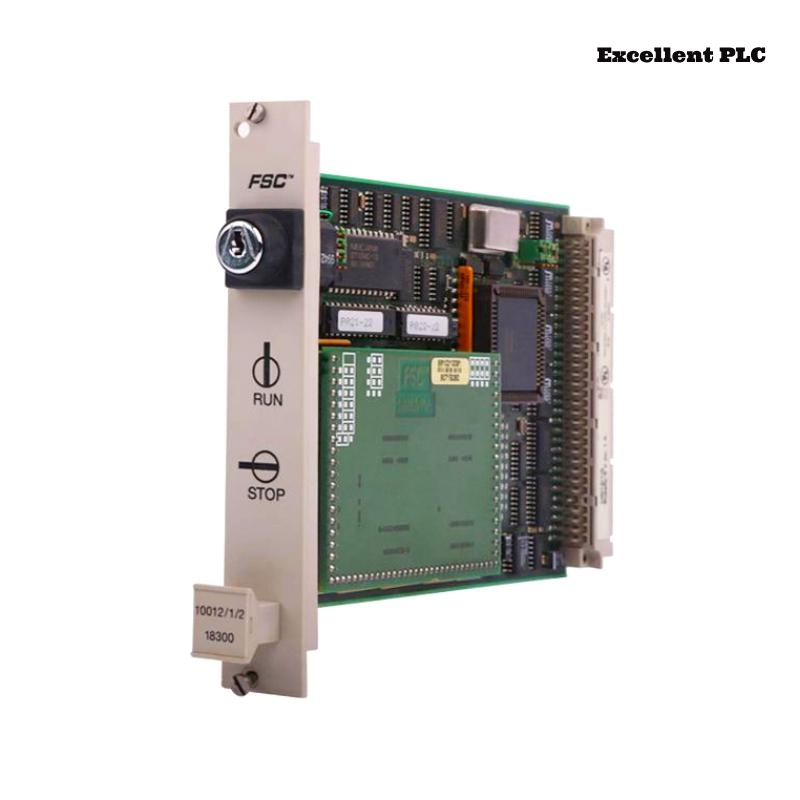
The Honeywell 10012/1/2 CPU module, like many controller CPUs of its generation, relies heavily on onboard flash memory to store operating firmware, control logic, and configuration data. When that memory begins to degrade, the symptoms are subtle — and dangerous.
The Early Warning Signs Nobody Took Seriously
The system had been stable for years. Then, slowly:
-
Random parameter values reverted after reboot
-
Configuration downloads succeeded but didn’t persist
-
CPU restarted without clear hardware faults
-
Diagnostics showed “normal” CPU health
Nothing pointed directly to hardware failure.
And yet, something was clearly wrong.
Understanding the Role of Flash in the 10012/1/2
In the Honeywell 10012/1/2, flash memory is responsible for:
-
Firmware image storage
-
Control application persistence
-
Non-volatile configuration retention
-
Bootloader integrity
Unlike RAM, flash has finite write cycles.
Every download, every online change, every auto-save consumes a little more of that lifespan.
What Finally Triggered the Failure
A routine logic modification was deployed.
After the next power cycle:
-
Part of the configuration was missing
-
Several function blocks reverted to defaults
-
CPU entered an unexpected initialization state
The flash memory had crossed its reliability threshold.
Data was written — but not reliably retained.
Why This Failure Mode Is Hard to Diagnose
Flash degradation does not behave like a clean fault.
Instead, it causes:
-
Partial writes
-
Silent data corruption
-
Inconsistent boot behavior
-
Errors that disappear after re-downloads
From the CPU’s point of view, the memory still “exists.”
It just can’t be trusted anymore.
How We Confirmed Flash Degradation
We performed controlled tests:
Results varied from cycle to cycle.
Same procedure.
Different outcomes.
That variability ruled out software and confirmed hardware-level memory wear.
Why Replacing the CPU Was the Only Real Fix
Flash memory on the 10012/1/2 CPU module is not field-replaceable.
Temporary workarounds (reloading firmware, reducing writes) only delay failure.
The only sustainable solution was:
-
CPU module replacement
-
Restoration from a verified offline backup
-
Implementation of stricter change-control policies
Lessons Learned from This Failure
-
Flash memory ages — even if the CPU still runs
-
Frequent online changes accelerate wear
-
“Successful download” does not guarantee data integrity
-
Backup verification is just as important as backup creation
Operational Best Practices Going Forward
-
Minimize unnecessary configuration writes
-
Avoid repetitive online edits
-
Schedule periodic cold restart validation
-
Track CPU service life, not just fault history
In modern systems, memory health is system health.
Final Thoughts
The Honeywell 10012/1/2 CPU flash memory didn’t fail suddenly.
It failed quietly, patiently, one write at a time.
In control systems, forgetting is sometimes more dangerous than stopping.
— Andrew Collins