 Excellent PLC


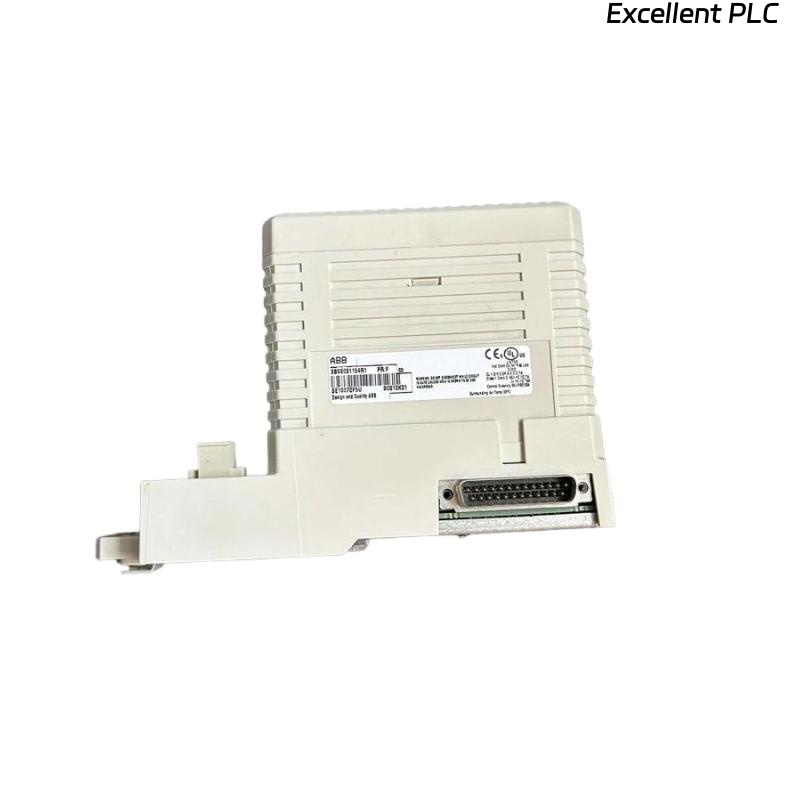
I recently came across an alarming issue while maintaining one of our ABB control cabinets. The SAFT138CHS Power Supply Module suddenly emitted a faint burnt smell during operation. The controller hadn’t shut down yet, but I knew immediately this was something that couldn’t wait.
This post walks through exactly what I did — step by step — to diagnose, isolate, and fix the issue safely.
Step 1: Immediate Power Isolation
The first rule when you detect a burning smell in an industrial power module — shut it down.
I cut off the main 24V DC input supply to the SAFT138CHS immediately. The LEDs on the module were still lit just before shutdown, indicating partial operation, but I didn’t risk further damage.
After power isolation, I allowed the unit to cool for at least 10 minutes before removing it from the backplane.
Step 2: Initial Visual and Odor Inspection
Once removed, the burnt smell was clearly concentrated around the top-right vent area. Using a flashlight, I inspected the module casing and noticed a slight discoloration near the ventilation grid — a typical indicator of internal capacitor overheating.
No signs of melted connectors or scorched PCB traces were visible externally, which meant the problem was likely inside the unit.
Step 3: Checking the Input and Load Conditions
Before opening anything, I checked whether the SAFT138CHS was possibly overloaded or operating under unstable input voltage.
Here’s what I verified with a multimeter and logger data:
-
Input voltage: 24.6 VDC stable (within normal tolerance)
-
Output voltage: Before shutdown, it had spiked briefly to 25.3 VDC
-
Load current: Peaked near 3.2A, which was above its typical 2.5A continuous rating
That small overload, combined with long operation, can accelerate internal component wear — particularly on electrolytic capacitors.
Step 4: Internal Examination (Bench Testing)
On the bench, I carefully opened the module cover (static-safe environment).
Inside, the smell source was clear: one of the primary filter capacitors (220µF, 50V) had bulged slightly, and there was residue on the surrounding PCB area. The thermal protection near the heat sink also showed slight darkening.
No components were fully burnt, meaning the fault occurred before catastrophic failure, which was a good sign.
I replaced:
-
The bulging capacitor (same rating, low ESR industrial-grade)
-
Cleaned the PCB area with isopropyl alcohol
-
Reapplied fresh thermal compound to the voltage regulator IC
Step 5: Controlled Re-Powering and Monitoring
After reassembly, I powered the module through an isolated DC supply with current limiting set to 1.5A.
The startup was smooth — no noise, no abnormal smell, and the output voltage stabilized at 24.02V.
Then I increased the load gradually up to 2.5A while monitoring temperature rise:
-
After 30 minutes, the casing temperature reached 38°C (normal).
-
Output ripple remained below 50mV.
-
No smell or instability detected.
This confirmed the module was safe to reinstall.
Step 6: Root Cause Analysis
After comparing system logs and environmental data, the most likely root cause was prolonged high load combined with cabinet heat accumulation. The SAFT138CHS is designed for continuous service, but high ambient temperatures (over 45°C) can shorten capacitor life significantly.
To prevent this issue from repeating, I recommended:
-
Reducing module load by redistributing the 24V bus.
-
Installing a small panel fan to improve airflow.
-
Performing annual thermal inspection using an infrared camera.
-
Logging output voltage trend to detect capacitor degradation early.
Step 7: Lessons Learned
This incident reminded me that even a reliable ABB power module like the SAFT138CHS can fail gracefully if you react fast enough.
A faint burnt smell is not something to ignore — it’s an early warning of electrical stress or thermal overload.
Here’s what I’ve learned from handling similar modules over the years:
-
Always disconnect power immediately when you smell burning insulation.
-
Check the output load and temperature logs before assuming hardware failure.
-
Use high-quality replacement capacitors if repair is necessary.
-
Keep the module ventilation clear — dust and blocked air paths accelerate failure.
-
Recommission repaired units only after full bench testing under load.
Final Thoughts
The ABB SAFT138CHS Power Supply Module is robust, but like all industrial components, it relies heavily on proper cooling, stable loads, and preventive maintenance.
If you detect a burnt smell, don’t wait for the system to fail — investigate right away. Early intervention can turn a potential power disaster into a simple capacitor replacement.
As I often tell junior engineers:
“When a module smells burnt but still works — that’s your second and last warning.”