 Excellent PLC


By Michael Turner – Plant Automation Specialist
Firmware upgrades are supposed to be boring.
Click, wait, verify, move on.
But with safety controllers, “boring” is a luxury you only get when you’ve already paid for it with planning.
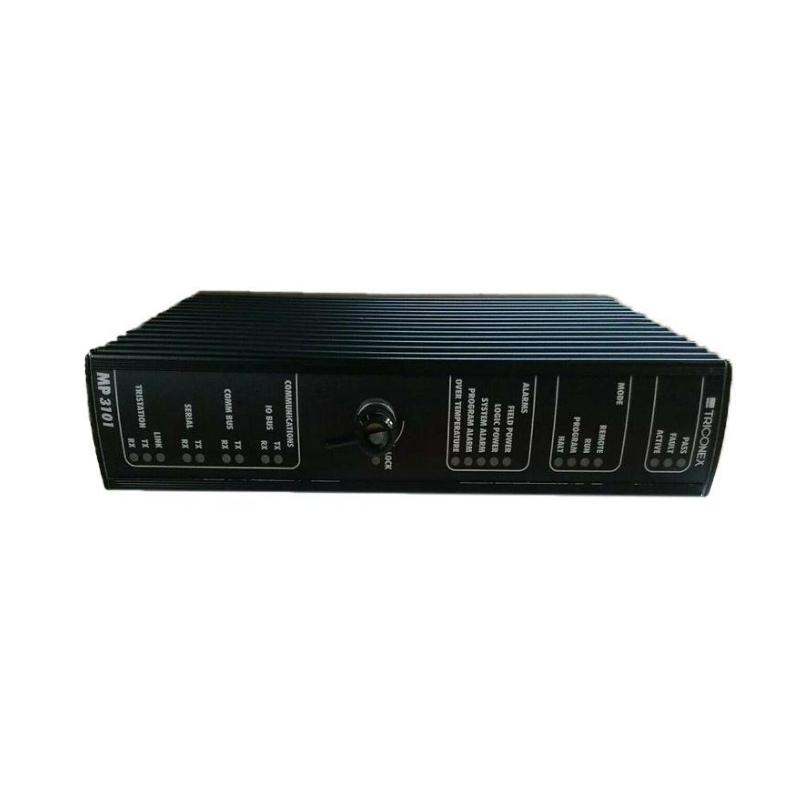
The Triconex 3101 main processor module taught our team that lesson the slow way.
Context: A Routine Maintenance Window
We scheduled a standard firmware update during a planned outage:
-
Single Tricon system
-
Redundant processors active
-
All safety functions inhibited
-
HMI and engineering workstation online
Everything followed the checklist.
Nothing was rushed.
And still, something unexpected happened.
What We Observed
After the firmware update and reboot sequence:
-
One processor channel came online slightly later than the others
-
Redundancy synchronization took longer than documented
-
Engineering tools reported temporary “module initializing” states
-
Operators thought the controller was stuck
From the system’s point of view, it was just being careful.
From the control room’s point of view, it looked broken.
What Was Actually Going On
During firmware transitions, the 3101 MPM:
-
Rebuilds internal state tables
-
Verifies firmware integrity
-
Performs cross-channel consistency checks
-
Re-establishes redundancy alignment
If one channel completes validation slower (due to flash memory condition, temperature, or load), the whole system waits.
This waiting period is not a failure.
It is a safety pause.
How We Validated the Root Cause
We replayed the sequence in a test rack:
Cold starts after firmware updates consistently showed longer synchronization windows.
The behavior was deterministic.
We just weren’t used to seeing it.
Why This Becomes a “Field Problem”
-
Maintenance windows are short
-
Operators expect instant readiness
-
Documentation mentions synchronization, but not the subjective “how long it feels”
-
Engineering tools show intermediate states without clear explanations
So the human response is:
“Something is wrong.”
What We Changed Afterward
-
Added firmware upgrade timing expectations to procedures
-
Informed operators about normal post-upgrade behavior
-
Scheduled a fixed stabilization period before declaring the system “ready”
-
Performed flash memory health checks on older modules
After that, the same process caused zero panic.
Final Thought
The Triconex 3101 didn’t struggle during the upgrade.
We struggled with our expectations of how fast “safe” should look.
Safety systems move at the speed of certainty, not at the speed of impatience.
— Michael Turner