 Excellent PLC


By Robert Klein – System Integration Lead
If you’ve ever commissioned a Tricon system, you know the comfort of triple modular redundancy.
Three processors.
Three independent opinions.
One decision.
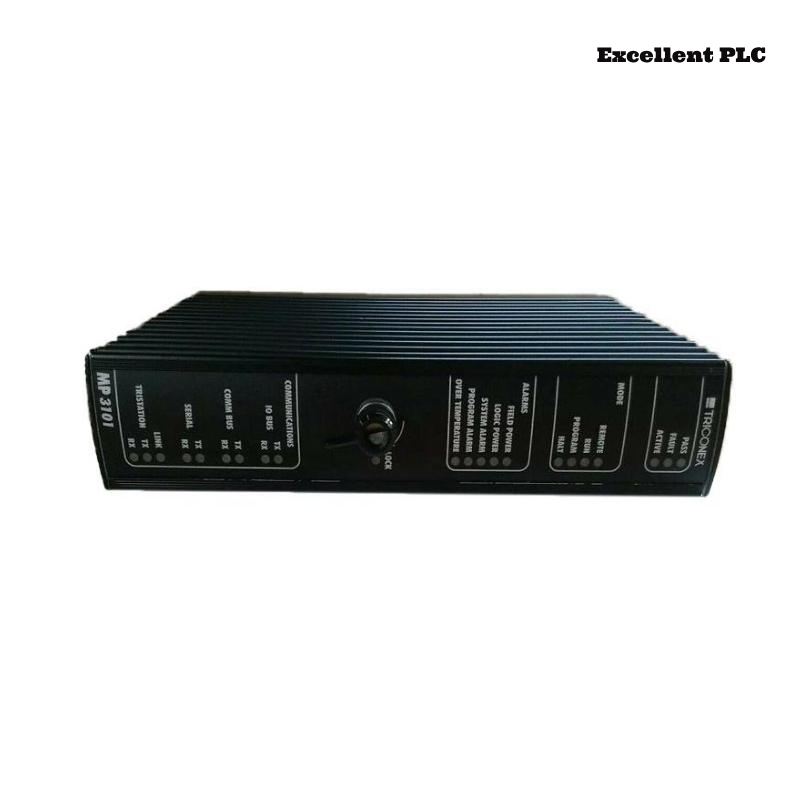
With the Triconex 3101 main processor module, that promise holds — but under extreme load, the way those three “brains” stay in sync becomes visible in subtle ways.
Project Background
This happened during the final phase of a refinery upgrade:
-
New safety logic added to an existing Tricon system
-
Scan cycle tightened to meet faster interlock response
-
Large number of analog inputs sampled at once
-
Redundancy channels fully loaded
Everything passed FAT.
SAT revealed something different.
What We Actually Saw on Site
-
Control outputs remained correct
-
No safety trips occurred
-
System logs showed minor timing jitter between channels
-
In rare cases, one channel lagged a few milliseconds behind
From an operator’s perspective, nothing was “wrong.”
From a systems perspective, timing drift had entered the picture.
Why This Happens
The 3101 MPM performs:
-
Real-time logic execution
-
Continuous cross-channel comparison
-
Input sampling and voting
-
Output commit only after agreement
Under high computational load:
-
Task scheduling becomes denser
-
Channel execution phases can slip slightly
-
Synchronization logic realigns channels before committing outputs
This realignment introduces tiny timing shifts — not failures, but temporal friction.
How We Proved It
We instrumented scan cycles across all three channels:
Under nominal load, deltas were negligible.
Under peak load, deltas widened — still within tolerance, but noticeable.
Engineering Lessons
-
Redundancy synchronization has a cost under heavy load
-
Timing jitter does not equal functional failure
-
Scan cycle tuning matters more than most teams expect
-
FAT rarely reflects worst-case site load
What We Changed
-
Slightly relaxed scan cycle timing
-
Redistributed logic execution
-
Reduced burst sampling of non-critical inputs
-
Added performance monitoring during peak operations
The jitter disappeared without touching hardware.
Closing Thought
The Triconex 3101 did exactly what it was designed to do:
maintain safety first, timing second.
When three processors argue, the system pauses just long enough to make sure they agree — and that pause is part of the design, not a defect.
— Robert Klein