Excellent PLC


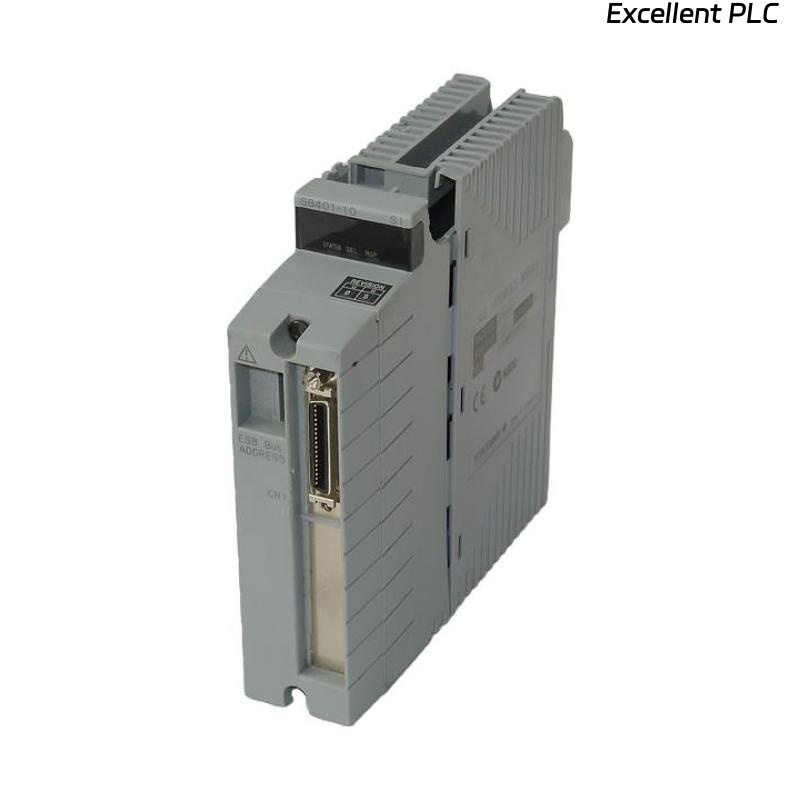
Product Introduction
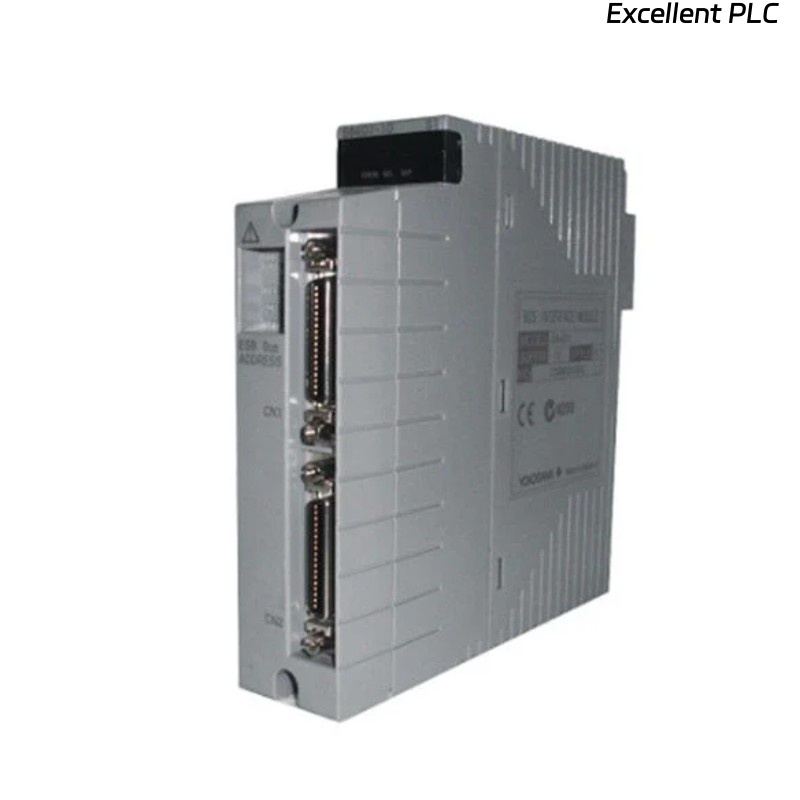
The Yokogawa ANT401-50 Optical ESB Bus Repeater Module is a specialized communication module designed to enhance the transmission of ESB (Enhanced Simplex Bus) signals over long distances within industrial automation systems. By employing advanced optical technology, it serves as a repeater that regenerates, amplifies, and transmits signals across extended networks.
Technical Specifications
| Parameter | Description |
|---|---|
| Model | ANT401-50 Optical ESB Bus Repeater Module |
| Function | Optical signal repeating and transmission for ESB bus |
| Transmission Medium | Optical fiber |
| Supported Bus | ESB (Enhanced Simplex Bus) |
| Data Rate | High-speed bus communication (suitable for DCS/ESB protocols) |
| Interface Type | Optical input/output ports with ESB compatibility |
| Maximum Transmission Distance | Up to 2 km (depending on fiber type) |
| Power Supply Voltage | 24 V DC (typical) |
| Power Consumption | 8 W |
| Operating Temperature | 0°C to +55°C |
| Storage Temperature | -20°C to +70°C |
| Humidity Range | 10% to 90% RH (non-condensing) |
| Dimensions | 142.5 x 130 x 32.8 mm |
| Weight | 0.3 kg |
| Mounting Method | Mounted within ESB node unit or system rack |
| Compatibility | Yokogawa CENTUM VP, ProSafe-RS, and other ESB-based modules |
Product Applications
The ANT401-50 Optical ESB Bus Repeater Module is designed for use in industrial automation and process control systems that require extended communication networks. Its main applications include:
-
Distributed Control Systems (DCS): Ensures reliable communication between controllers and I/O modules in large plants.
-
Safety Instrumented Systems (SIS): Facilitates fault-tolerant signal communication in ProSafe-RS environments.
-
Power Plants: Used for extending communication networks in thermal, nuclear, and renewable energy facilities.
-
Petrochemical Plants: Maintains stable communication across wide areas with high EMI/RFI interference.
-
Pharmaceutical Manufacturing: Provides secure data transfer for regulatory-compliant operations.
-
Long-Distance ESB Networking: Extends coverage between field units separated by large plant areas.
Product Advantages
-
Enhanced Communication Reliability: Optical fiber reduces susceptibility to noise, EMI, and signal degradation.
-
Long-Distance Transmission: Supports communication across extended plant layouts without performance loss.
-
High-Speed Data Integrity: Maintains consistent data throughput for mission-critical applications.
-
Compact and Lightweight Design: Optimized for easy integration within Yokogawa’s ESB architecture.
-
Seamless System Integration: Fully compatible with CENTUM VP and ProSafe-RS systems.
-
Robust Environmental Tolerance: Performs reliably under a wide range of temperature and humidity conditions.
-
Scalability: Allows system designers to expand plant communication networks without redesigning the entire infrastructure.
FAQ
Q1: What communication protocol does the ANT401-50 support?
A1: It supports the Enhanced Simplex Bus (ESB) communication protocol used in Yokogawa’s DCS and safety systems.
Q2: Can the ANT401-50 be used for both control and safety systems?
A2: Yes, it is compatible with both CENTUM VP control systems and ProSafe-RS safety systems.
Q3: How does the module handle signal regeneration?
A3: The module amplifies and re-times incoming signals before retransmitting them, ensuring data integrity.
Q4: What type of optical fiber is recommended for use?
A4: Multi-mode optical fibers are typically recommended for optimal performance and distance support.
Q5: Does the module support redundant configurations?
A5: Yes, it can be configured in redundant network setups to enhance system reliability.
Q6: How is synchronization ensured across ESB nodes?
A6: The module aligns signal timing to maintain synchronized communication across distributed nodes.
Q7: Is the module hot-swappable within the system rack?
A7: Yes, it is designed to allow hot-swapping for maintenance without system downtime.
Q8: What are the maximum transmission distances supported?
A8: Up to 2 km per segment, depending on fiber type and environmental conditions.
Q9: How does it interact with other ESB modules in the system?
A9: It functions as a repeater, extending signals between ESB bus nodes while maintaining protocol compatibility.
Q10: What diagnostic features are included?
A10: The module includes status indicators and error detection functions to help operators identify communication faults.
Recommended Models – Same Series or Related
| Model | Description | Key Feature |
|---|---|---|
| ANT401-10 | Optical ESB Bus Repeater Module | Standard transmission range, early generation |
| ANT401-20 | Optical ESB Bus Repeater Module | Improved stability, wider environmental range |
| ANT401-30 | Optical ESB Bus Repeater Module | Higher noise immunity |
| ANT401-40 | Optical ESB Bus Repeater Module | Extended redundancy features |
| ANT401-50 | Optical ESB Bus Repeater Module | Current model, optimized for CENTUM VP/ProSafe-RS |
| ANT401-60 | Optical ESB Bus Repeater Module | Next-gen variant with longer distance support |
Recommended Models – Same Brand Popular
| Model | Description | Key Feature |
|---|---|---|
| AAI141-S50 | Analog Input Module | High-density analog signal acquisition |
| AAI143-S00 | Analog Output Module | Precision analog output for DCS control |
| ADV151-P63 | Analog Input Module | High-speed response for critical signals |
| PW402-S1 | Power Supply Module | Stable power delivery for control systems |
| ANB11D-B25 | Fiber Optic ESB Bus Node Unit | Node-level connectivity for ESB systems |
| AFV30S-A41262 | Field Control Unit | Central control and field communication |
| CP451-10 | Processor Module | High-performance CPU for CENTUM VP |
| EC401-50 | Communication Interface Module | Gateway for external communication protocols |