 Excellent PLC


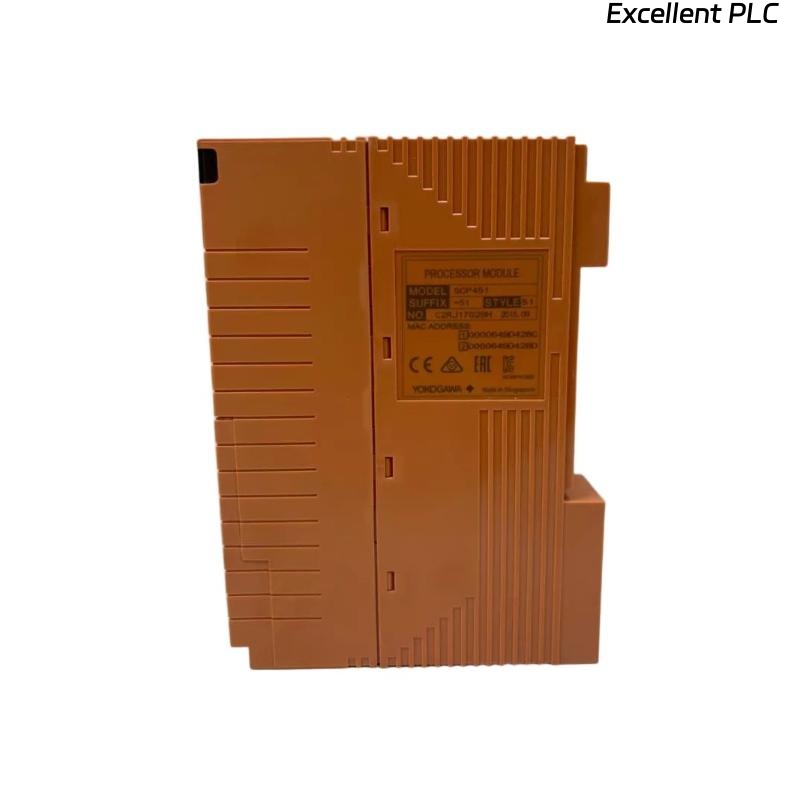
The Yokogawa CP451 CPU module is engineered for high-reliability DCS operations. However, unstable power supply voltage is one of the leading causes of unexpected resets, module lockups, or intermittent faults. This article explores a field case where AC/DC fluctuations led to CP451 module instability and outlines engineering mitigation strategies.
1. Operational Background
Plant Type: Chemical processing facility
CPU Module: Yokogawa CP451
Power Supply: 24VDC from redundant industrial PSUs
Environment: Control room with occasional maintenance-related power interruptions
The CPU module is sensitive to both overvoltage and undervoltage, which can disrupt logic execution and I/O scanning cycles.
2. Observed Field Symptoms
During field operation, technicians reported:
-
Random CPU resets without clear software errors
-
Delayed I/O updates and intermittent Vnet/IP communication loss
-
HMI freeze and alarm bursts during peak plant activity
-
UPS alarms indicating rapid voltage swings
Diagnostic logs captured:
3. Root Cause Analysis
Investigation identified multiple contributing factors:
A. AC Input Instability
-
Industrial facility experienced occasional ±15% voltage spikes
-
Maintenance equipment startup caused temporary brownouts
-
Poorly regulated transformer outputs contributed to fluctuations
B. PSU Aging and Ripple
-
DC power supplies showed ripple exceeding 50 mV
-
Capacitor aging caused reduced filtering capacity
-
PSU hot-swapping during operation caused transient dips
C. Lack of Power Conditioning
-
No line conditioners or surge suppressors installed
-
Voltage sags propagated directly to the CPU module
-
External electrical disturbances (motors, welding) not isolated
D. Effect on CP451 Module
-
Momentary undervoltage triggered internal brownout detection
-
CPU halted logic scan and initiated reset sequence
-
Vnet/IP communication timeout occurred due to incomplete cycle
-
Repeated transients accelerated wear on internal components
4. Diagnostic Procedures
Engineers executed the following steps:
-
Voltage Monitoring: Continuous logging with high-speed data acquisition
-
Power Supply Inspection: Checked PSU output stability, measured ripple and load response
-
CPU Performance Logging: Analyzed scan cycle time and CPU utilization
-
Vnet/IP Network Analysis: Correlated communication delays with voltage dips
-
Environmental Assessment: Reviewed plant AC network for harmonics, transients, and sags
5. Corrective Measures Implemented
Short-Term Actions
-
Added temporary line conditioners to stabilize supply
-
Replaced aging PSU modules with new industrial-grade units
-
Implemented UPS monitoring with automatic alerts
Long-Term Engineering Solutions
-
Segregated sensitive control circuits from high-power loads
-
Installed surge suppressors at AC entry points
-
Configured redundant DC PSUs with automatic failover
-
Scheduled periodic power quality audits
6. Preventive Maintenance Recommendations
| Maintenance Task | Recommended Interval |
|---|---|
| PSU output voltage and ripple check | Quarterly |
| UPS and line conditioner inspection | Semi-annual |
| AC line transient logging | Annual |
| CPU module firmware update (power handling patches) | As released by Yokogawa |
| Power cable integrity inspection | Annual |
7. Key Takeaways
-
Voltage fluctuations, even short-term, can trigger CP451 resets or communication failures.
-
Power quality monitoring is essential in DCS environments.
-
Redundant and well-regulated PSUs dramatically improve system stability.
-
Integrating power conditioning, UPS systems, and surge protection reduces risk of downtime.
Conclusion
Power instability is a critical but often overlooked source of CP451 module failure. Proper design of control power circuits, combined with periodic monitoring and preventive maintenance, ensures reliable operation of Yokogawa DCS systems, even in electrically noisy industrial environments.