 Excellent PLC


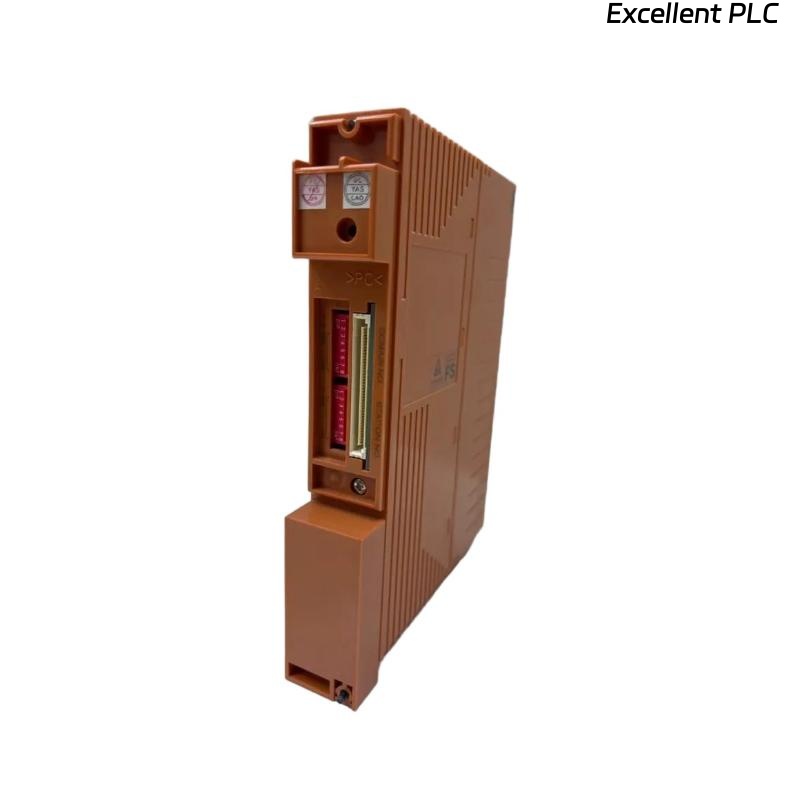
Industrial DCS controllers such as the Yokogawa CP451 operate under strict real-time constraints. One failure scenario observed in complex process plants involves watchdog timer trips caused by overloaded scan cycles. When the controller cannot complete all tasks within the configured execution window, the watchdog forces a reset to prevent unsafe operation. This article provides a technical analysis of such an event.
1. Understanding the Watchdog in CP451 Architecture
The watchdog timer in the CP451 ensures deterministic execution of:
-
Control logic scan tasks
-
I/O polling cycles
-
Communication servicing (Vnet/IP)
-
System housekeeping routines
If the CPU fails to complete its workload within the configured scan cycle duration, the watchdog timer triggers a forced reset. This behavior complies with safety principles defined by IEC 61131 and IEC 61508.
2. Failure Scenario Overview
A refining facility reported intermittent controller resets on a CP451 module. No power instability or network failures were observed. Post-event logs indicated repeated watchdog timer events, each followed by automatic reboot.
3. Observable Indicators and Symptoms
The event presented the following operational symptoms:
(A) DCS Process Effects
-
Short-duration actuator freeze during resets
-
Momentary loss of control loop execution
-
HMI alarm flood immediately after reboot
-
Trend data gaps on historian systems
(B) Diagnostic Messaging
Engineering station logs showed:
-
CPU Watchdog Timeout -
Exceeded Scan Cycle Time -
Uncompleted Logic Task -
Vnet/IP Communication Delay
(C) Module Hardware Behavior
-
RUN LED blinking with interrupted cadence
-
ERR LED occasionally flashing during resets
-
No thermal or PSU alarms
4. Root Cause Investigation
Detailed control logic review identified multiple contributing factors:
1. Excessive Logic Execution Load
The CP451 was running:
-
Large cascade control structures
-
Embedded calculation blocks
-
Historical data buffers
-
Conditional triggers for reporting
-
Algorithmic density beyond recommended limits
Some execution blocks were computationally expensive, especially floating-point routines.
2. Improper Task Prioritization
Tasks were not prioritized correctly:
-
OPC historian data pushes competed with real-time logic
-
Data archiving tasks executed during peak load
-
Vnet/IP communication servicing delayed I/O updates
3. I/O Module Polling Bottlenecks
Remote I/O racks exhibited:
-
Increased network latency
-
Burst-mode communication traffic
-
Polling retries due to packet losses
These effects extended the control scan window.
4. Scan Time Misconfiguration
Scan cycle parameters were set too aggressively (e.g., sub-100 ms), creating tight execution boundaries.
5. Diagnostic Procedures Executed
Maintenance engineers performed the following analysis steps:
Step 1 — Scan Time Profiling
Profiling tools revealed:
-
Normal scan time: 60–75 ms
-
Burst scan time: 120–180 ms
-
Configured watchdog limit: 100 ms
Step 2 — Logic Load Audit
Found redundant and inefficient logic structures:
-
Repeated non-essential PID cascades
-
Multi-branch conditional chains
-
Redundant arithmetic blocks
Step 3 — Network Traffic Analysis
Vnet/IP switches displayed:
-
Increased broadcast traffic
-
OPC UA/DA polling spikes during shift changes
Step 4 — CPU Utilization Analysis
CPU load peaked at ~90% during high process variability periods.
6. Corrective Measures Applied
A combination of software and configuration improvements resolved the issue:
Control Logic Optimization
✔ Eliminated redundant calculations
✔ Converted polling routines to event-based operations
✔ Reduced historian sample frequency
Task Prioritization Adjustments
✔ Real-time tasks assigned highest priority
✔ Logging and historian tasks throttled
✔ Communication tasks scheduled more efficiently
Scan Cycle Reconfiguration
✔ Watchdog threshold increased to safe margin
✔ Base scan cycle adjusted to allow computational headroom
Network Optimization
✔ Implemented QoS for Vnet/IP packets
✔ Reduced OPC polling frequency
✔ Segmented VLAN for control domain
After these corrections, no further watchdog resets occurred.
7. Preventive Recommendations for Plant Engineers
Facilities can avoid similar failures by adopting:
Control Logic Best Practices
-
Avoid unnecessary floating-point loops
-
Use event-based triggers instead of continuous scans
-
Consolidate repeated logic blocks
Network Management Practices
-
Segregate historian and HMI traffic
-
Use QoS to protect control packets
-
Review OPC polling intervals quarterly
Maintenance and Monitoring
-
Perform yearly scan profiling audits
-
Validate watchdog thresholds during FAT/SAT
-
Track CPU utilization during process upsets
Conclusion
Watchdog timer trips on Yokogawa CP451 modules are typically software-driven rather than hardware failures. By optimizing scan loads, adjusting task priorities, and managing network traffic, plants can significantly improve controller stability. This case reinforces the importance of treating DCS systems as combined software–hardware ecosystems where both control engineering and IT management practices influence reliability.