 Excellent PLC


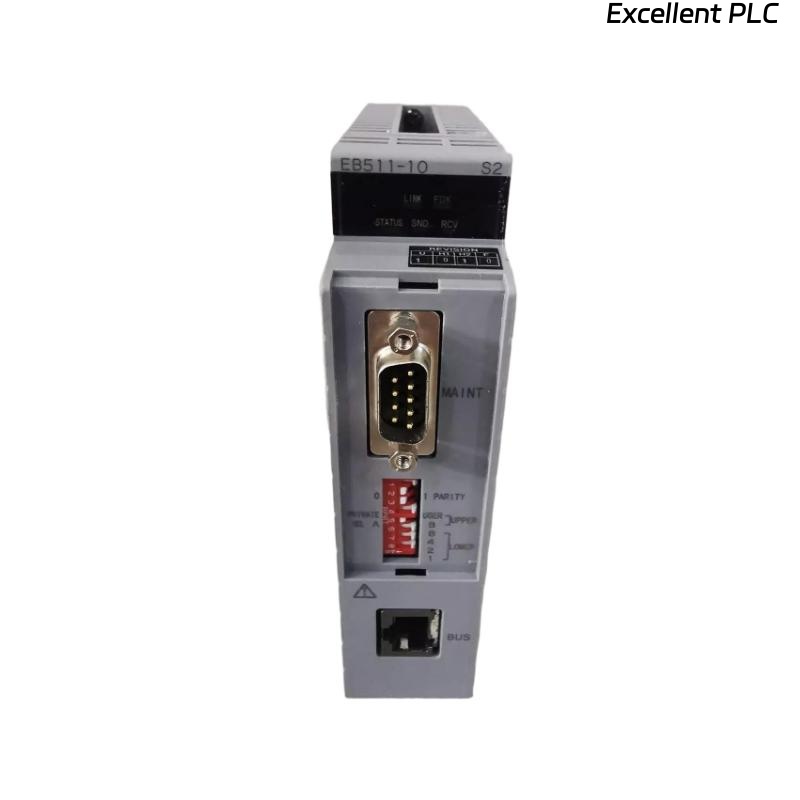
Industrial automation cabinets are often located in areas where overheating, cable insulation failure, or external electrical fires may occur. Once smoke or flame reaches bus communication hardware like the Yokogawa EB511 bus interface module, the resulting damage is often silent but severe.
This report documents real-world failure behavior, inspection procedures, and replacement considerations for EB511 modules exposed to localized cabinet fire and smoke contamination.
1. Scenario Overview
A small electrical fire occurred inside a PLC/IPC cabinet due to a melted 24VDC distribution rail. Although the flame lasted less than 4 minutes and was extinguished by staff, multiple modules were affected by smoke and heat exposure.
Affected module:
-
Model: Yokogawa EB511 Bus Interface Module
-
System role: Fieldbus / Remote IO communication bridge
-
Exposure duration: ~4–5 minutes active flame + ~18 minutes hot smoke
-
Cabinet ambient peak: ~145–170°C (estimated by thermographic analysis after event)
2. Damage Characteristics
Post-incident inspection revealed multi-layered damage:
2.1 External Housing
-
Housing darkened, uneven soot deposition
-
Vent holes partially clogged by carbonized deposits
-
No visible melting (ABS housing softened around ~220°C, event remained below threshold)
2.2 PCB & Soldering
Inspection under microscope found:
-
PCB surface discoloration
-
Micro-soot particles embedded in flux residue
-
Oxidation on exposed copper pads
-
Darkened areas near COM and BUS driver ICs
2.3 Connector & Terminal Blocks
A critical detail often overlooked:
Smoke contains conductive ions such as K⁺, Ca²⁺, Cl⁻, and partially carbonized particulates. After humidity exposure they become semi-conductive.
Observed failure modes:
-
Measured leakage between BUS+ and BUS–: ~1.1 MΩ (should be >20 MΩ)
-
Terminal screws showed minor oxidation (brown/purple tint)
-
Detachable connectors smelled strongly of phenolic smoke
2.4 Internal IC Damage
BUS transceivers were thermally stressed:
-
COM IC temperature was 76°C during post-event live power test at idle
-
Normal idle temperature is 38–44°C
-
Indicates partial dielectric breakdown or degraded silicon junction
3. Operational Symptoms After Smoke Exposure
When placed back into operation for testing, EB511 exhibited:
| Symptom | Observation |
|---|---|
| Link instability | Bus resets every 30–80 seconds |
| CRC errors | Spike from <0.05% → 4–9% |
| Intermittent drops | Random IO timeout on remote stations |
| Thermal drift | Temp rises fast under normal load |
| Diagnostic LED | Alternates ERR ↔ RUN states |
Notably — module was not dead, which can mislead technicians into thinking it’s recoverable.
4. Can Smoke-Damaged EB511 Be Recovered?
Technically: yes, but not reliably for industrial use.
Cleaning Process Attempted:
-
Full disassembly
-
IPA ultrasonic bath at 40°C (15 minutes)
-
Drying at 65°C for 6 hours
-
Conformal coating retouch on edge connector areas
After cleaning:
-
CRC error rate reduced to 0.4–0.7%
-
Leakage between BUS lines improved to 7–12 MΩ
However, these values remained outside safe operating ranges for critical fieldbus systems.
Therefore:
Restoration = Possible for bench testing
Reliability = Too low for production environments
5. Recommended Engineering Action
5.1 Mandatory Checks
Before deciding replacement:
-
Smoke contamination swab test (ionic contamination check)
-
BUS line leakage measurement
-
Thermal imaging during load
-
PCB oxidation inspection under magnification
5.2 Replacement Decision
Industrial recommendation:
✔ Replace EB511 if:
-
Exposed to active flame, hot smoke, or soot deposits
-
BUS CRC >0.5%
-
COM IC idle temperature >50°C
-
Leakage <10 MΩ between differential pairs
Fieldbus reliability is too critical to risk periodic resets.
6. Additional System Recommendations
After fire/smoke events:
✔ Replace all air filters and cabinet fans
✔ Vacuum + wipe carbonized dust inside cabinet
✔ Re-terminate any melted cable insulation
✔ Inspect grounding integrity (fire often compromises bonding)
✔ Install temperature strip indicators inside cabinet for future early detection
✔ Deploy IAQ smoke detection sensors for control rooms
7. Final Engineering Notes
-
EB511 modules can survive short-duration heat events without melting, but ionic smoke contamination is the real killer, not the flame.
-
Fieldbus communication may continue to operate, but degraded CRC and leakage will cause periodic downtime.
-
For mission-critical DCS/PLC networks, replacement is cheaper than unstable runtime, even if module still “appears to work”.