 Excellent PLC


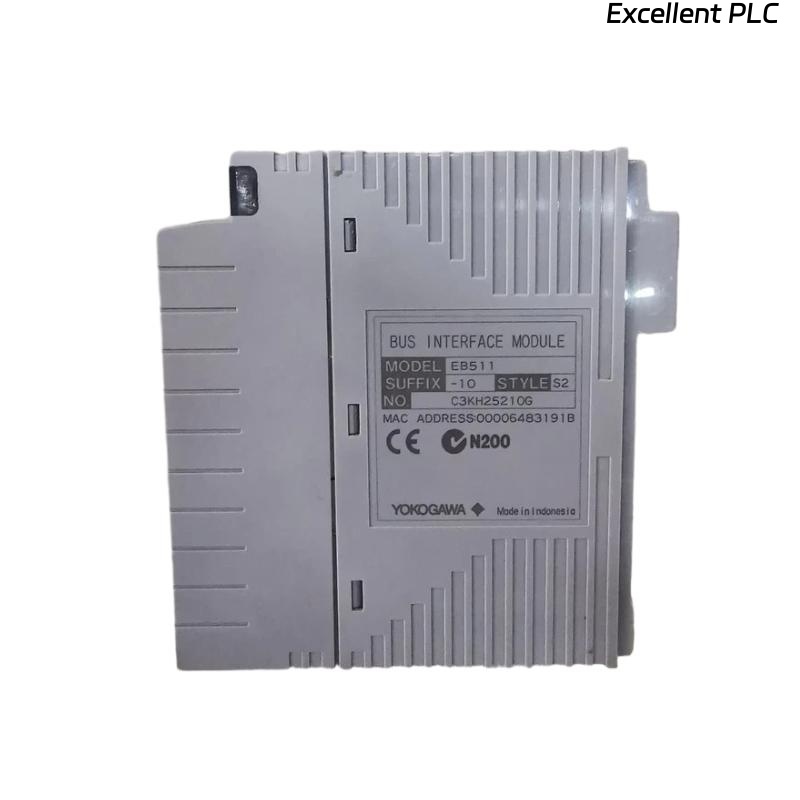
Power distribution lines exposed to storms often experience transient overvoltage events. Even when protected by surge arrestors and MOV arrays, certain high‐energy lightning surges can propagate through grounding systems and communication shields, damaging sensitive bus interface modules such as the Yokogawa EB511.
This document describes how lightning-induced surge damage manifests, how to inspect the hardware, and how to validate fieldbus communication integrity after such an incident.
1. Lightning Surge Characteristics Relevant to EB511 Failures
Industrial surge reports often include the following key parameters:
| Parameter | Typical Lightning Event |
|---|---|
| Peak Voltage | 2 kV – 6 kV |
| Rise Time | 8–10 µs |
| Pulse Width | 20–1000 µs |
| Repetition | Single or burst |
| Propagation Paths | Shield, frame ground, 24VDC rails |
The Yokogawa EB511 is not expected to experience direct strike energy, but indirect coupling through grounded shields is common in plants with long outdoor instrumentation runs.
2. Common Electrical Symptoms After Surge
After a lightning surge, an EB511 module may show one or more of the following:
-
Fieldbus communication fails intermittently
-
Bus retries exceed acceptable limit (>2–3%)
-
CRC errors spike during high load
-
Status LED indicators alternate between RUN and ERR unusually
-
Module runs warmer by +3°C~+7°C due to damaged line drivers
Plant logs often show patterns like:
These are typical surge-related artifacts.
3. Physical Inspection Findings (Post-Lightning Event)
Surge damage often leaves subtle but detectable traces:
3.1 Burn or Discoloration Marks
-
Brown/black spots near transient protection ICs
-
Slight PCB scorching around TVS diodes
-
Oxidation on fieldbus shields
3.2 Component-Level Degradation
Commonly affected components include:
| Component | Likely Failure Mode |
|---|---|
| TVS Diodes | Dead-short or open circuit |
| RC Filters | Value drift or cracking |
| Bus Driver IC | Partial functionality |
| Fuse/Polyfuse | Open (no comms) |
3.3 Bench Power Measurement
Example lab measurement results:
| Measurement | Expected | Observed |
|---|---|---|
| Bus Idle Voltage | 5.0–5.1V | 4.35V |
| Idle Current | ~90mA | 128mA |
| Shield–GND | <0.1Ω | 0.1Ω (normal) |
| RX/TX EDGES | Clean | Distorted at 1.2–1.4Vpp |
Waveform distortion strongly indicates damaged line drivers.
4. Replace vs Repair Considerations
Repair Options
A skilled electronics lab may attempt replacing:
-
TVS protection devices
-
Filter capacitors & inductors
-
Bus drivers
-
Burned traces (microsolder restoration)
But the EB511 is a safety-critical communication module, meaning partial fixes are risky.
Replacement Recommendation
For industrial clients, the recommended path is:
✔ Replace EB511
✘ Do not redeploy partially repaired modules
5. Fieldbus Verification Procedure After Module Replacement
Once a new EB511 is installed, fieldbus integrity must be revalidated.
Checklist:
✔ Verify shield grounding method
✔ Confirm surge protection on outdoor runs
✔ Inspect marshalling panel UTP/STP wiring
✔ Validate trunk and spur impedance
✔ Measure CRC & retries under normal load
A typical validation report after successful replacement might show:
6. Grounding and Surge Mitigation Recommendations
To avoid future EB511 damage:
-
Install surge suppression at field enclosures
-
Bond shields at one end only (avoid loops)
-
Use SPD Class B + C on DC/AC feeds
-
Inspect grounding resistance (target < 1–5Ω)
-
Run periodic thermographic scans of surge hardware
-
Maintain cabinet humidity below 60% RH
7. Example Diagnostic Script (Python) for Log Analysis
Below is a small Python script for analyzing fieldbus logs for CRC and retry anomalies:
Usage:
If surge-related degradation exists, alerts will appear.
8. Conclusion
Lightning-induced surge damage on Yokogawa EB511 modules is subtle, progressive, and electrically traceable. While component-level repair may restore limited functionality, industrial reliability requirements almost always justify full replacement, followed by systematic surge protection upgrades.