 Excellent PLC


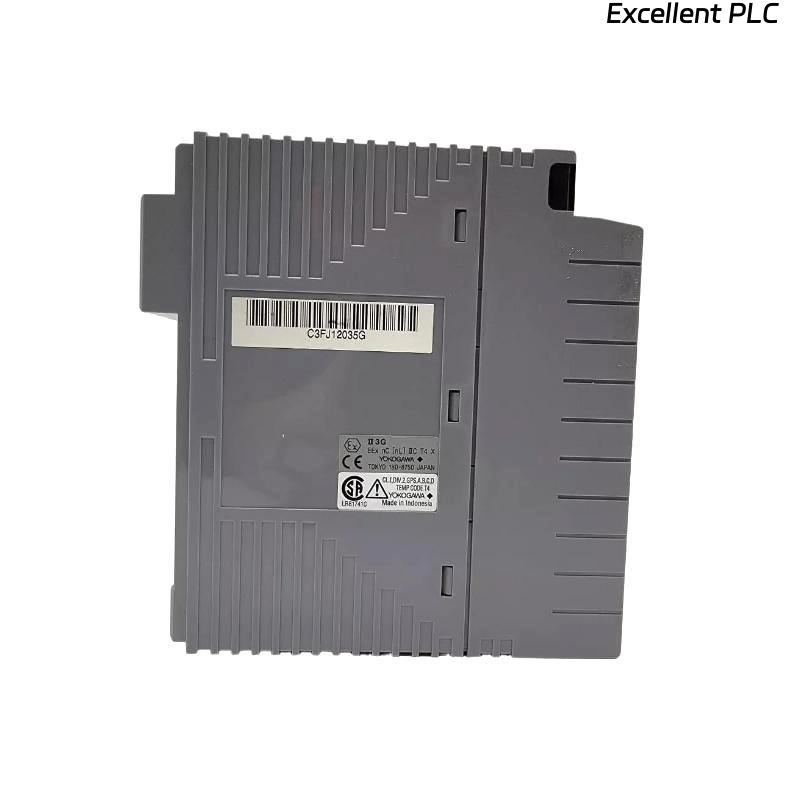
Industrial modules rarely burn directly in a fire, but smoke, soot, and melted insulation residues can severely degrade insulation resistance and signal integrity. This case documents how a Yokogawa EB511 bus interface module became unstable after a warehouse fire without visible flame damage.
1. Incident Overview
-
Module: Yokogawa EB511 Bus Interface Module
-
Installation: Outdoor field I/O cabinet
-
Industry: Wastewater treatment
-
Event: Nearby warehouse caught fire; smoke infiltrated control cabinet
-
Cabinet Temperature: approx. 65–75°C (no direct flame)
-
Primary Damage: Soot deposition and hygroscopic carbon residue
After the event, the module continued to run, but symptoms appeared gradually.
2. Post-Fire Operational Symptoms
Technicians observed intermittent communication failures:
✔ Bus timeout errors
✔ Retransmission bursts
✔ Occasional I/O dropouts
✔ Increased CRC failure rate
✘ No hard power failure
✘ No permanent fault LEDs
The most striking part: the module didn’t “die” immediately, making diagnosis harder.
3. Root Physical Mechanism
Fire smoke contains:
-
Carbon particles
-
Hydrocarbons
-
Chlorides from burning plastics
-
Moisture
Once deposited on PCBs, soot becomes slightly conductive, especially when mixed with humidity. This leads to:
-
Reduced creepage distance
-
Surface leakage currents
-
Impedance distortion on bus lines
-
Differential signal mismatch
On the EB511 (which handles differential bus signaling), this caused erratic behavior.
4. Lab Inspection Findings
After removing the module from service:
4.1 Visual Clues
-
Soot film on connector shield
-
Brown residue around terminal blocks
-
Slight tackiness on PCB surface
-
Dust accumulation near bus transceivers
4.2 Electrical Measurements
| Parameter | Normal | Post-Fire Reading |
|---|---|---|
| Differential line impedance | ~120Ω | 93–101Ω (fluctuating) |
| Insulation resistance | >1GΩ | 8–23MΩ (surface leakage) |
| Shield-to-ground coupling | Stable | Variable with humidity |
This confirmed contamination-induced signal degradation.
5. Field Diagnostic Using Bus Monitor
A simple bus analyzer was used to capture error bursts.
Below is a Python (pyserial + minimal parsing) snippet used to detect CRC anomalies during investigation:
During a 30-minute capture, technicians counted:
This matched the operators’ reports of intermittent I/O loss.
6. Remediation & Cleaning Attempts
Technicians attempted salvage:
6.1 Cabinet-Level Actions
✔ Fresh air ventilation
✔ Filter replacement
✔ Terminal re-wiring
✔ Grounding continuity verification
6.2 Module-Level Cleaning
The EB511 PCB underwent:
-
Isopropyl alcohol (IPA) cleaning
-
Ultrasonic wash (65°C)
-
Low-humidity dry cabinet bake (8h @ 50°C)
After cleaning, insulation resistance improved to:
But the differential impedance and CRC errors did not fully stabilize, likely due to:
-
Micro-corrosion at transceiver pins
-
Residual contamination under IC packages
Therefore, cleaning did not restore full reliability.
7. Final Engineering Decision
Because the plant operates continuous wastewater treatment, risk assessment concluded:
“Intermittent I/O is more dangerous than a hard failure.”
Result:
✔ EB511 replaced with new unit
✔ Contaminated module classified as non-serviceable
✔ Cabinet smoke intrusion mitigation upgraded
8. Preventive Engineering Measures
To avoid similar failures after fire events:
✔ Install positive-pressure air purge systems
✔ Route fresh air from conditioned environment
✔ Use smoke-rated cabinet gaskets
✔ Install fire dampers on HVAC ducts
✔ Document post-fire electrical inspection protocols
Even without flames, smoke alone can destroy electronics by altering signal integrity.
9. Conclusion
Smoke contamination is a highly underestimated failure mode. The Yokogawa EB511 survived temperature exposure but became electronically unreliable due to conductive soot altering differential bus characteristics. Cleaning improved insulation but did not restore deterministic performance, making full replacement the only safe option.