 Excellent PLC


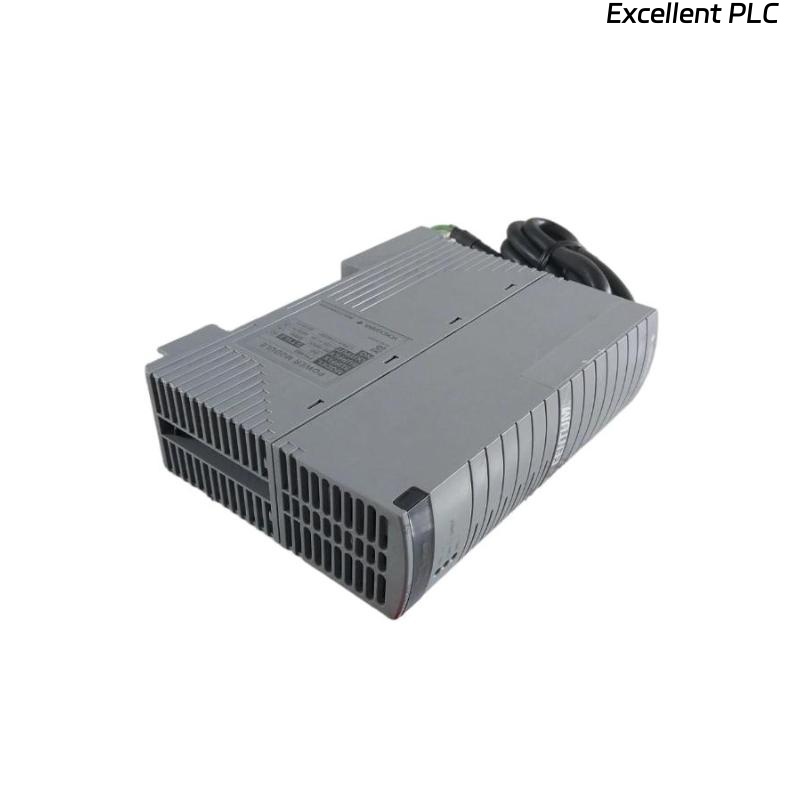
1. Device Profile
-
Model: Yokogawa PW482
-
Category: 24 VDC power supply module
-
Nominal Output: 24 V / 5 A
-
Backplane Voltage Range: 20.4–28.8 V
-
Operating Temperature: 0–50°C
-
Typical Installation: DCS power bay or lower cabinet rack
2. Environmental Exposure Incident
During an extreme rainfall event in July 2024, rainwater penetrated a rooftop vent and entered a control room hosting multiple DCS cabinets. Approximately 2–3 liters of water dripped directly above the cabinet section containing the PW482 module for nearly 25 minutes.
The module was positioned in the bottom slot (~0.4 m above floor level), resulting in water collecting around the module’s lower edge and connector area.
3. On-Site Failure Symptoms
The module did not fail instantly. Instead, it exhibited a progressive degradation pattern:
0–5 minutes after moisture contact:
| Parameter | Normal | Observed |
|---|---|---|
| Output Voltage | 24.0–24.1 V | 23.0–23.4 V |
| Load Current | 2.5–3.0 A | 3.6–4.0 A |
| Output Ripple | <70 mVp-p | 180–250 mVp-p |
| Status LED | Steady Green | Green → Amber Blink |
5–12 minutes after moisture contact:
-
Multiple communication timeouts
-
Intermittent power dips > 80 ms
-
PLC registered 17 power-related faults in 10 min
Diagnostic log samples:
After ~12 minutes, PW482 completely shut down.
4. Laboratory Inspection & Electrical Analysis
The module was sent to a repair facility 3 hours later. The unit was disassembled and evaluated under controlled conditions.
4.1 Visual Findings
-
Moisture residue found around lower PCB region
-
Early corrosion visible on solder joints near output stage
-
Oxidized terminal block (tin plating turned matte grey)
-
Staining radius on PCB approx. 22–35 mm
-
No burnt traces detected
4.2 Electrical Diagnostics
Measured vs standard reference values:
| Test Item | Measured | Expected | Status |
|---|---|---|---|
| Surface Resistance | 2.1–3.0 MΩ | >20 MΩ | Abnormal |
| Isolation (Output→Backplane) | 8.4 MΩ | ≥10 MΩ | Marginal |
| Inductor L1 Q-factor | 0.33 | 0.72–0.85 | Degraded |
| MOSFET Gate Leakage | 158 μA | <10 μA | Failed |
| Output Regulation | Unstable | Stable ±1% | Failed |
Result indicates electrolytic corrosion accelerated by live voltage under moisture.
5. Repair Feasibility Evaluation
Water-damaged power modules generally fall into three repair categories:
-
Surface contamination only → Cleanable, repairable
-
Terminal oxidation → Replaceable
-
Switching stage failure → Often uneconomical
The PW482 sample exhibited:
-
Terminal oxidation (category 2)
-
Switching MOSFET leakage damage (category 3)
Final evaluation:
Technically repairable but not economically viable.
Recommended action: module replacement.
6. Replacement Procedure (Field Method)
Technicians followed a controlled replacement process:
Power Isolation:
-
Main supply disconnected for >5 minutes
-
Load confirmed at <0.2 A before removal
Swap Steps:
Post-Installation Validation:
| Parameter | Result |
|---|---|
| Output Voltage | 24.06 V @ 3 A |
| Ripple | 54 mVp-p |
| Temperature Rise | +14°C after 30 min |
| System Faults | None |
7. Preventive Mitigation Measures
To prevent similar failures in the future, the following measures were implemented:
✔ Cabinet Top Sealing
-
Industrial silicone applied around vent
-
Roof drain route corrected
✔ Splash Shields Installed
-
Low-cost polycarbonate drip guards over power modules
-
Cost: < USD 40 per cabinet
✔ Positioning Revision
-
Power modules moved to >1.1 m height zone
✔ Humidity Monitoring
-
Passive humidity indicators added (threshold >65% RH)
✔ Spare Inventory Strategy
Recommended for wastewater facilities:
8. Key Engineering Takeaways
-
PW482 is generally robust, but water + live voltage can cause irreversible corrosion within 10–30 minutes
-
Water damage is not the most expensive failure mode, yet reliability after repair cannot be guaranteed
-
The most effective solution is preventing exposure, not post-failure repair
-
Proper cabinet design and installation height significantly reduce risk