 Excellent PLC


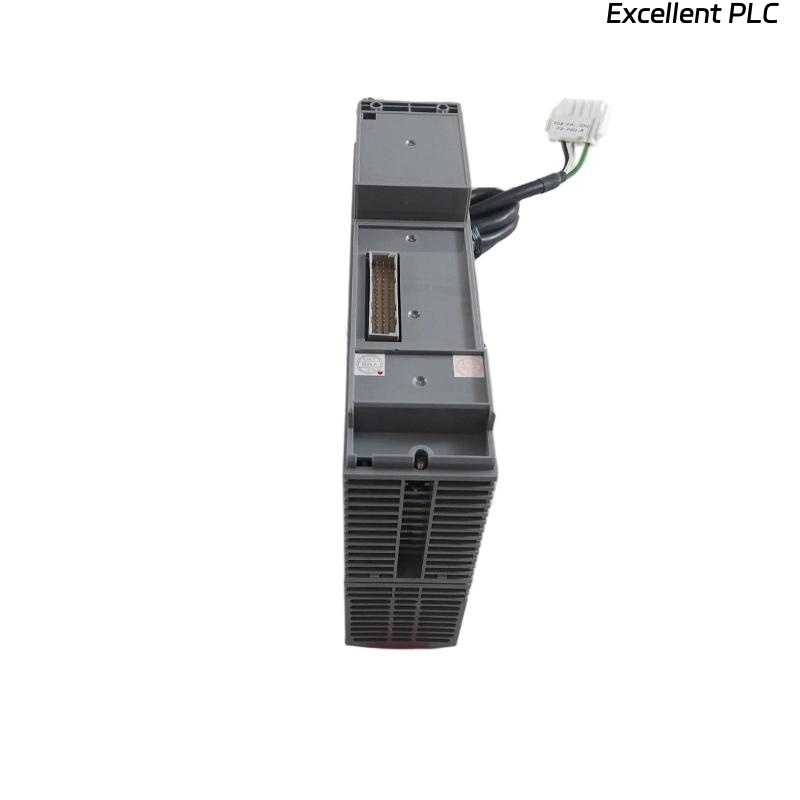
Industrial power supply modules such as the Yokogawa PW482 are designed to operate within a specific input voltage range. When a technician accidentally applies a voltage outside that range, the result is typically immediate failure. Among all failure modes observed in the field, incorrect input wiring is one of the fastest and most destructive.
This document explains how such failures happen, what symptoms appear, what internal components are usually damaged, and how maintenance teams should respond to prevent recurrence.
1. Normal Input Specifications
The PW482 is designed for controlled supply conditions:
-
Input Type: AC mains or UPS-backed AC
-
Nominal Voltage: 100–120 VAC or 200–240 VAC (depending on region)
-
Frequency: 50/60 Hz
-
Surge Tolerance: Moderate, not designed for direct raw grid fluctuations
-
Isolation: Galvanically isolated stages for safety
These design parameters assume stable and correctly wired input power.
2. How Miswiring Accidents Happen
Incorrect wiring typically occurs during:
-
Emergency maintenance under time pressure
-
Cabinet retrofits or upgrades
-
Replacement of power distribution blocks
-
Temporary bypassing of UPS during testing
-
Misidentification of phase vs neutral conductors
Common mistakes include:
❌ Applying 480 VAC instead of 240 VAC
❌ Connecting DC bus directly into the PW482 AC input
❌ Reversing neutral and phase on ungrounded systems
❌ Floating grounds causing differential spikes
Any of the above can destroy the module in milliseconds.
3. Observable External Symptoms
When miswired, the PW482 does not usually “half-fail” — it either works or dies immediately.
Typical visible symptoms:
-
No output voltage on the 24 VDC bus
-
No status LEDs or LEDs blinking abnormally
-
Tripped upstream breaker or fuse
-
Burnt smell near the AC input section
-
In rare cases, visible scorch marks on slot rails
In over-voltage cases (>300 VAC applied), technicians often report hearing a short “pop” within the cabinet at the moment of energizing.
4. Electrical Damage Mechanism Inside PW482
Applying incorrect input voltage primarily damages components on the primary stage of the module.
The most commonly failed parts include:
| Component | Failure Behavior | Reason |
|---|---|---|
| Input Fuse | Blows open | First line protection |
| Bridge Rectifier | Short/Cracked | Overvoltage stress |
| MOV Surge Absorber | Exploded / Cracked | Excess energy |
| NTC Thermistor | Open Circuit | Thermal shock |
| PWM Controller IC | Internal Short | Overvoltage on primary rail |
| Switching MOSFET | Gate Punch-Through | Voltage spike |
Once the MOSFET and controller stage are compromised, repairs become impractical due to unpredictable secondary failures.
5. Repair vs Replace Decision
A PW482 subjected to incorrect voltage is usually not a good candidate for repair for three reasons:
-
Primary Stress Propagation: Damage may extend beyond visible components.
-
Compromised Dielectrics: Insulation reliability can degrade.
-
Unverifiable Long-Term Reliability: Repaired units can fail again unpredictably.
Technical rule of thumb used by many service centers:
“If the primary stage is destroyed, treat the unit as non-repairable for critical systems.”
For non-critical training labs, repairs can be attempted — but for real industrial production lines, replacement is strongly recommended.
6. Correct Replacement Procedure
To prevent additional cabinet or backplane damage:
If the upstream fuse or breaker has tripped, replace it only after verifying no secondary faults are present.
7. Preventing Misoperation in the Future
Human-factor failures are preventable. Recommended countermeasures:
A. Clear Labeling
-
Mark AC voltage levels on cabinet doors and terminal strips
-
Color-code conductors (brown/blue/green-yellow or site standards)
B. Physical Barriers
-
Use terminal shields to prevent accidental contact
-
Install keyed connectors when possible
C. Documentation Control
-
Keep up-to-date wiring diagrams in the cabinet
-
Update after every modification
D. Training & Lockout
-
Require authorized personnel for power work
-
Enforce “lockout & test before energizing” procedures
E. UPS & Isolation
-
Always feed PW482 through UPS or isolation transformers to reduce risk
8. Final Engineering Notes
The Yokogawa PW482 is mechanically robust and electrically stable when operated within its design envelope. The issue is not with the module — it is with the wiring environment around it.
Incorrect input voltage is a failure mode that:
-
Has zero tolerance
-
Causes instant damage
-
Is 100% preventable
Preventing it is far cheaper than replacing modules and recovering from production downtime.