 Excellent PLC


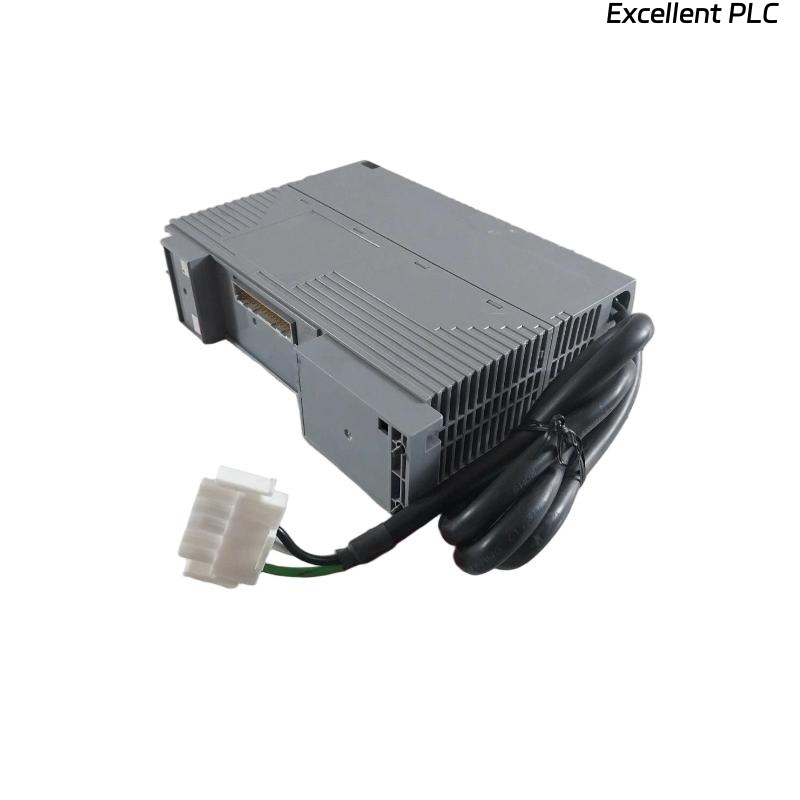
Most industrial power supplies are rated for a certain level of electrical noise and transient spikes, but lightning energy is in a completely different league. The Yokogawa PW482 is no exception. While it is a reliable 24 VDC supply for DCS and instrumentation, a poorly protected plant grid during a storm can still take it out in milliseconds.
Below is a breakdown of how a lightning surge destroyed a PW482 in a steel plant in South Asia in August 2023, and how the engineering team handled it afterward.
1. What Happened? (Real Field Context)
A thunderstorm generated a cloud-to-ground lightning strike roughly 200–300 meters from the plant perimeter. The strike injected energy into the overhead power line feeding the plant substation. Although the main distribution switchgear damped the surge, enough residual energy traveled through:
The PW482 was sitting at the very end of this chain.
Duration of the event: < 2 ms
Peak transient on the 24 V bus: ≈ 58–65 V (measured post-event from UPS logs)
2. Symptom Pattern Seen in the Control System
This failure did not look like a normal power supply burnout. Instead, all system signs pointed to instability:
✔ Random DCS node resets
✔ Intermittent I/O scan loss
✔ Backplane communication timeouts
✔ Inconsistent 24 V readings (dropping to 17–19 V intermittently)
Diagnostic excerpts from the historian:
Total runtime before complete shutdown: ~ 48 seconds
3. What the Surge Actually Damaged Inside PW482
Lightning surges do not usually “burn everything.” They pick weak points.
Inspection showed:
-
Input MOV (Metal Oxide Varistor) was cracked
-
Primary-side rectifier diode was shorted
-
One PWM controller pin had visible carbon deposits
-
Secondary capacitors were bulged but not exploded
-
Output MOSFET survived (unexpected but possible)
Measured values:
| Component | Status | Notes |
|---|---|---|
| MOV | Failed Open | Typical after high-energy surge |
| Bridge Rectifier | Shorted | Caused fuse blow |
| Fuse | Open | Prevented fire (good) |
| Output Caps (ESR) | 2.5–3.6 Ω | Should be <0.6 Ω |
| Controller IC | Partially Damaged | Gate pin output unstable |
4. Can a PW482 Be Repaired After Lightning?
Short answer: Sometimes, but not always smart.
Repair considerations:
✔ Low-energy surges → often repairable
✘ High-energy surges → hidden damage → unreliable
Lightning damage creates secondary failures due to dielectric stress, making long-term reliability unpredictable.
In this case:
-
Repair cost estimate: USD 210–260
-
Brand new PW482 replacement: USD 350–420
-
Plant downtime cost/hour: ~USD 18,000
Decision was obvious: replace immediately, analyze failed unit later.
5. Replacement Process (Fast Field Method)
Steps followed by maintenance crew:
Total replacement time: 8 minutes
System reboot and I/O resync: 3 minutes
Total downtime: ≈ 11 minutes
6. How This Could Have Been Prevented
Lightning protection is a system-level concept, not a module-level one. Key layers:
Layer 1: External Surge Arrestors
Install at substation or plant entry:
-
Class I surge arrestors
-
Ground bonded at low impedance
Layer 2: Internal SPD (Surge Protective Devices)
Install on:
-
400 V MCC
-
UPS input
-
Control power transformers
Layer 3: DC Bus Surge Clamp
For 24 V instrumentation bus:
-
TVS diodes
-
Transient suppressors
-
MOV arrays
Layer 4: Proper Grounding
Lightning hates long grounding paths. Keep:
-
< 1 Ω grounding resistance if possible
-
< 5 m lead length for SPD bonding
Layer 5: Regular Testing
UPS event logs saved this case by identifying surge voltage.
7. Lessons Learned
Lightning damage is often misunderstood. It is not about brute force; it is about steep rise-time transients (microseconds), and PW482 was simply not designed to take direct surge currents without system-level suppression.
Key takeaways:
✔ PW482 protected the backplane by sacrificing itself
✔ Surges travel farther than expected during storms
✔ The fastest recovery path is hot spare replacement
✔ Prevention is cheaper than analyzing burnt boards