 Excellent PLC


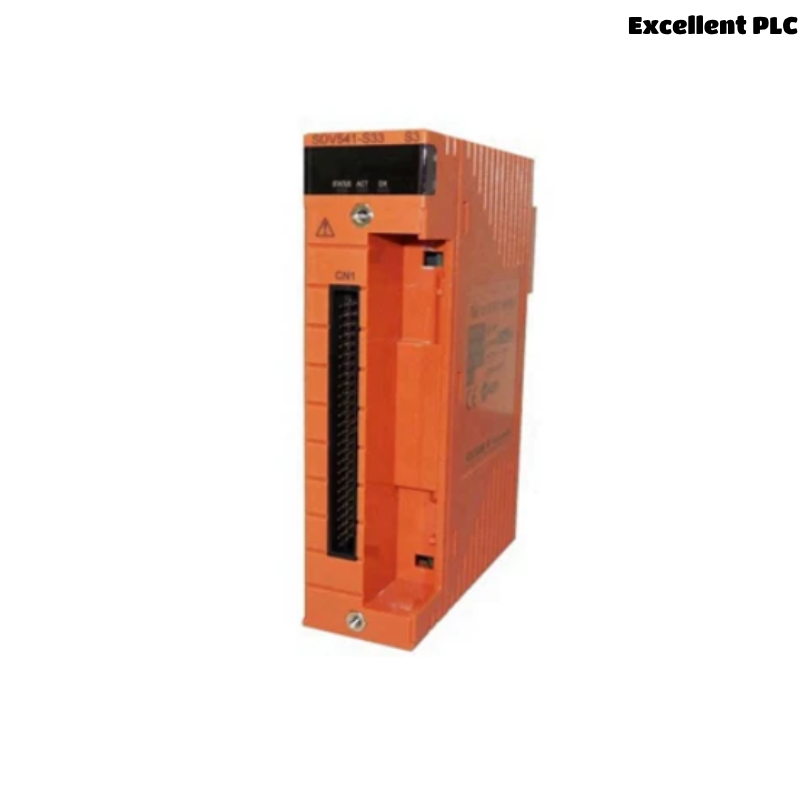
When designing or expanding a Yokogawa control system, selecting the correct bus interface module is a critical architectural decision. The SB401 Bus Interface Slave Module is often compared with other Yokogawa bus interface modules that serve different roles within the same system.
This article provides a technical comparison focused on function, responsibility, and application scenarios, helping engineers make informed selection decisions.
1. Functional Positioning
The most fundamental difference lies in system responsibility.
| Module Type | Primary Role | Communication Initiation |
|---|---|---|
| SB401 | Bus Slave Interface | Passive (responds only) |
| Master Interface Module | Bus Master | Active (polls slaves) |
| Controller Interface | System Integration | Active / Supervisory |
The SB401 is designed specifically for deterministic slave communication, not system control.
2. Communication Control Capability
The SB401 does not manage bus scheduling or polling logic.
By contrast, master-side modules handle:
This distinction directly impacts system complexity and scalability.
3. Configuration Complexity
| Aspect | SB401 | Other Bus Interface Modules |
|---|---|---|
| Address Setting | Required | Often automatic |
| Timing Control | Master-defined | Internally managed |
| Logic Configuration | Minimal | Moderate to advanced |
The SB401 offers a low-configuration footprint, making it ideal for systems where stability and simplicity are priorities.
4. Data Handling Responsibility
The SB401 focuses strictly on data transfer, not interpretation.
Other interface modules may perform:
-
Data aggregation
-
Pre-processing
-
Diagnostic evaluation
This separation ensures that processing load remains centralized at the controller level.
5. Fault Detection and Diagnostics
The SB401 provides basic error reporting, while higher-level diagnostics are handled elsewhere.
This layered approach improves system reliability by avoiding duplicated logic.
6. Typical Application Scenarios
SB401 is the best choice when:
-
The system uses a strict master–slave bus topology
-
Deterministic communication is required
-
I/O expansion needs to remain simple and modular
Other bus interface modules are preferred when:
-
Complex communication scheduling is required
-
Multiple network segments must be managed
-
Advanced diagnostics or redundancy is needed
7. Selection Considerations for Engineers
When choosing between SB401 and other Yokogawa bus interface modules, engineers should evaluate:
-
System architecture (centralized vs distributed)
-
Communication determinism requirements
-
Expansion strategy
-
Maintenance and troubleshooting workflow
Conclusion
The Yokogawa SB401 Bus Interface Slave Module is purpose-built for slave-side communication in deterministic bus systems. Compared with other Yokogawa bus interface modules, it offers simplicity, predictability, and architectural clarity, making it an excellent choice for stable and scalable control systems.
Understanding these differences allows engineers to optimize system performance, reduce integration risks, and simplify long-term maintenance.