 Excellent PLC


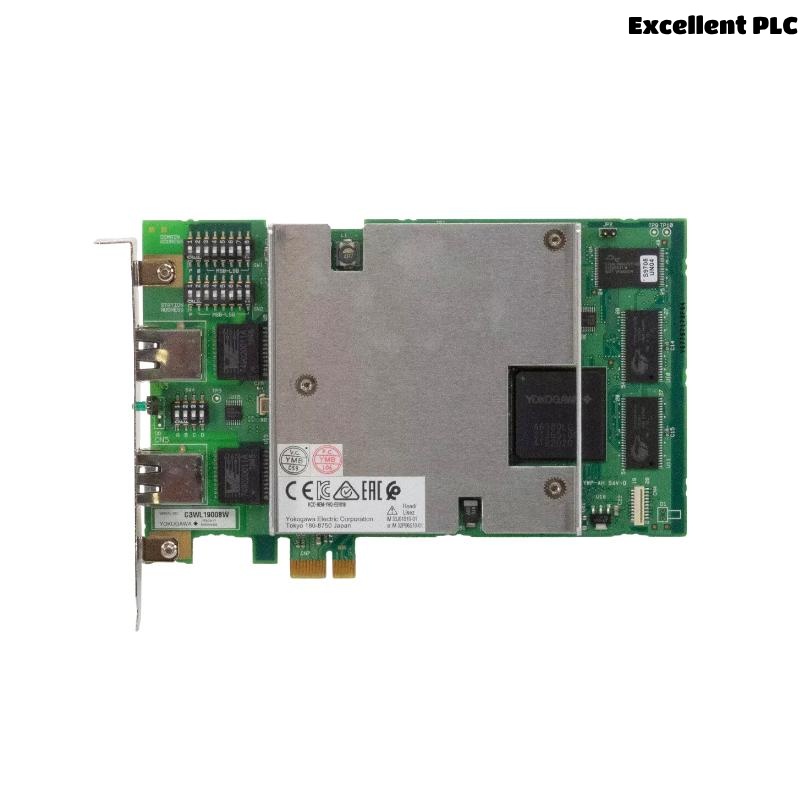
Yokogawa control systems offer multiple interface card options, each designed for specific communication, I/O handling, and system architecture requirements. Selecting the correct interface card is essential for system reliability, scalability, and long-term maintainability.
This article compares the Yokogawa VI702 Interface Card with other commonly used Yokogawa interface cards, focusing on technical capabilities, application scenarios, and selection criteria.
1. Positioning of the VI702 in Yokogawa Systems
The VI702 is primarily designed for:
-
Stable I/O signal interfacing
-
Internal communication between I/O modules and controllers
-
Support for redundant system architectures
-
Medium to large-scale DCS deployments
It is not intended to replace communication modules or protocol converters, but to act as a reliable interface layer within the system.
2. Functional Comparison Overview
| Feature | VI702 | Standard Interface Cards | Communication Cards |
|---|---|---|---|
| Primary Function | I/O signal interfacing | Basic signal routing | Network/protocol communication |
| Redundancy Support | Yes | Limited | Depends on model |
| System Integration | Deep (DCS internal) | Basic | Network-level |
| Configuration Complexity | Moderate | Low | High |
| Typical Use | Core system interface | Small expansions | External connectivity |
3. VI702 vs Basic Interface Cards
Key Differences
-
VI702 supports higher system loads and more complex architectures
-
Basic interface cards are suitable for simple, non-redundant systems
Engineering Insight: In systems with future expansion plans, VI702 provides better long-term flexibility.
4. VI702 vs Communication Cards
Communication cards are designed for external protocol integration (e.g., Modbus, Ethernet).
| Aspect | VI702 | Communication Card |
|---|---|---|
| Handles Field I/O | Yes | No |
| Protocol Conversion | No | Yes |
| Internal Data Flow | Optimized | Indirect |
| External Network Access | No | Yes |
5. Selection Criteria for Engineers
When choosing an interface card, engineers should evaluate:
-
System architecture (single vs redundant)
-
I/O volume and expansion plans
-
Required availability level
-
Maintenance and lifecycle strategy
The VI702 typically scores higher in availability and scalability.
6. Typical Engineering Scenarios
Scenario A: Plant Expansion
-
Existing DCS needs additional I/O
-
High uptime requirement
-
Recommended: VI702
Scenario B: Small Standalone System
-
Limited I/O
-
No redundancy required
-
Recommended: Basic interface card
Scenario C: Third-Party System Integration
-
External network communication needed
-
Recommended: Communication card
7. Long-Term Maintenance Perspective
From a lifecycle viewpoint, the VI702 offers:
-
Better documentation and support
-
Easier integration into redundant systems
-
Predictable performance under high load
Conclusion
The Yokogawa VI702 Interface Card is best suited for core system interfacing, especially in redundant and large-scale DCS architectures. While basic interface cards and communication modules have their place, the VI702 provides a balanced solution for stability, scalability, and long-term system reliability.
Choosing the right interface card ensures not only correct system operation, but also reduced maintenance effort and improved plant availability over the system lifecycle.