 Excellent PLC


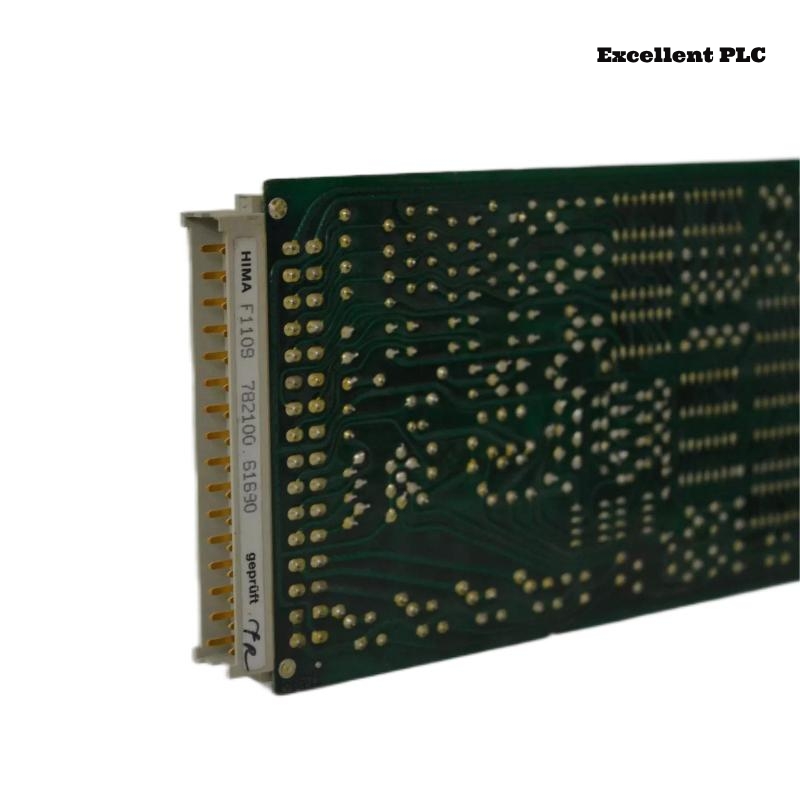
Symptom Description in the Control Room
A pressure loop connected to the Black Horse F1109 Analog Input Module suddenly displayed a constant maximum value, despite the process remaining stable. Operators confirmed that the transmitter was not at full-scale condition. In another case, a level channel remained permanently at zero even when the tank was visibly filled.
This type of failure — where the analog value is stuck at either the low or high limit — typically indicates signal saturation, wiring faults, or internal analog front-end failure.
Understanding What “Saturation” Really Means
In analog input modules, saturation occurs when the measured signal exceeds the measurable range or when the input conditioning stage cannot correctly interpret the signal. The system then reports a fixed extreme value (e.g., 0% or 100%).
Possible categories of causes include:
-
Open circuit in a 4–20 mA loop
-
Short circuit or overcurrent event
-
Incorrect configuration of input type
-
Internal failure in input conditioning circuitry
Step-by-Step Isolation Process
1. Measure loop current directly at the terminal (using a calibrated meter).
2. Confirm transmitter output matches expected process value.
3. Inspect loop wiring for open or short conditions.
4. Inject a known stable current (4 mA / 12 mA / 20 mA).
5. Compare module reading response to injected test values.
If the injected signal still results in a fixed full-scale or zero reading, the fault is likely internal to the F1109 module.
Distinguishing Open Loop vs Internal Failure
A key diagnostic distinction:
-
Open loop condition often drives the reading to zero or below-range.
-
Short circuit or excessive current may drive the reading to full-scale.
-
Internal analog front-end damage results in no change regardless of injected signal.
Testing with an independent calibrator is the most reliable way to isolate these conditions.
Typical Root Cause in Documented Cases
In several Planar F cabinets, saturation faults were traced to transient overvoltage events caused by improper grounding during maintenance activities. The analog front-end protection components absorbed the surge but suffered partial damage, leading to permanent measurement saturation on affected channels.
In other cases, incorrect configuration (e.g., voltage mode selected instead of current mode) caused the system to misinterpret the signal range.
Corrective Measures
– Repair or replace damaged loop wiring if open/short is detected.
– Verify and correct input type configuration.
– Replace the F1109 module if internal front-end damage is confirmed.
– Validate grounding integrity to prevent recurrence.
After module replacement, full functional validation should be performed across the measurement range.
Post-Repair Functional Verification
– Inject 4 mA → confirm 0% reading.
– Inject 12 mA → confirm ~50% reading.
– Inject 20 mA → confirm 100% reading.
– Monitor stability for at least one operational cycle.
This ensures both scaling accuracy and dynamic response are restored.
Preventive Recommendations
-
Implement surge protection on analog signal lines.
-
Ensure proper shielding and grounding practices.
-
Include analog loop verification in periodic maintenance routines.
-
Maintain documentation of input configuration parameters.
Analog input modules are particularly sensitive to electrical transients, making protection and proper configuration critical for long-term stability.
Conclusion
When a Black Horse F1109 Analog Input Module displays a constant full-scale or zero reading, the issue is typically related to loop wiring faults, configuration errors, or internal analog front-end damage. A structured diagnostic workflow using signal injection and loop measurement allows engineers to quickly isolate the root cause and restore accurate measurement within the Planar F system.