 Excellent PLC


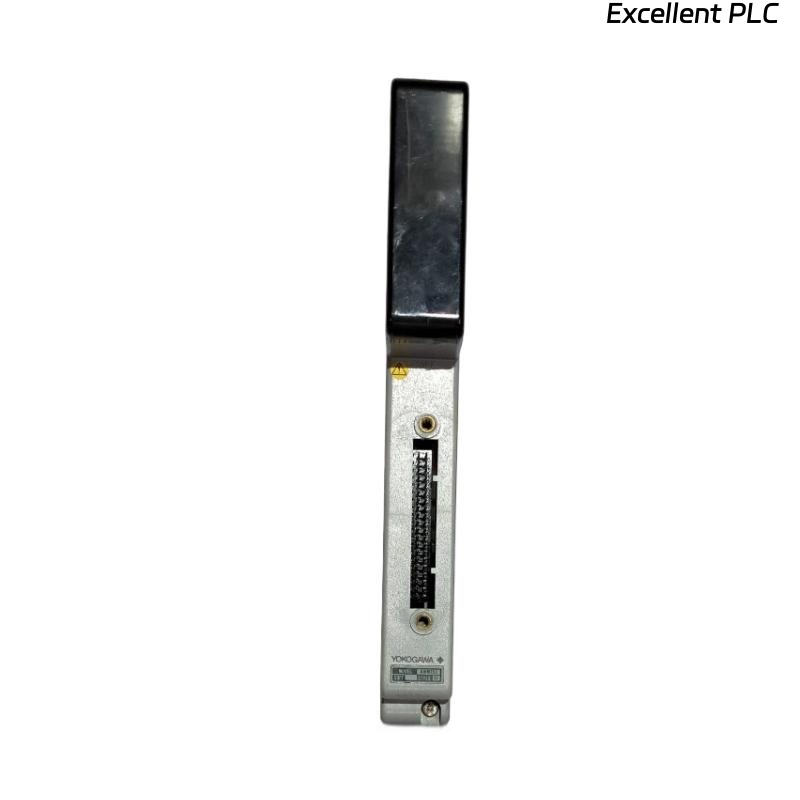
The Yokogawa AMM25C mV Input Multiplexer Module with Thermocouple Interface is a high-precision analog input module designed for Yokogawa CENTUM CS and CENTUM VP Distributed Control Systems (DCS). The module acquires multiple low-level millivolt (mV) input signals while providing an integrated thermocouple interface with Reference Junction Compensation (RJC), enabling accurate temperature measurement from multiple thermocouple channels. The AMM25C is a 15-point connector-type multiplexer module with an additional RJC input port for thermocouple applications. It is widely used in industrial process temperature monitoring, furnaces, reactors, boilers, kilns, heat exchangers, and analyzer systems requiring high-accuracy temperature acquisition.
Contents
- 1. Product Overview
- 2. Main Features
- 3. Typical Applications
- 4. Installation Preparation
- 5. Module Installation
- 6. Thermocouple and mV Signal Wiring
- 7. Module Configuration
- 8. Commissioning Procedure
- 9. Functional Verification
- 10. Preventive Maintenance
- 11. Practical Installation Case
- 12. Frequently Asked Questions
Product Overview
The AMM25C continuously scans fifteen multiplexed input channels and converts low-level analog signals into digital values for the Yokogawa controller. An integrated Reference Junction Compensation (RJC) input improves thermocouple measurement accuracy by automatically compensating for terminal temperature variations. This design supports reliable multi-channel temperature monitoring in demanding industrial environments.
Main Features
- 15-channel connector-type multiplexer module
- Integrated thermocouple interface
- Reference Junction Compensation (RJC) input
- High-resolution millivolt signal acquisition
- High-accuracy temperature measurement
- Built-in multiplexed channel scanning
- Compatible with Yokogawa CENTUM CS and CENTUM VP
- Continuous industrial operation capability
Typical Applications
- Distributed Control Systems (DCS)
- Industrial furnace monitoring
- Boiler temperature measurement
- Reactor temperature monitoring
- Heat exchanger control
- Process analyzer systems
- Power generation plants
- Petrochemical facilities
- Chemical processing plants
- Metallurgical industries
Installation Preparation
- Verify the AMM25C module model.
- Review approved wiring diagrams.
- Confirm thermocouple type for each channel.
- Inspect connector assemblies and extension cables.
- Follow ESD protection procedures.
Module Installation
- Power down the controller if required by maintenance procedures.
- Insert the AMM25C into the designated I/O slot.
- Secure the retaining mechanism.
- Connect the field signal connector.
- Connect the RJC interface where applicable.
- Restore controller power.
Thermocouple and mV Signal Wiring
- Verify input signal polarity.
- Use matching thermocouple extension cable.
- Inspect connector integrity.
- Verify RJC wiring.
- Use shielded signal cables.
- Separate analog wiring from power cables.
- Ground cable shields according to plant standards.
Module Configuration
- Assign input channels.
- Select thermocouple type where required.
- Configure engineering units.
- Assign measurement ranges.
- Configure alarm limits.
- Download controller configuration.
Commissioning Procedure
VERIFY MODULE INSTALLATION
CHECK FIELD WIRING
VERIFY RJC CONNECTION
CONFIGURE INPUT CHANNELS
VERIFY TEMPERATURE VALUES
CHECK DIAGNOSTICS
TEST ALARMS
CONFIRM NORMAL OPERATION
Functional Verification
- Verify all configured channels respond correctly.
- Compare measurements with calibrated reference equipment.
- Verify RJC operation.
- Confirm alarm functionality.
- Monitor long-term measurement stability.
Preventive Maintenance
- Inspect field wiring regularly.
- Verify connector security.
- Inspect thermocouple extension cables.
- Review module diagnostics.
- Verify calibration during scheduled maintenance.
- Maintain cabinet cooling and cleanliness.
Practical Installation Case
During the modernization of a refinery heater control system, an AMM25C module was installed to acquire temperature measurements from multiple thermocouples distributed throughout the combustion chamber.
Following commissioning:
- All fifteen temperature channels operated normally.
- Reference junction compensation functioned correctly.
- Measured temperatures agreed with calibration equipment.
- The control system maintained stable temperature monitoring throughout continuous plant operation.
Frequently Asked Questions
What is the primary function of the AMM25C?
The AMM25C acquires multiple millivolt and thermocouple signals through multiplexed scanning while providing integrated reference junction compensation for accurate temperature measurement.
Why is Reference Junction Compensation important?
Reference Junction Compensation automatically corrects thermocouple measurements for terminal temperature variations, significantly improving measurement accuracy in industrial environments.
What should be verified after installation?
Verify module installation, connector integrity, thermocouple wiring, RJC connection, channel configuration, measured temperatures, diagnostics, alarm functions, and controller communication before placing the system into normal operation.
Summary
Proper installation of the Yokogawa AMM25C mV Input Multiplexer Module with Thermocouple Interface ensures accurate multi-channel temperature acquisition for Yokogawa CENTUM Distributed Control Systems. Correct wiring, proper reference junction compensation, systematic commissioning, and routine preventive maintenance maximize measurement accuracy, reliability, and long-term industrial process performance.