 Excellent PLC


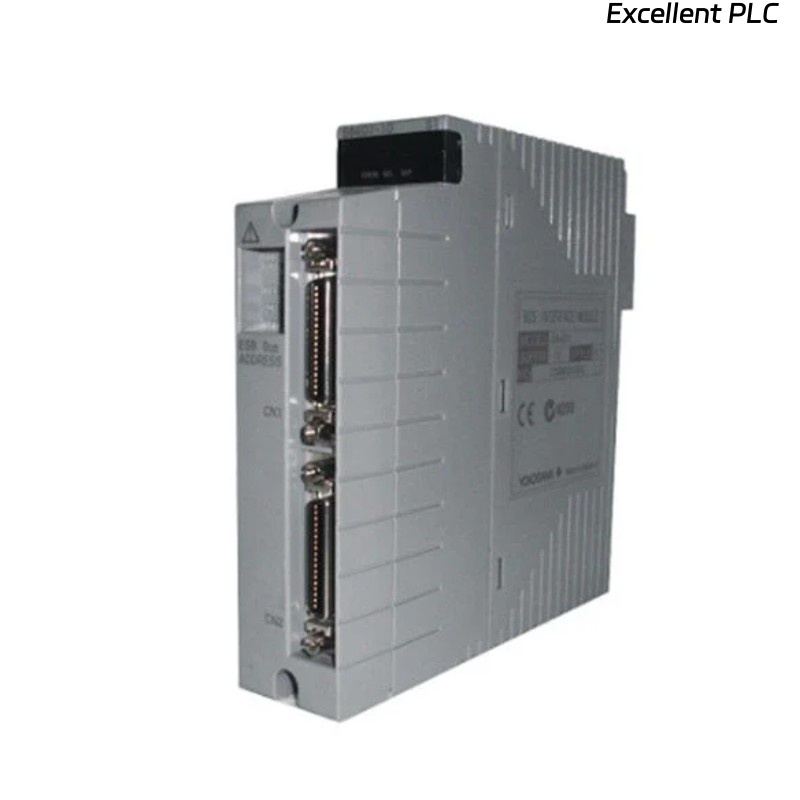
The Yokogawa ANT401 Optical ESB Bus Repeater Master Module is the master-side optical communication module used in Yokogawa CENTUM VP and CENTUM CS 3000 Distributed Control Systems (DCS). Installed at the controller or local ESB Bus node, the ANT401 converts electrical Enhanced Serial Bus (ESB) signals into optical signals for transmission over fiber optic cable. It operates together with the ANT502 Optical ESB Bus Repeater Slave Module to provide reliable long-distance communication between the Field Control Unit (FCU) and remote Field I/O (FIO) nodes. Because the ANT401 serves as the starting point of the optical communication network, failures involving this module may interrupt communication with multiple remote ESB Bus nodes simultaneously.
Contents
- 1. Understanding Optical Repeater Faults
- 2. Common Failure Symptoms
- 3. Typical Causes
- 4. Initial Hardware Inspection
- 5. Power and Module Verification
- 6. Fiber Optic Communication Inspection
- 7. Diagnostic Analysis
- 8. Recommended Troubleshooting Workflow
- 9. Corrective Actions
- 10. Functional Recovery Verification
- 11. Preventive Maintenance
- 12. Industrial Maintenance Case
- 13. Frequently Asked Questions
Understanding Optical Repeater Faults
The ANT401 converts electrical ESB Bus communication into optical transmission. Communication failures may originate from contaminated fiber connectors, damaged optical cables, incorrect transmit/receive polarity, faulty optical transceivers, loose electrical ESB connections, or communication problems with the paired ANT502 slave module. Accurate diagnosis should determine whether the fault is located on the master side, the fiber optic link, or the remote slave side.
Common Failure Symptoms
- Remote ESB Bus nodes become unavailable.
- Optical communication alarms appear in the DCS.
- Optical Link LED remains OFF.
- Communication with the ANT502 slave module fails.
- Field Control Unit reports ESB Bus communication errors.
- Intermittent communication interruptions occur.
- Multiple remote I/O cabinets become offline.
- Optical redundancy alarms are generated.
Typical Causes
- Dirty LC fiber optic connectors.
- Broken or excessively bent fiber optic cable.
- Incorrect transmit/receive fiber connections.
- Loose ESB Bus connector.
- Faulty optical transceiver circuitry.
- Power supply instability.
- Communication mismatch with the paired ANT502 module.
- Improper module installation.
- Internal ANT401 hardware failure.
Initial Hardware Inspection
- Verify the ANT401 is fully seated.
- Inspect module status LEDs.
- Check electrical ESB Bus connections.
- Inspect optical fiber connectors.
- Verify cabinet temperature and ventilation.
- Confirm protective grounding.
Power and Module Verification
- Verify controller power supply status.
- Confirm module power indicators.
- Inspect module connectors.
- Review controller diagnostic messages.
- Verify module recognition.
- Test the module in another compatible slot if available.
Fiber Optic Communication Inspection
- Inspect optical transmit (TX) and receive (RX) connections.
- Clean LC fiber connectors using approved cleaning tools.
- Verify optical connector polarity.
- Measure optical attenuation if optical test equipment is available.
- Inspect fiber routing for excessive bending or mechanical damage.
- Verify communication with the paired ANT502 module.
Diagnostic Analysis
| Observed Condition | Possible Diagnosis |
|---|---|
| No optical communication | Power failure, module failure, or disconnected fiber |
| Optical Link LED OFF | Fiber break, incorrect polarity, or remote module offline |
| Intermittent communication | Dirty connectors or damaged optical cable |
| Multiple remote nodes offline | Master repeater failure or complete optical link failure |
| Communication alarms only after startup | Configuration mismatch or incorrect fiber connection |
Recommended Troubleshooting Workflow
CHECK DCS DIAGNOSTICS
VERIFY MODULE STATUS
CHECK ESB BUS CONNECTION
INSPECT FIBER CONNECTORS
VERIFY TX/RX POLARITY
CHECK REMOTE ANT502 STATUS
TEST OPTICAL COMMUNICATION
CONFIRM SYSTEM RECOVERY
Corrective Actions
- Reconnect loose ESB Bus connectors.
- Clean contaminated optical connectors.
- Replace damaged fiber optic cables.
- Correct TX/RX fiber polarity.
- Reseat the ANT401 module.
- Restore stable power supply.
- Replace defective ANT401 modules if internal failure is confirmed.
- Verify proper communication with the paired ANT502 slave module.
Functional Recovery Verification
- Confirm Optical Link LEDs indicate normal operation.
- Verify communication with the paired ANT502 module.
- Confirm all remote ESB Bus nodes are online.
- Verify process data transmission.
- Review DCS communication diagnostics.
- Monitor long-term communication stability.
Preventive Maintenance
- Clean fiber optic connectors during scheduled maintenance.
- Inspect fiber routing for physical damage.
- Verify module seating.
- Review communication alarm history.
- Maintain cabinet cooling and cleanliness.
- Periodically test optical communication redundancy where applicable.
Industrial Maintenance Case
At a large refinery, operators reported that several remote Field I/O stations became unavailable simultaneously. The DCS generated Optical ESB Bus communication alarms, and the ANT401 Optical Link LED remained OFF.
Maintenance engineers inspected the optical network and discovered that a fiber jumper had been incorrectly reconnected after cabinet maintenance, reversing the transmit and receive fibers. After correcting the fiber polarity, cleaning both LC connectors, and verifying communication with the paired ANT502 slave module:
- The Optical Link LED illuminated normally.
- All remote ESB Bus nodes were restored.
- Communication alarms cleared automatically.
- The control system operated continuously without further communication interruptions.
Frequently Asked Questions
Can the ANT401 operate by itself?
No. The ANT401 is designed to operate with a compatible ANT502 Optical ESB Bus Repeater Slave Module. Both modules are required to establish an optical communication link.
Why is the Optical Link LED OFF even though the module has power?
This usually indicates a fiber communication problem such as disconnected or contaminated fiber connectors, incorrect TX/RX polarity, excessive optical attenuation, a failed remote ANT502 module, or damaged fiber optic cable.
What should be checked before replacing the ANT401?
Verify controller power, ESB Bus electrical connections, optical TX/RX polarity, LC connector cleanliness, fiber cable integrity, communication with the paired ANT502 module, controller diagnostics, and optical attenuation before determining that the ANT401 hardware has failed.
Summary
Effective troubleshooting of the Yokogawa ANT401 Optical ESB Bus Repeater Master Module requires systematic inspection of power supplies, electrical ESB Bus connections, fiber optic communication paths, TX/RX polarity, paired ANT502 slave operation, and DCS diagnostics. Regular connector cleaning, fiber inspection, and communication verification help ensure reliable long-distance optical ESB Bus communication and continuous operation of Yokogawa CENTUM Distributed Control Systems.