 Excellent PLC


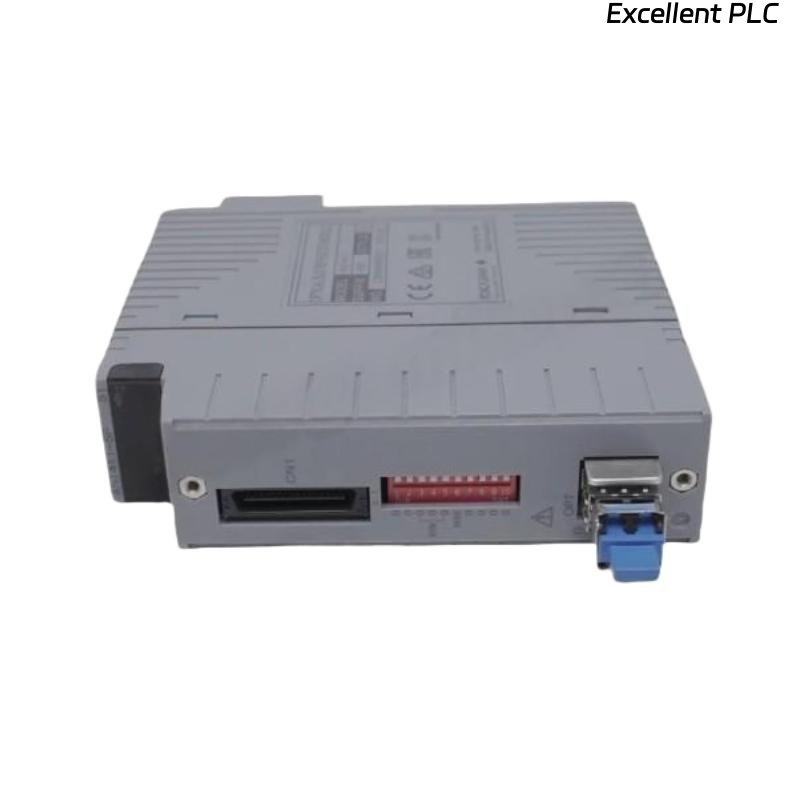
The Yokogawa ANT512 Optical ESB Bus Repeater Slave Module is a long-distance optical communication module used in Yokogawa CENTUM VP and CENTUM CS 3000 Distributed Control Systems (DCS). It serves as the slave-side module of the Optical Enhanced Serial Bus (ESB) communication network and operates together with the ANT411 Optical ESB Bus Repeater Master Module. The ANT512 converts incoming optical ESB Bus signals into electrical ESB Bus signals for remote Field I/O (FIO) nodes, enabling reliable communication over distances from 5 km to 50 km using single-mode fiber optic cable. It is installed as the standard slave module in Optical ESB Bus Node Units (ANB11) and can also be installed in the ANT10U Optical ESB Bus Repeater Unit.
Contents
- 1. Product Overview
- 2. Main Features
- 3. Typical Applications
- 4. Installation Preparation
- 5. Module Installation
- 6. Fiber Optic Wiring
- 7. System Configuration
- 8. Commissioning Procedure
- 9. Functional Verification
- 10. Preventive Maintenance
- 11. Practical Installation Case
- 12. Frequently Asked Questions
Product Overview
The ANT512 receives optical communication transmitted by the ANT411 master module and converts it into electrical ESB Bus communication for the local Optical ESB Bus Node Unit. It supports chain and star optical network topologies and is designed for long-distance industrial communication where remote Field I/O stations are located several kilometers away from the control room. The module also supports optional HKU cabinet environmental monitoring through dedicated connector options.
Main Features
- Optical-to-electrical ESB Bus signal conversion
- Supports optical transmission distances from 5 km to 50 km
- Compatible with ANT411 Optical ESB Bus Repeater Master Module
- Supports chain and star optical network topologies
- Complete electrical isolation
- High immunity to electromagnetic interference
- Optional HKU cabinet monitoring interface
- Industrial-grade continuous operation
Typical Applications
- Remote Field I/O cabinets
- Oil and gas pipeline stations
- Large petrochemical complexes
- Power generation plants
- LNG terminals
- Mining automation systems
- Remote compressor stations
- Long-distance industrial communication networks
Installation Preparation
- Verify the ANT512 model and suffix code.
- Confirm compatibility with the ANB11 or ANT10U unit.
- Prepare qualified single-mode fiber optic cables.
- Inspect LC optical connectors for cleanliness.
- Verify cabinet grounding.
- Review Optical ESB Bus network drawings.
- Confirm the corresponding ANT411 master module is installed.
Module Installation
- Switch off cabinet power before installation.
- Insert the ANT512 into the designated slot.
- Secure the module using the locking mechanism.
- Install the appropriate connector unit (/BU1A, /BU1B, /HU1A, or /HU1B as required).
- Connect the optical TX and RX fibers.
- Connect the local ESB Bus interface if applicable.
- Verify all electrical and optical connections before applying power.
Fiber Optic Wiring
- Connect TX and RX fibers according to system drawings.
- Clean LC fiber connectors before installation.
- Maintain the minimum allowable fiber bending radius.
- Separate fiber optic cables from power wiring.
- Secure all optical connectors.
- Label communication channels clearly.
System Configuration
- Configure Optical ESB Bus communication.
- Verify communication with the ANT411 master module.
- Assign remote node parameters.
- Configure redundant communication if installed.
- Download controller configuration.
- Review communication diagnostics.
Commissioning Procedure
VERIFY MODULE INSTALLATION
CHECK POWER STATUS
VERIFY FIBER CONNECTIONS
VERIFY ESB BUS CONNECTION
POWER UP SYSTEM
VERIFY OPTICAL LINK
TEST REMOTE I/O COMMUNICATION
CONFIRM NORMAL OPERATION
Functional Verification
- Verify Optical Link indicators show normal status.
- Confirm communication with the ANT411 master module.
- Verify all remote Field I/O nodes are recognized.
- Check communication diagnostics.
- Verify field signal transmission.
- Monitor long-term communication stability.
Preventive Maintenance
- Inspect and clean LC fiber connectors regularly.
- Check optical fiber cables for physical damage.
- Verify module seating.
- Review communication alarm history.
- Maintain cabinet ventilation.
- Perform scheduled optical communication testing.
Practical Installation Case
During the expansion of a pipeline control system, engineers installed an ANT512 Optical ESB Bus Repeater Slave Module inside an ANB11 Optical ESB Bus Node Unit approximately 32 km from the central control room. After connecting the single-mode fiber to the ANT411 master module, configuring the controller database, and verifying optical communication, all remote Field I/O stations operated reliably with stable long-distance communication and excellent immunity to electrical interference.
Frequently Asked Questions
What is the primary function of the ANT512?
The ANT512 receives optical ESB Bus communication from an ANT411 master module and converts it into electrical ESB Bus communication for remote Optical ESB Bus Node Units. It supports transmission distances from 5 km to 50 km.
Where can the ANT512 be installed?
The ANT512 is installed as the standard slave module in Optical ESB Bus Node Units (ANB11) and can also be installed in the ANT10U Optical ESB Bus Repeater Unit.
Can the ANT512 be used without an ANT411?
No. The ANT512 is designed to operate together with an ANT411 Optical ESB Bus Repeater Master Module. The master and slave modules must be installed as a matched pair to establish Optical ESB Bus communication.
Summary
The Yokogawa ANT512 Optical ESB Bus Repeater Slave Module provides reliable optical-to-electrical conversion for long-distance Optical ESB Bus communication in Yokogawa CENTUM Distributed Control Systems. Proper installation, clean fiber optic connections, correct communication configuration, and comprehensive commissioning ensure dependable communication over distances of up to 50 km and stable operation of remote Field I/O stations.