 Excellent PLC


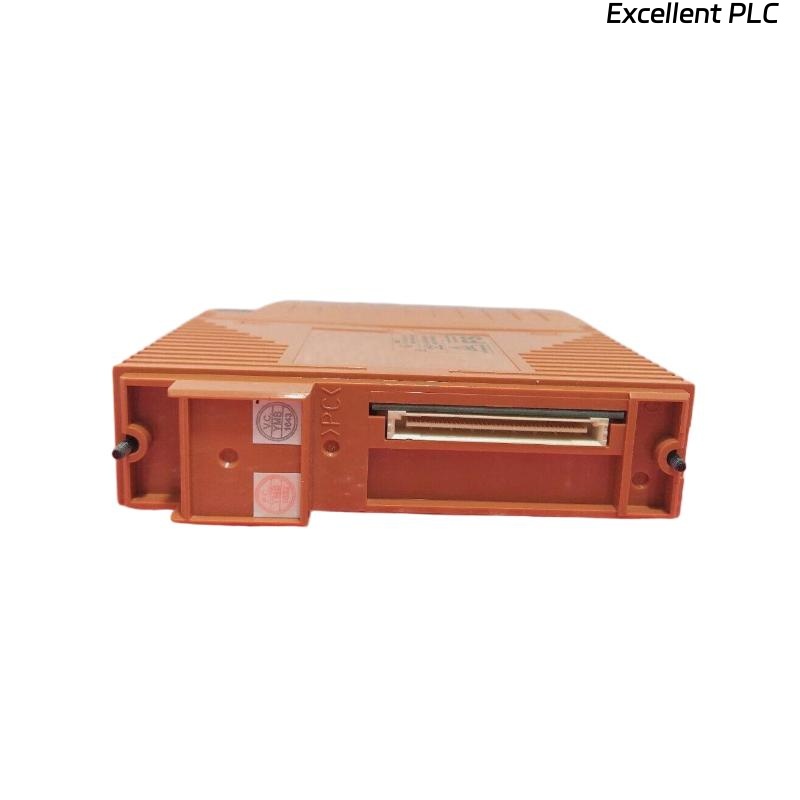
Yokogawa SB401-11 ESB Bus Interface Slave Module installation failures are commonly caused by incorrect ESB bus configuration, communication path mismatches, or node assignment errors rather than hardware defects. Following a structured Installation Guide significantly improves Setup efficiency, communication stability, and Commissioning success within Yokogawa CENTUM VP distributed control systems. The SB401-11 serves as an ESB Bus Interface Slave Module that enables reliable communication between remote I/O units and central control systems across ESB networks. :contentReference[oaicite:0]{index=0}
Contents
- SB401-11 ESB Bus Interface Slave Module Overview
- SB401-11 Application in Distributed Control Systems
- ESB Network Planning Before Installation
- SB401-11 Hardware Inspection
- Control Cabinet Preparation
- Environmental Requirements
- Power Verification
- SB401-11 Installation Guide
- ESB Communication Cabling
- SB401-11 Setup Procedure
- System Configuration Validation
- Initial Diagnostic Checks
- Commissioning Verification
- Communication Performance Testing
- Maintenance Recommendations
- Real Commissioning Case
- FAQ
SB401-11 ESB Bus Interface Slave Module Overview
The SB401-11 provides a communication interface between ESB bus networks and distributed field devices, supporting reliable data exchange within Yokogawa automation architectures. It is widely deployed in oil and gas, power generation, petrochemical, and process industries. :contentReference[oaicite:1]{index=1}
SB401-11 Application in Distributed Control Systems
- ESB bus communication management
- Remote I/O integration
- Controller data synchronization
- Distributed automation systems
- Process control applications
ESB Network Planning Before Installation
- Assign unique node addresses
- Verify ESB topology design
- Review communication paths
- Validate network load capacity
- Prepare redundancy strategy
SB401-11 Hardware Inspection
- Verify model identification
- Inspect front panel indicators
- Check backplane connectors
- Inspect communication interfaces
- Confirm module revision
Control Cabinet Preparation
- Verify grounding continuity
- Separate power and signal wiring
- Check mounting space
- Inspect ventilation conditions
Environmental Requirements
- Temperature within design limits
- Controlled humidity levels
- Minimal vibration exposure
- EMI protection measures
- Adequate cooling airflow
Power Verification
- Measure supply voltage
- Verify redundant power systems
- Check grounding resistance
- Review UPS status
SB401-11 Installation Guide
- Shut down cabinet power.
- Insert SB401-11 into the designated slot.
- Secure locking mechanisms.
- Connect ESB communication interfaces.
- Inspect module alignment.
- Restore power supply.
- Verify module indicators.
ESB Communication Cabling
- Inspect cable integrity
- Verify connector engagement
- Check cable shielding
- Confirm cable labeling
- Validate communication continuity
SB401-11 Setup Procedure
INSTALL MODULE
POWER ON SYSTEM
VERIFY STATUS LED
ASSIGN NODE ADDRESS
DOWNLOAD CONFIGURATION
ENABLE COMMUNICATION
SAVE PARAMETERS
RESTART NETWORK NODE
System Configuration Validation
- Address assignment review
- Communication parameter validation
- I/O mapping verification
- Database consistency checks
- Controller communication confirmation
Initial Diagnostic Checks
- Status LED verification
- Communication statistics review
- Error counter inspection
- Network health assessment
Commissioning Verification
- Node communication testing
- Data exchange validation
- Alarm verification
- Redundancy testing
- Integrated system startup
Communication Performance Testing
- Latency measurement
- Data consistency verification
- Error rate analysis
- Network utilization review
Maintenance Recommendations
- Periodic communication checks
- Connector inspections
- Configuration backups
- ESB network diagnostics
Real Commissioning Case
During commissioning of a petrochemical expansion project, an SB401-11 failed to establish communication with three remote node units.
- Power Supply: 24.2 VDC
- Module Status: Healthy
- Communication Status: Offline
- Error Count: Increasing continuously
The maintenance team initially suspected a defective module. However, detailed engineering review revealed a duplicated ESB node address that prevented network registration.
After correcting the addressing conflict:
- Communication recovered within seconds
- Remote nodes synchronized correctly
- Error counters stopped increasing
- Commissioning completed successfully
In one commissioning case, addressing validation solved an issue that had been incorrectly diagnosed as a hardware failure.
SB401-11 Installation Guide FAQ
What is the main role of the SB401-11 module?
The SB401-11 functions as an ESB Bus Interface Slave Module that connects distributed field devices and remote I/O units to Yokogawa control systems. :contentReference[oaicite:2]{index=2}
What should be checked before Setup?
Engineers should verify node addresses, communication topology, power quality, and System Configuration parameters.
Why is Commissioning verification important?
Commissioning tests confirm stable communication, proper data exchange, and reliable operation before plant startup.
Summary: Successful SB401-11 Installation, Setup, and Commissioning require proper ESB network planning, accurate System Configuration, validated communication paths, and comprehensive diagnostic testing.