 Excellent PLC


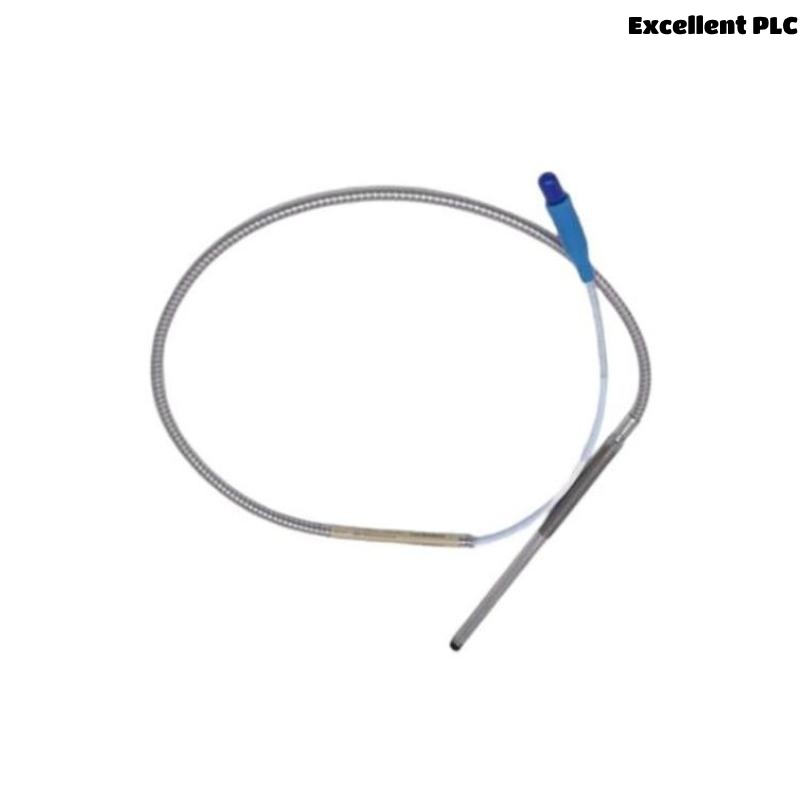
Table of Contents
- Bently Nevada 128987-130-02-05 Sensor Overview
- Application Scope of 128987-130-02-05
- Pre-Installation Preparation
- Mechanical Mounting and Alignment
- Signal Wiring and Shielding Guidelines
- System Integration with 3500 Monitoring Modules
- Commissioning and Signal Verification
- Field Installation Case Study
- Installation FAQ
- Final Engineering Notes
Bently Nevada 128987-130-02-05 Sensor Overview
The Bently Nevada 128987-130-02-05 is a high-precision proximity/vibration sensor designed for continuous shaft displacement and vibration monitoring in rotating machinery. Proper installation is crucial to ensure reliable condition monitoring and accurate machine protection.
Faulty installation is a leading cause of inaccurate readings, false alarms, and potential machine downtime.
Application Scope of 128987-130-02-05
- Steam and gas turbines
- Compressors, pumps, and high-speed motors
- Gearboxes and industrial rotating equipment
- Machinery requiring continuous vibration monitoring for protection
The sensor is compatible with Bently Nevada 3500 monitoring modules for real-time monitoring and alarm management.
Pre-Installation Preparation
- Verify sensor model, calibration, and serial number
- Inspect sensor tip, probe housing, and cable for any physical damage
- Ensure the mounting surface is clean, rigid, and level
- Prepare twisted-pair shielded signal cable for proper installation
Mechanical Mounting and Alignment
- Align probe precisely with the shaft measurement axis
- Torque mounting bolts per specification (usually 6–8 Nm)
- Ensure tip-to-shaft clearance is within design range (0.010–0.020 inches)
- Use feeler gauge or calibration tool for initial verification
  // Mounting Verification Logic
  IF Mounting_Surface_Not_Flat OR Tip_Clearance_Out_Of_Spec THEN
      Rework_Mounting;
  END_IF;
Signal Wiring and Shielding Guidelines
- Use twisted-pair shielded cables for optimal signal integrity
- Ground shield at one end only to prevent ground loops
- Avoid running cables near high-current or power lines
- Test cable continuity and insulation resistance before connecting to 3500 module
System Integration with 3500 Monitoring Modules
- Verify input type and configuration on 3500/22 or 3500/23 module
- Set scaling, probe type, and alarm thresholds in monitoring software
- Confirm data logging and signal validation settings
Commissioning and Signal Verification
- Power on system and allow probe warm-up
- Check baseline readings at idle conditions
- Cross-check with portable vibration analyzer
- Monitor signal stability over at least 30 minutes
- Document initial readings for reference
Field Installation Case Study
During turbine installation, initial vibration readings were unstable due to slight misalignment and nearby power line EMI. After realignment and rerouting the cable with proper shielding, readings stabilized and matched reference devices within ±0.05 mil.
Installation FAQ
Why are initial readings fluctuating?
Fluctuations are usually caused by probe misalignment or EMI interference. Verify mechanical alignment and cable shielding.
Can the sensor be used in high-temperature environments?
Yes, but verify sensor and cable temperature ratings before installation.
How to verify correct tip-to-shaft clearance?
Use feeler gauges or monitoring software measurement to confirm distance is within design specification.
Final Engineering Notes
Proper installation of Bently Nevada 128987-130-02-05 requires precise mechanical alignment, shielded wiring, and correct system configuration. Following these steps ensures accurate vibration measurement and reliable machinery protection.