 Excellent PLC


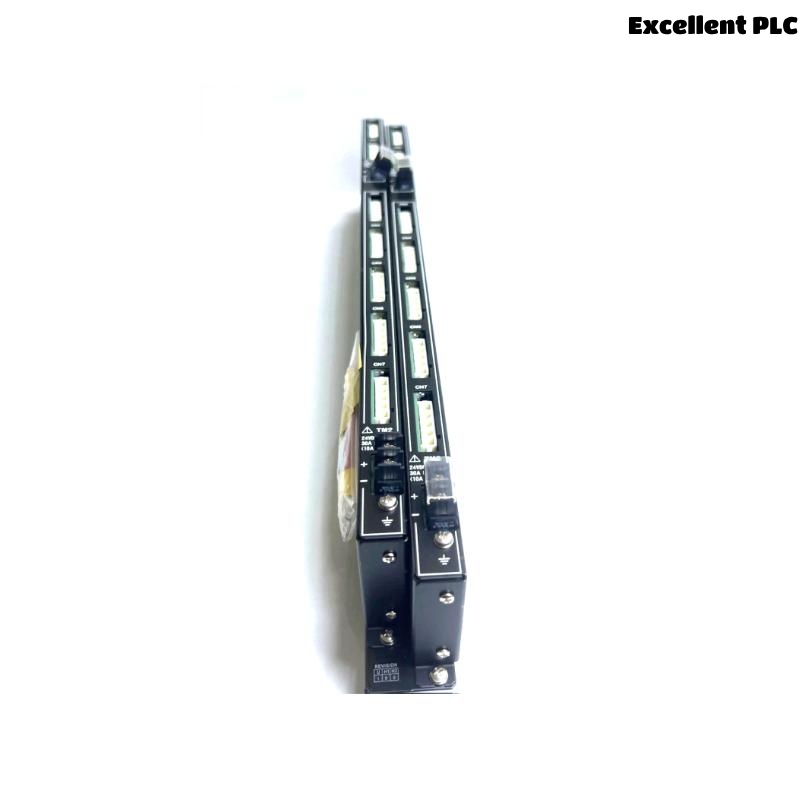
The Yokogawa AEPV7D Vertical Power Supply Bus Unit is designed for cabinet-mounted CENTUM VP, ProSafe-RS, FIO, and N-IO systems. It distributes primary power from one or two independent power sources to multiple modules installed within the same control cabinet. The vertical design optimizes cabinet space while supporting redundant power architectures for high-availability industrial automation systems. Proper installation, wiring, grounding, and commissioning are essential to ensure safe and reliable power distribution throughout the control system.
Contents
- 1. AEPV7D Power Supply Bus Unit Overview
- 2. Technical Features
- 3. Typical Industrial Applications
- 4. Installation Planning
- 5. Hardware Inspection
- 6. Installation Environment
- 7. Vertical Mounting Procedure
- 8. Primary Power Wiring
- 9. Grounding Requirements
- 10. Power Distribution Connections
- 11. Wiring Verification
- 12. Commissioning Procedure
- 13. Functional Testing
- 14. Preventive Maintenance
- 15. Practical Installation Case
- 16. Frequently Asked Questions
AEPV7D Power Supply Bus Unit Overview
The AEPV7D is a vertically mounted primary power supply bus unit that distributes electrical power to modules installed within the same cabinet. It accepts two independent power inputs for redundant operation. AC models provide seven outputs for each input (A and B), while the 24 VDC model divides each line into A1/A2 and B1/B2 output groups. Short-circuit links allow one power source to supply up to fourteen outputs when redundancy is not required. The AEPV7D is designed so that Line A and Line B can be maintained independently. It is compatible with Yokogawa FIO and N-IO systems, with Style S2 or later required for N-IO applications. :contentReference[oaicite:0]{index=0}
Technical Features
- Vertical cabinet-mounted design
- Dual independent power inputs
- Supports redundant power architecture
- Up to fourteen output circuits
- Available for 100–120 VAC, 220–240 VAC, and 24 VDC models
- Independent maintenance of Line A and Line B
Typical Industrial Applications
- CENTUM VP control cabinets
- ProSafe-RS safety systems
- FIO cabinets
- N-IO cabinets
- Oil and gas facilities
- Chemical processing plants
Installation Planning
Proper engineering preparation simplifies installation and improves long-term system reliability.
- Review cabinet drawings
- Verify power supply ratings
- Calculate electrical loads
- Prepare cable schedules
- Confirm redundancy requirements
Hardware Inspection
- Verify model number
- Inspect enclosure condition
- Check input terminals
- Inspect output connectors
- Verify mounting accessories
Installation Environment
- Maintain adequate ventilation
- Avoid excessive humidity
- Protect against vibration
- Prevent conductive dust accumulation
- Maintain cabinet cleanliness
Vertical Mounting Procedure
- Disconnect all incoming power sources.
- Install the AEPV7D vertically inside the cabinet.
- Secure all mounting hardware.
- Verify adequate cable clearance.
- Confirm connector accessibility.
- Inspect mechanical alignment.
Primary Power Wiring
All wiring should comply with approved engineering documentation and applicable electrical standards.
- Connect Input A power source
- Connect Input B when redundant power is required
- Verify conductor sizing
- Observe correct polarity for DC models
- Tighten all terminals securely
Grounding Requirements
- Connect protective earth securely
- Verify cabinet bonding
- Maintain low grounding resistance
- Avoid multiple grounding paths
- Inspect earth continuity
Power Distribution Connections
VERIFY INPUT POWER
CONNECT LINE A
CONNECT LINE B
VERIFY OUTPUT PORTS
CHECK LOAD BALANCE
LABEL ALL POWER CIRCUITS
Wiring Verification
- Verify terminal identification
- Measure insulation resistance
- Inspect conductor polarity
- Verify output assignments
- Review engineering documentation
Commissioning Procedure
- Apply incoming power
- Measure output voltages
- Verify redundant operation
- Inspect downstream equipment
- Document commissioning results
Functional Testing
- Verify all output ports
- Test Line A and Line B independently
- Confirm voltage stability
- Monitor connected equipment
- Validate cabinet operation
Preventive Maintenance
- Inspect terminals every six months
- Retighten power connections
- Inspect grounding annually
- Clean cabinet interiors
- Review electrical load distribution periodically
Practical Installation Case
During commissioning of a CENTUM VP cabinet, engineers observed that only the modules connected to Line B remained without power while Line A operated normally.
Inspection confirmed that both incoming power supplies were functioning correctly. The installation team discovered that the Line B input terminal had not been completely tightened after cable termination.
After securing the terminal connection and repeating commissioning tests:
- Both Line A and Line B distributed power normally.
- All connected FIO modules started successfully.
- Redundant power operation passed functional testing.
- No hardware replacement was required.
Frequently Asked Questions
What is the main purpose of the AEPV7D?
The AEPV7D distributes primary electrical power from one or two independent sources to multiple modules installed in the same Yokogawa control cabinet while supporting redundant power architectures. :contentReference[oaicite:1]{index=1}
How many output circuits are available?
AC models provide seven outputs for each power input. By linking the redundant inputs with short cables, a single power source can feed up to fourteen outputs. The 24 VDC version provides separate A1/A2 and B1/B2 output groups with equivalent distribution capability. :contentReference[oaicite:2]{index=2}
Can the AEPV7D be used in N-IO systems?
Yes. When installed in Yokogawa N-IO systems, the AEPV7D must be Style S2 or later. :contentReference[oaicite:3]{index=3}
Summary: Proper installation of the Yokogawa AEPV7D Vertical Power Supply Bus Unit requires correct vertical mounting, secure primary power wiring, reliable grounding, balanced power distribution, and thorough commissioning. Following these procedures ensures dependable redundant power delivery and long-term operation in Yokogawa FIO and N-IO control systems.