 Excellent PLC


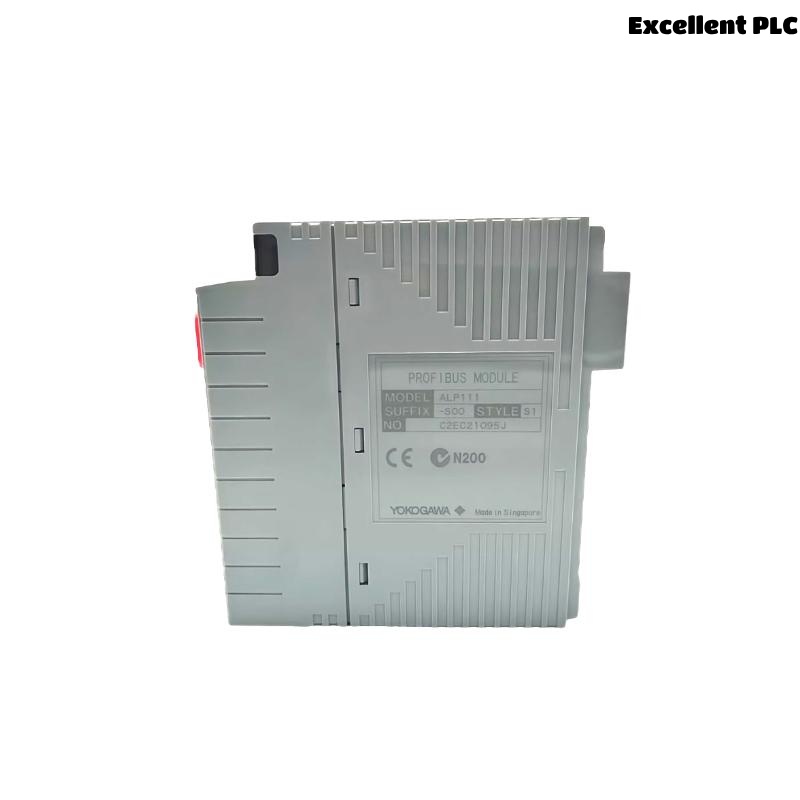
The Yokogawa ALP111 Communication Module is an industrial communication interface designed for Yokogawa CENTUM VP and CENTUM CS Distributed Control Systems (DCS). The module provides high-speed communication between the Field Control Station (FCS), Human Interface Station (HIS), engineering workstations, and the Vnet/IP control network. It enables reliable controller communication, data exchange, system synchronization, and real-time process information transmission throughout the distributed automation system. Proper installation, network configuration, and commissioning are essential to ensure high availability, deterministic communication, and long-term system reliability.
Contents
- 1. Product Overview
- 2. Main Features
- 3. Typical Applications
- 4. Installation Preparation
- 5. Module Installation
- 6. Network Connections
- 7. Module Configuration
- 8. Commissioning Procedure
- 9. Functional Verification
- 10. Preventive Maintenance
- 11. Practical Installation Case
- 12. Frequently Asked Questions
Product Overview
The ALP111 Communication Module functions as a high-speed communication interface within Yokogawa CENTUM VP systems. It exchanges control data between controllers, operator stations, engineering workstations, and network infrastructure while supporting deterministic communication over the Vnet/IP architecture. The module incorporates diagnostic capabilities to continuously monitor communication status and network integrity.
Main Features
- Industrial communication interface module
- Supports Yokogawa CENTUM VP and CENTUM CS systems
- High-speed Vnet/IP communication
- Reliable real-time controller communication
- Supports redundant network architectures
- Built-in communication diagnostics
- Designed for continuous industrial operation
Typical Applications
- CENTUM VP Distributed Control Systems
- Field Control Stations (FCS)
- Human Interface Stations (HIS)
- Engineering Workstations (ENG)
- Industrial Ethernet communication
- Oil and gas facilities
- Petrochemical plants
- Power generation stations
- Chemical processing industries
Installation Preparation
- Verify the ALP111 model number.
- Review approved network architecture drawings.
- Inspect communication cables and connectors.
- Verify controller slot allocation.
- Follow ESD protection procedures.
Module Installation
- Power down the controller if required by maintenance procedures.
- Insert the ALP111 into the designated communication slot.
- Secure the retaining mechanism.
- Connect network communication cables.
- Verify connector locking mechanisms.
- Restore controller power.
Network Connections
- Verify network cable integrity.
- Confirm connector orientation.
- Inspect optical or copper communication media as applicable.
- Verify redundant network paths.
- Check communication switch connections.
Module Configuration
- Configure network parameters.
- Verify controller communication settings.
- Enable redundancy if required.
- Download approved system configuration.
- Verify communication diagnostics.
Commissioning Procedure
VERIFY MODULE INSTALLATION
CHECK POWER STATUS
CONNECT NETWORK CABLES
CONFIGURE COMMUNICATION
VERIFY NETWORK STATUS
CHECK CONTROLLER COMMUNICATION
VERIFY SYSTEM DIAGNOSTICS
CONFIRM NORMAL OPERATION
Functional Verification
- Verify communication with all controllers.
- Confirm network status indicators.
- Check communication diagnostics.
- Verify data exchange with HIS and ENG stations.
- Monitor communication stability.
Preventive Maintenance
- Inspect communication cables regularly.
- Verify connector security.
- Review network diagnostics.
- Maintain controller firmware compatibility.
- Inspect cabinet cooling and ventilation.
Practical Installation Case
During the expansion of a power generation control system, an ALP111 Communication Module was installed to integrate an additional Field Control Station into the existing Vnet/IP network.
Following installation and commissioning:
- Controller communication was established successfully.
- Operator stations received real-time process data.
- Engineering workstations communicated normally with the controller.
- The distributed control system operated continuously without communication alarms.
Frequently Asked Questions
What is the primary function of the ALP111?
The ALP111 provides high-speed communication between controllers, operator stations, engineering workstations, and the Yokogawa Vnet/IP control network, enabling reliable real-time process data exchange.
Does the ALP111 support redundant communication?
Yes. The module is designed to operate in CENTUM VP architectures that support redundant network configurations for improved communication availability.
What should be verified after installation?
Verify module installation, network cable connections, communication diagnostics, controller connectivity, network redundancy status, and stable data exchange before placing the system into operation.
Summary
Proper installation of the Yokogawa ALP111 Communication Module ensures reliable high-speed communication throughout CENTUM VP Distributed Control Systems. Correct network configuration, secure cable installation, comprehensive commissioning, and preventive maintenance maximize communication reliability and long-term industrial automation performance.