 Excellent PLC


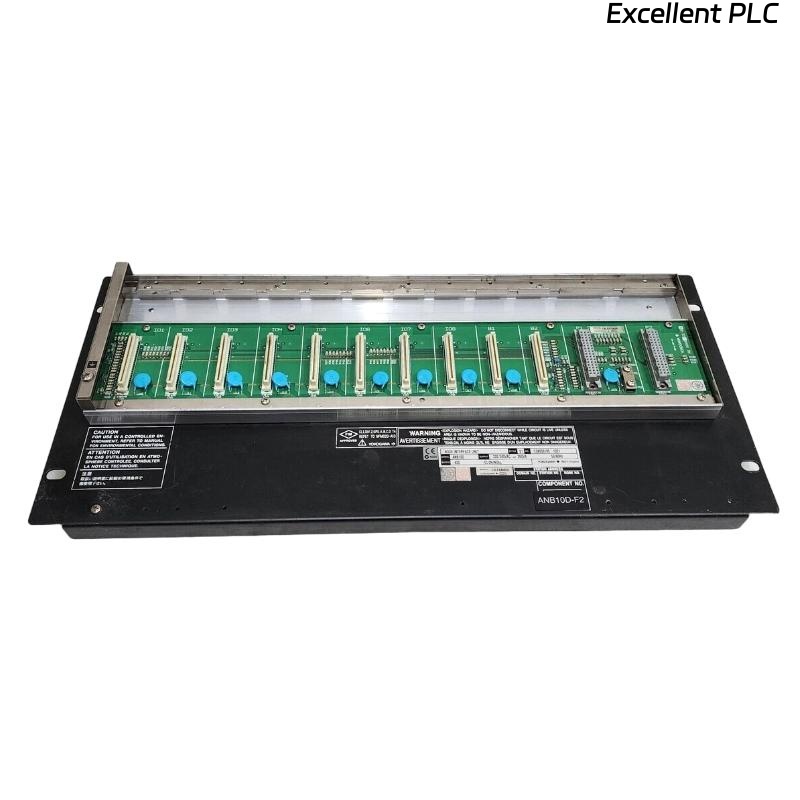
The Yokogawa ANB10D Dual-Redundant ESB Bus Node Unit is a rack-mounted node unit used in Yokogawa CENTUM VP and CENTUM CS 3000 Field I/O (FIO) systems. It provides the interface between the Field Control Unit (FCU) and distributed I/O modules through a dual-redundant ESB (Enhanced Serial Bus). The ANB10D houses power supply modules, bus interface modules, and I/O modules, while distributing power and maintaining redundant communication paths to ensure high system availability. It is designed for mission-critical industrial applications where continuous operation and fault tolerance are required.
Contents
- 1. Product Overview
- 2. Main Features
- 3. Typical Applications
- 4. Installation Preparation
- 5. Node Unit Installation
- 6. ESB Bus and Power Wiring
- 7. System Configuration
- 8. Commissioning Procedure
- 9. Functional Verification
- 10. Preventive Maintenance
- 11. Practical Installation Case
- 12. Frequently Asked Questions
Product Overview
The ANB10D is a dual-redundant ESB Bus Node Unit that accommodates power supply modules, ESB bus interface modules, and Yokogawa FIO I/O modules. Connected to the Field Control Unit via redundant ESB bus lines, it distributes operating power to installed modules while providing reliable communication between field devices and the controller. Dual ESB buses ensure uninterrupted operation even if one communication path fails.
Main Features
- Dual-redundant ESB Bus architecture
- Rack-mounted node unit
- Supports redundant power supplies
- Accommodates FIO bus interface modules
- Supports Yokogawa analog and digital I/O modules
- High-availability industrial design
- Hot-swappable module replacement capability (system dependent)
- Designed for continuous 24/7 operation
Typical Applications
- Oil and gas production
- Refinery process automation
- Chemical processing plants
- Power generation facilities
- LNG terminals
- Water and wastewater treatment
- Pharmaceutical manufacturing
- Large-scale distributed control systems
Installation Preparation
- Verify the ANB10D model and suffix codes.
- Confirm cabinet mounting location.
- Prepare redundant ESB bus cables.
- Verify compatible power supply and bus interface modules.
- Confirm proper grounding arrangements.
- Review approved system drawings.
- Inspect all connectors before installation.
Node Unit Installation
- Mount the ANB10D securely in the control cabinet.
- Install redundant power supply modules.
- Install ESB bus interface modules.
- Insert required FIO I/O modules.
- Verify module locking mechanisms.
- Connect redundant ESB bus cables.
- Inspect all electrical connections.
ESB Bus and Power Wiring
- Connect redundant ESB Bus A and Bus B.
- Verify connector orientation.
- Ensure connector locking mechanisms are fully engaged.
- Route ESB bus cables separately from power cables.
- Verify protective grounding.
- Confirm redundant power input wiring.
System Configuration
- Configure ESB bus addresses.
- Assign installed I/O modules.
- Configure redundant communication paths.
- Download controller configuration.
- Verify node recognition.
- Check communication diagnostics.
Commissioning Procedure
VERIFY NODE INSTALLATION
CHECK POWER SUPPLIES
VERIFY ESB BUS CONNECTIONS
INSTALL I/O MODULES
POWER UP SYSTEM
VERIFY NODE STATUS
CHECK COMMUNICATION
CONFIRM NORMAL OPERATION
Functional Verification
- Verify the controller detects the node.
- Confirm both ESB communication channels are operational.
- Verify all installed I/O modules are recognized.
- Check redundant power operation.
- Test field signal communication.
- Review diagnostic information.
Preventive Maintenance
- Inspect ESB bus connectors regularly.
- Check redundant power supply status.
- Verify module seating.
- Clean connectors when required.
- Inspect cabinet cooling.
- Review communication diagnostics.
Practical Installation Case
During a refinery expansion project, an ANB10D node unit was installed to provide redundant communication for newly added field I/O cabinets. After installing redundant power supplies, connecting dual ESB buses, and commissioning the node, the Field Control Unit successfully recognized all installed I/O modules. Communication continued without interruption even when one ESB bus path was intentionally disconnected during redundancy testing, demonstrating the high availability of the dual-redundant architecture.
Frequently Asked Questions
What is the primary function of the ANB10D?
The ANB10D serves as a dual-redundant ESB Bus node that houses power supplies, bus interface modules, and FIO I/O modules while providing redundant communication between the Field Control Unit and field I/O.
Does the ANB10D perform signal processing?
No. Signal acquisition and control are performed by the installed I/O modules. The ANB10D provides power distribution, backplane connectivity, and redundant ESB bus communication.
Why is dual-redundant ESB Bus important?
Dual ESB buses provide two independent communication paths between the Field Control Unit and the node. If one bus fails, communication automatically continues over the remaining path, improving system availability for critical process control applications.
Summary
The Yokogawa ANB10D Dual-Redundant ESB Bus Node Unit provides a highly reliable platform for FIO modules in Yokogawa CENTUM Distributed Control Systems. Proper installation, redundant power configuration, secure ESB bus connections, accurate node configuration, and comprehensive commissioning ensure dependable field communication and continuous operation in mission-critical industrial environments.