 Excellent PLC


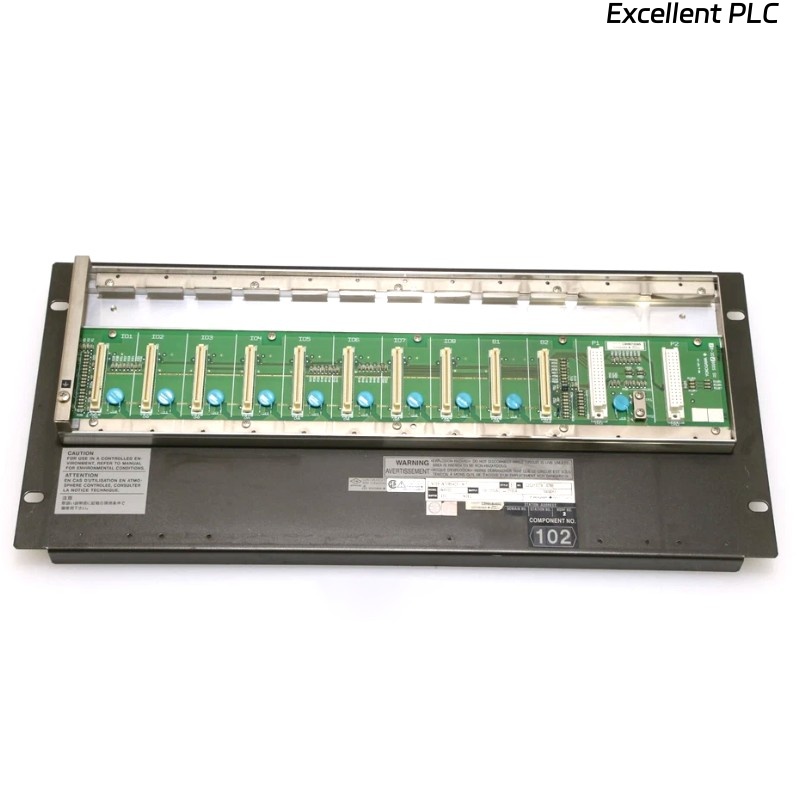
The Yokogawa ANR10D Dual-Redundant ER Bus Node Unit is a remote Field I/O (FIO) node designed for Yokogawa CENTUM VP and CENTUM CS 3000 Distributed Control Systems (DCS). Unlike the ANB series ESB Bus Node Units, the ANR10D is connected to an ER (Enhanced Remote) Bus through an ER Bus Interface Master Module (EB401), allowing Field I/O cabinets to be installed remotely from the Field Control Unit (FCU). The ANR10D houses power supply modules, ER Bus interface modules, and FIO analog and digital I/O modules while providing dual-redundant ER Bus communication for high system availability.
Contents
- 1. Product Overview
- 2. Main Features
- 3. Typical Applications
- 4. Installation Preparation
- 5. Node Unit Installation
- 6. ER Bus Wiring
- 7. System Configuration
- 8. Commissioning Procedure
- 9. Functional Verification
- 10. Preventive Maintenance
- 11. Practical Installation Case
- 12. Frequently Asked Questions
Product Overview
The ANR10D serves as a remote node on the Yokogawa ER Bus network. Communication with the Field Control Unit is established through an EB401 ER Bus Interface Master Module installed in a local ESB Bus Node Unit. The node accommodates redundant power supplies, ER Bus interface modules, and FIO I/O modules, enabling remote expansion of process signals while maintaining communication redundancy and high reliability.
Main Features
- Dual-redundant ER Bus architecture
- Remote Field I/O node
- Supports redundant power supplies
- Compatible with Yokogawa FIO analog and digital I/O modules
- Supports remote cabinet installation
- High-speed industrial communication
- Industrial-grade reliability
- Continuous 24-hour operation
Typical Applications
- Large refinery automation systems
- Petrochemical plants
- Power generation facilities
- Oil and gas production
- Pipeline monitoring stations
- Water treatment plants
- Remote instrumentation buildings
- Large distributed process control systems
Installation Preparation
- Verify the ANR10D model and suffix code.
- Confirm compatibility with the ER Bus architecture.
- Prepare redundant ER Bus communication cables.
- Verify compatible power supply and interface modules.
- Inspect communication connectors.
- Confirm cabinet grounding.
- Review approved engineering drawings.
Node Unit Installation
- Mount the ANR10D securely in the control cabinet.
- Install redundant power supply modules.
- Install the ER Bus interface module.
- Install required FIO analog and digital I/O modules.
- Connect redundant ER Bus communication cables.
- Verify module locking mechanisms.
- Inspect all electrical connections before energizing.
ER Bus Wiring
- Connect ER Bus A.
- Connect ER Bus B.
- Verify communication cable polarity.
- Route communication cables separately from power cables.
- Verify connector locking mechanisms.
- Inspect grounding continuity.
System Configuration
- Assign remote node addresses.
- Configure ER Bus redundancy.
- Assign installed I/O modules.
- Download controller configuration.
- Verify node recognition.
- Review communication diagnostics.
Commissioning Procedure
VERIFY NODE INSTALLATION
CHECK POWER SUPPLIES
VERIFY ER BUS A
VERIFY ER BUS B
INSTALL I/O MODULES
POWER UP SYSTEM
VERIFY NODE COMMUNICATION
CONFIRM NORMAL OPERATION
Functional Verification
- Verify controller recognizes the remote node.
- Confirm both ER Bus channels operate normally.
- Verify all installed I/O modules are detected.
- Test communication redundancy.
- Verify field signal transmission.
- Review controller diagnostics.
Preventive Maintenance
- Inspect ER Bus connectors regularly.
- Verify redundant power supply operation.
- Inspect module seating.
- Check cabinet ventilation.
- Review communication diagnostics.
- Maintain cabinet cleanliness.
Practical Installation Case
During the expansion of a petrochemical facility, several remote instrument cabinets were installed approximately 150 meters from the central control room. ANR10D Dual-Redundant ER Bus Node Units were deployed to accommodate additional analog and digital I/O modules.
After installation and commissioning:
- All remote nodes were recognized successfully.
- Both ER Bus communication channels operated normally.
- Field signals were transmitted without interruption.
- Communication redundancy testing confirmed automatic switchover during simulated cable failures.
Frequently Asked Questions
What is the primary function of the ANR10D?
The ANR10D serves as a remote Field I/O node that extends Yokogawa FIO systems through a dual-redundant ER Bus, providing communication, power distribution, and installation space for FIO I/O modules.
How is the ANR10D different from the ANB10D?
The ANB10D is an ESB Bus local node directly connected to the Field Control Unit, whereas the ANR10D is a remote node connected through an EB401 ER Bus Interface Master Module over the ER Bus network.
Does the ANR10D perform analog or digital signal processing?
No. Signal acquisition and output processing are performed by the installed FIO I/O modules. The ANR10D provides the node backplane, power distribution, and ER Bus communication infrastructure.
Summary
The Yokogawa ANR10D Dual-Redundant ER Bus Node Unit provides a reliable remote Field I/O platform for Yokogawa CENTUM Distributed Control Systems. Proper installation, secure ER Bus connections, accurate node configuration, and comprehensive commissioning ensure dependable long-distance remote I/O communication, high system availability, and reliable industrial process control.