 Excellent PLC


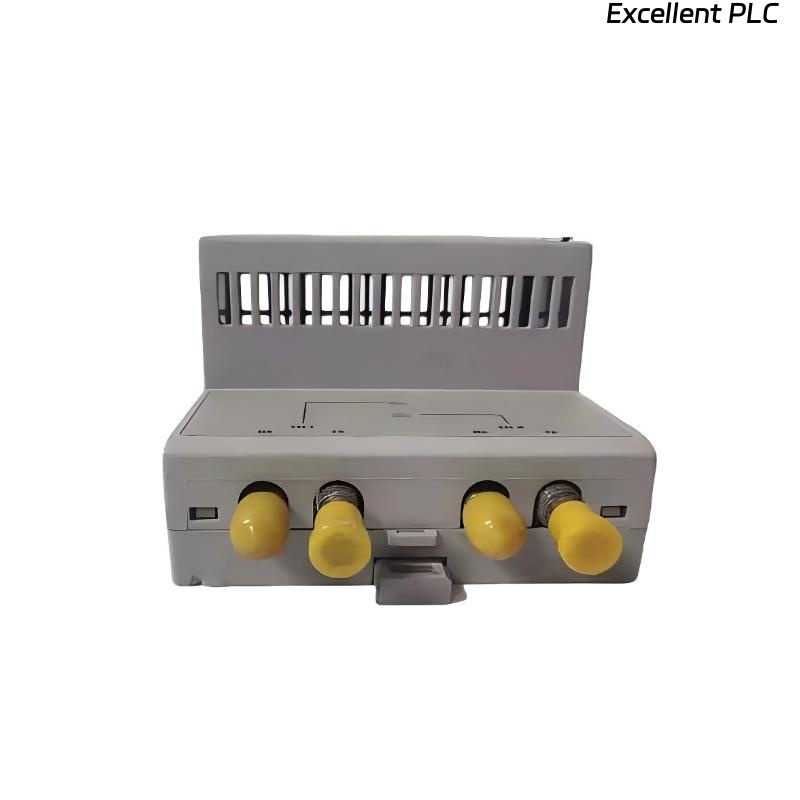
The Allen-Bradley 1786-RPFRXL is designed to extend and maintain signal integrity in ControlLogix fiber optic ring networks. In practice, its role is to ensure reliable data transmission between distributed I/O racks, especially in environments with electrical noise or long distances.
During installation, I always start by confirming that the network fiber connections are clean and properly rated for the RPFRXL module. Dust or scratches on fiber ends can cause signal loss, so careful inspection and proper cleaning are essential. The module supports standard ST or SC connectors depending on your network setup, and matching connectors is critical to avoid network errors.
Mounting the module into the ControlLogix chassis is straightforward, but attention to the rack position and orientation is important. I’ve seen issues where modules placed in the wrong slot caused network initialization failures. Once inserted, the LEDs on the module provide real-time feedback: power, ring status, and fault indicators. Observing these LEDs during network startup helps identify miswiring or fiber continuity problems early.
Configuring the module typically involves addressing and enabling the ring repeater functionality within RSLogix 5000 or Studio 5000. I always double-check firmware versions and network settings because mismatched configurations between RPFRXL modules in the ring can cause communication errors that are hard to diagnose in the field.
One lesson I’ve learned from repeated installations is to label both ends of each fiber cable clearly. Mislabeling can lead to reversed connections, which the module cannot automatically detect. Additionally, ensure that the fiber loop is continuous and properly terminated; open or broken loops will prevent the module from passing messages correctly to downstream I/O.
Finally, after powering up, I always run a network diagnostic check. This includes verifying ring status on each connected module and checking for any dropped packets or fault LEDs. Proper initial validation ensures that the network operates reliably and prevents troubleshooting issues during normal operation.
In my experience, the RPFRXL module works flawlessly when fiber is clean, connections are correct, and ring continuity is verified. Neglecting any of these details is the most common source of early network problems.
References:
Rockwell Automation. 1786-RPFRXL User Manual. 2020.
Allen-Bradley. ControlLogix Fiber Optic Network Guidelines. 2019.