 Excellent PLC


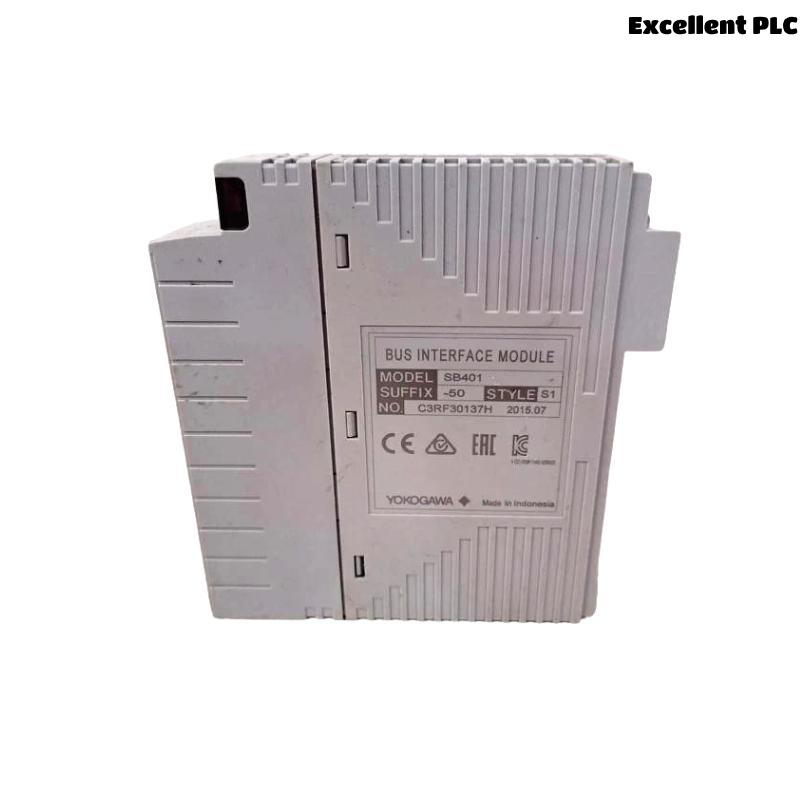
Yokogawa SB401-50 communication faults are commonly caused by ESB network configuration errors, communication cable degradation, duplicate node addresses, or grounding issues rather than actual module failure. Effective Troubleshooting and Fault Diagnosis should focus on communication infrastructure and System Configuration before considering module replacement.
Contents
- SB401-50 Communication Fault Symptoms
- Impact of ESB Communication Failures
- Common Failure Patterns
- Common Causes of SB401-50 Faults
- Fault Diagnosis Strategy
- Module Status Analysis
- Node Address Troubleshooting
- ESB Network Fault Investigation
- Grounding and EMI Analysis
- System Configuration Review
- Communication Signal Assessment
- Diagnostic Workflow
- Recovery Procedures
- Repair Verification
- Preventive Maintenance
- Real Fault Diagnosis Case
- FAQ
SB401-50 Communication Fault Symptoms
- Node communication loss
- Intermittent communication alarms
- I/O update delays
- Communication timeout events
- Field device synchronization failures
- Increased network error counters
Impact of ESB Communication Failures
- Production interruptions
- Loss of process visibility
- Alarm generation
- Controller communication instability
- Reduced system reliability
Common Failure Patterns
- Communication failure after maintenance
- Intermittent network outages
- Startup communication issues
- Communication degradation during peak load
- Faults after database modification
Common Causes of SB401-50 Faults
- Duplicate node addresses
- Damaged communication cables
- Improper grounding
- Loose connectors
- Configuration inconsistencies
- EMI interference
- Communication hardware aging
Fault Diagnosis Strategy
Experienced field engineers first determine whether the communication fault originates from network infrastructure, System Configuration, or hardware.
Replacing the module without communication analysis often results in unnecessary downtime and increased maintenance costs.
Module Status Analysis
| Status | Possible Cause |
|---|---|
| Offline | Network path interruption |
| Online Without Data | Addressing issue |
| Intermittent | Connector or EMI problem |
| Healthy | Normal operation |
Node Address Troubleshooting
- Verify node uniqueness
- Review addressing database
- Confirm controller assignments
- Validate network maps
ESB Network Fault Investigation
- Inspect communication cables
- Review connector conditions
- Check network continuity
- Analyze communication statistics
Grounding and EMI Analysis
- Measure grounding resistance
- Inspect shield terminations
- Review cable separation
- Identify EMI sources
System Configuration Review
- Verify project revision
- Inspect communication tables
- Check database synchronization
- Validate node mappings
Communication Signal Assessment
- Monitor packet transmission
- Review communication latency
- Analyze error counters
- Evaluate update intervals
Diagnostic Workflow
CHECK MODULE STATUS
VERIFY NODE ADDRESS
INSPECT COMMUNICATION CABLES
CHECK GROUNDING
REVIEW CONFIGURATION DATABASE
ANALYZE NETWORK ERRORS
IDENTIFY ROOT CAUSE
Recovery Procedures
- Correct address conflicts
- Replace damaged cables
- Restore configuration database
- Repair grounding systems
- Replace faulty hardware if required
Repair Verification
- Communication stability testing
- Node synchronization validation
- Alarm clearance verification
- Long-duration monitoring
Preventive Maintenance
- Routine cable inspections
- Regular configuration backups
- Periodic communication analysis
- Grounding system audits
Real Fault Diagnosis Case
A power station experienced intermittent communication faults affecting several remote nodes connected through an SB401-50 module.
- Communication Error Rate: 14%
- Node Availability: 86%
- Power Supply: Stable
- Controller Status: Normal
Maintenance personnel initially suspected a defective module. However, detailed Troubleshooting identified poor shield grounding on an ESB communication cable.
Measurements showed grounding resistance exceeding 18 ohms. After correcting the grounding connection, communication quality improved significantly.
- Error rate reduced from 14% to 0.4%
- Node availability increased to 100%
- Communication alarms disappeared
- System stability improved immediately
We observed that grounding problems often create communication symptoms nearly identical to hardware failures.
SB401-50 Fault Diagnosis FAQ
Does communication loss always indicate a failed SB401-50 module?
No. Most communication failures originate from network issues, addressing conflicts, grounding problems, or configuration errors.
What should be checked first during Troubleshooting?
Engineers should inspect communication status, node addresses, cable integrity, and System Configuration before replacing hardware.
Can EMI affect ESB communication performance?
Yes. Poor shielding or grounding can introduce communication errors and intermittent network instability.
Summary: Effective SB401-50 Troubleshooting requires systematic Fault Diagnosis, communication network analysis, grounding verification, address validation, and System Configuration review before module replacement is considered.