 Excellent PLC


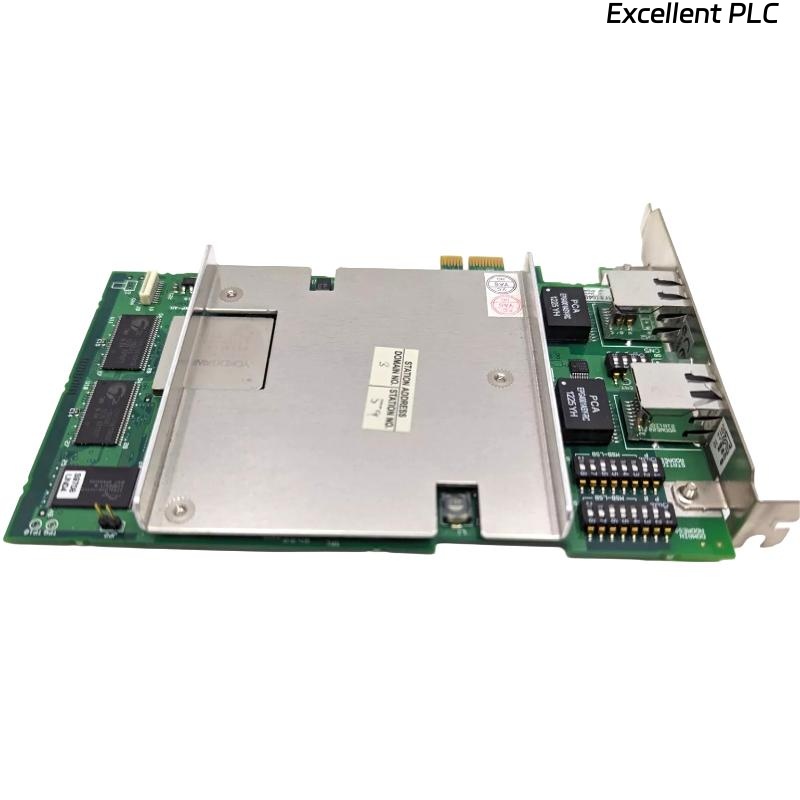
The Yokogawa VI702 is an interface card designed to provide reliable signal communication between field devices and Yokogawa control systems. It plays a critical role in signal transmission, system expansion, and stable I/O communication, especially in complex industrial automation environments.
Rather than acting as a standalone controller, the VI702 functions as a bridge component, ensuring accurate data exchange within distributed control architectures.
1. Typical Application Scenarios
The VI702 interface card is commonly used in the following applications:
-
DCS input/output expansion
-
Signal interfacing between control units and field I/O modules
-
Redundant system communication paths
-
Industrial plants requiring high signal integrity and stability
Typical industries include oil & gas, chemical processing, power generation, and water treatment.
2. Role of the VI702 in Control Systems
In a Yokogawa system architecture, the VI702 is positioned between:
-
Control processors
-
I/O modules
-
Communication backplanes
Its main purpose is to manage signal routing and protocol consistency, ensuring data is transmitted accurately and without delay.
3. Application Example: I/O Expansion in a DCS System
When additional field signals are required after initial system commissioning, the VI702 enables non-intrusive I/O expansion.
Engineering Workflow:
-
Install VI702 interface card in the designated slot
-
Connect additional I/O modules
-
Configure channel mapping in the control system
-
Validate signal integrity
This approach avoids major system redesign and minimizes downtime.
4. Signal Stability and Reliability Use Case
In plants with long cable runs or electrically noisy environments, the VI702 helps maintain stable signal transmission.
Key benefits:
-
Reduced signal distortion
-
Improved noise immunity
-
Consistent data update rates
This makes the VI702 suitable for critical process control loops where data accuracy is essential.
5. Redundancy and System Availability
In redundant system architectures, the VI702 can be deployed to support dual communication paths, enhancing system availability.
This application is particularly valuable in:
-
Continuous process industries
-
Safety-critical operations
-
Plants with strict uptime requirements
6. Installation and Configuration Considerations
From an engineering perspective, the following points are important when deploying the VI702:
-
Ensure correct slot assignment according to system documentation
-
Verify firmware compatibility with existing control hardware
-
Confirm proper grounding to avoid signal interference
-
Perform loop checks after installation
7. Practical Engineering Advantages
Using the Yokogawa VI702 interface card provides:
-
Flexible system expansion
-
Stable and reliable signal communication
-
Reduced commissioning time
-
Improved long-term system maintainability
Rather than replacing existing hardware, engineers can extend system capability efficiently.
Conclusion
The Yokogawa VI702 Interface Card is a key component for signal interfacing and system scalability in Yokogawa control systems. Its ability to support I/O expansion, improve signal reliability, and enhance system availability makes it an essential element in modern industrial automation projects.
For engineers designing or upgrading control systems, the VI702 offers a practical, reliable, and future-proof solution for managing complex signal communication requirements.