 Excellent PLC


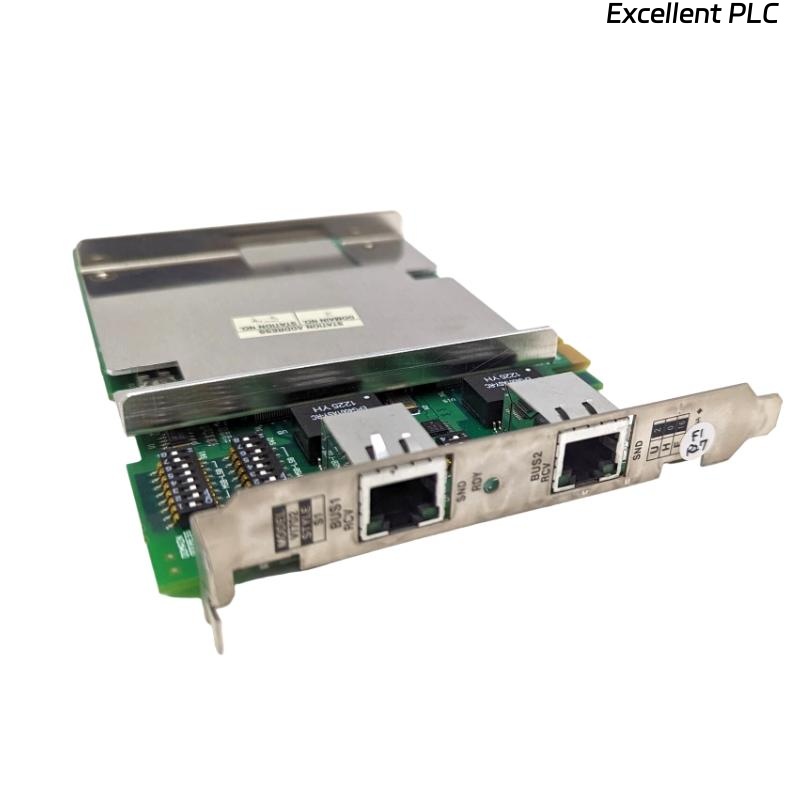
In modern industrial plants, system redundancy is essential to ensure high availability and uninterrupted operation. The Yokogawa VI702 Interface Card is commonly used in redundant DCS architectures to provide reliable signal communication and seamless failover between control paths.
This article explains how the VI702 is deployed in redundant systems, its role in redundancy strategies, and key engineering considerations.
1. Purpose of Redundancy in DCS Systems
Redundant architectures are designed to:
-
Minimize unplanned downtime
-
Eliminate single points of failure
-
Maintain continuous control during hardware faults
-
Support critical and continuous processes
In such systems, interface components like the VI702 must support stable communication switching without data loss.
2. Role of the VI702 in Redundant Architectures
The VI702 acts as an interface layer between I/O modules and redundant control processors. In a typical setup, it ensures that:
-
Both primary and standby controllers receive valid I/O data
-
Communication paths are continuously monitored
-
Failover occurs transparently to the control application
3. Typical Redundant Deployment Scenarios
3.1 Controller Redundancy
In controller redundancy, two control processors operate in active/standby mode.
-
The VI702 continuously exchanges data with both controllers
-
Only the active controller executes control logic
-
On failure, the standby controller takes over without reconfiguration
3.2 Communication Path Redundancy
In systems with dual communication buses:
-
The VI702 supports dual communication paths
-
Automatic path switching ensures data continuity
This approach is commonly used in large-scale plants with long-distance signal routing.
4. Engineering Design Considerations
When deploying the VI702 in redundant architectures, engineers should consider:
Slot and Hardware Layout
-
Follow Yokogawa-recommended slot assignments
-
Ensure symmetrical hardware configuration for redundancy pairs
Firmware and Configuration Consistency
-
Use identical firmware versions across redundant controllers
-
Synchronize configuration databases regularly
5. Failover Behavior and System Response
A well-designed VI702 deployment ensures that during failover:
-
No I/O data is lost
-
Control outputs remain stable
-
Operators are notified without control interruption
Typical failover time is short enough to be transparent to the process.
6. Testing and Validation
Before commissioning a redundant system, engineers should:
-
Simulate controller failure
-
Observe VI702 communication behavior
-
Verify I/O data continuity
-
Confirm alarm and event logging
Regular testing is essential to ensure long-term reliability.
7. Advantages of Using VI702 in Redundant Systems
-
High communication stability
-
Seamless controller and path failover
-
Reduced operational risk
-
Improved system availability
The VI702 enables redundancy strategies without adding unnecessary system complexity.
Conclusion
The Yokogawa VI702 Interface Card plays a vital role in redundant DCS architectures, providing stable signal interfacing and supporting seamless failover mechanisms. Proper deployment, configuration consistency, and regular testing allow engineers to fully leverage redundancy benefits and ensure continuous plant operation.