 Excellent PLC


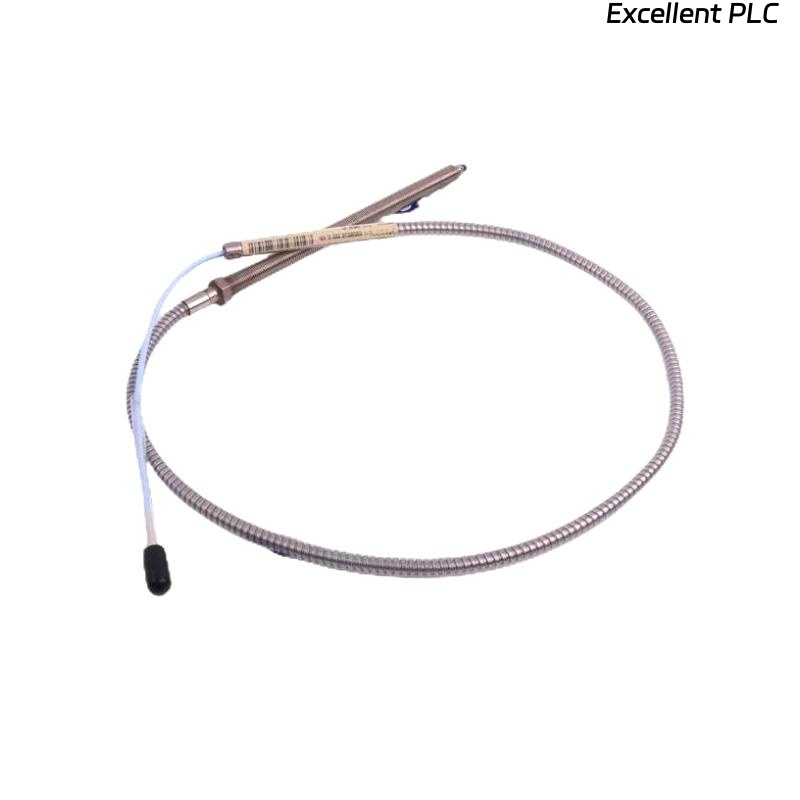
The Bently Nevada 109548-01 / P1407030-00100 belongs to the 3300XL NSv (Narrow Side-view) proximity probe family, widely used for shaft vibration and position monitoring on high-speed rotating machinery. This case study focuses on a common reliability issue encountered in field installations: incorrect probe gap adjustment leading to false vibration alarms and unnecessary machine trips.
1. Equipment & Operating Context
Device model: 109548-01 / 3300XL NSv probe
Application: Steam turbine vibration & radial shaft position monitoring
Measurement system: 3300XL Proximitor & 3500 Rack API 670 protection
Environment: High temperature machinery enclosure with limited accessibility
The NSv probe design allows measurements in narrow axial windows while maintaining stable eddy current performance. However, the gap setting is extremely sensitive, and even small deviations impact baseline signal accuracy.
2. Symptom Overview
Field technicians reported the following behaviors:
-
Sudden increases in indicated vibration (8–12 mils pk-pk)
-
Erratic vibration trending without physical machine issues
-
Shaft position bias drifting outside of normal range
-
Protection system issuing overspeed & vibration alarms
-
Machine operators forced to reduce load or abort startup
Importantly, no mechanical degradation (bearings, seals, couplings) was detected during inspection.
3. Diagnostic Findings
3.1 Gap Voltage Verification
Using a digital voltmeter on the Proximitor terminal:
-
Normal expected gap voltage: -10 VDC to -18 VDC
-
Measured field value: -2.7 VDC
This indicated the probe tip was too close to the shaft surface.
3.2 Physical Examination
After shutdown, probe flange and mounting bracket inspection revealed:
-
Probe was threaded ~2.5 mm too far into the mounting hole
-
Locking ring torque insufficient
-
Thermal expansion caused intermittent contact shifts
3.3 Cross-Verification
Comparative data from secondary bearing sensors showed:
-
No corresponding vibration increase
-
No oil film instability
-
No rotor imbalance or misalignment signatures
This confirmed a sensor-side fault, not a machine-side fault.
4. Root Cause Analysis
The primary root causes were:
✔ Improper mechanical installation
Probe was not set to required API 670 gap specifications.
✔ Thermal growth effects
Cabinet temperature rose during load, changing mounting geometry.
✔ Lack of post-maintenance calibration
No system-wide validation performed after probe replacement.
✔ Human factors
Technician assumed visual seating instead of measuring displacement.
5. Corrective Actions
The maintenance team implemented the following measures:
5.1 Mechanical Adjustment
-
Probe was backed out to achieve final -12.5 VDC gap voltage
-
Locking nut secured with calibrated torque wrench
-
Mounting bracket shim installed to offset thermal movement
5.2 System Validation
-
Shaft vibration rechecked under startup, steady, and high-load conditions
-
Vibration trend returned to baseline (3.2–3.6 mils pk-pk)
5.3 Documentation Updates
-
Added explicit gap verification to maintenance checklist
-
Trained technicians on NSv-specific installation tolerances
6. Preventive Recommendations
To prevent recurrence, the following practices are recommended:
| Task | Reason |
|---|---|
| Verify gap voltage during installation | Ensures correct shaft–probe distance |
| Re-torque locking nuts after warm-up | Reduces thermal drift and loosening |
| Validate against secondary sensors | Confirms measurements are machine-accurate |
| Document pre- and post-maintenance vibration | Supports future diagnostics |
| Follow API 670 mounting standards | Ensures compliance & reliability |
7. Key Takeaways
-
Incorrect gap settings are one of the most common failure modes for proximity probes.
-
These failures often appear identical to mechanical vibration, causing expensive false alarms.
-
Proper installation, verification, and thermal compensation are essential for reliable measurements.
-
A $200 installation error can trigger a $200,000 unplanned shutdown.
Conclusion
The Bently Nevada 109548-01 / 3300XL NSv probe is highly reliable when properly installed, but improper gap adjustment can lead to false vibration alarms, machine trips, and operational downtime. Robust installation procedures and verification standards significantly improve measurement accuracy and system reliability.