 Excellent PLC


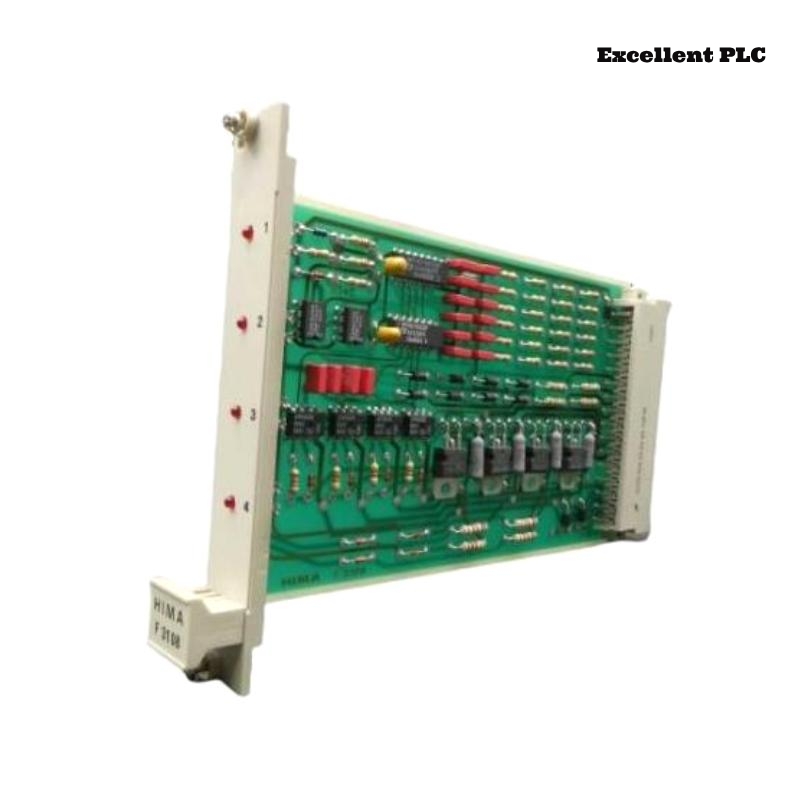
Field Failure Description
During routine operation, one output channel of the Black Horse F1201 4x Relay Amplifier Module failed to activate a connected solenoid valve.
Control logic confirmed the output command was ON.
Indicator LED on the PLC side showed active status.
However, the field device remained inactive.
Unlike a welded contact scenario, this failure presented as a complete lack of relay actuation.
Functional Overview of the F1201 Channel
Each relay channel inside the F1201 module typically includes:
-
Logic-level input stage
-
Driver transistor (or driver IC)
-
Relay coil
-
Output contact set
Failure to energize usually occurs in the coil energizing path.
Structured Diagnostic Process
To isolate the fault, apply this step-by-step method:
1. Confirm control logic output state.
2. Measure input drive signal to module.
3. Measure voltage across relay coil.
4. Check continuity of relay coil.
5. Evaluate driver transistor output.
Step 1 – Confirm Control Signal
Verify that the controller truly sends a high-level signal:
-
Check output forcing status
-
Observe logic transitions
-
Confirm correct channel addressing
If input command is absent, the issue lies upstream.
Step 2 – Measure Relay Coil Voltage
With output commanded ON:
Expected: Rated coil voltage present.
If 0V detected → driver or upstream issue.
If correct voltage present but no click → coil open circuit.
In this case, 0V was measured across the coil.
Step 3 – Check Coil Integrity
Power OFF the cabinet before resistance measurement.
Normal coil: measurable resistance.
Infinite resistance → open coil.
Very low resistance → shorted coil.
Coil resistance was within specification, eliminating mechanical coil damage.
Root Cause: Driver Transistor Failure
Further tracing revealed that the transistor responsible for switching coil current had failed in open state.
Common causes:
-
Inductive load back-EMF without suppression
-
Overcurrent stress
-
Voltage spikes from unstable power supply
Even if the relay coil is intact, the driver stage failure prevents energization.
Corrective Action Plan
– Replace F1201 module (driver stage not field-repairable).
– Install flyback diode across inductive loads.
– Verify stable DC supply voltage.
– Inspect grounding integrity.
After replacement and load protection upgrade, output operation restored immediately.
Preventive Recommendations
-
Always implement suppression on solenoids and contactors.
-
Avoid switching loads near maximum rated current.
-
Monitor cabinet power supply ripple.
-
Maintain proper grounding to reduce transient spikes.
Driver stage failures are typically electrical stress-related, not manufacturing defects.
Conclusion
When a relay channel on the Black Horse F1201 4x Relay Amplifier Module fails to energize despite active control logic, the most probable cause is driver transistor failure or coil circuit interruption. Systematic voltage tracing and resistance testing quickly isolate the fault, allowing safe module replacement and long-term reliability improvements in Planar F installations.